Strawberry Feta Salad
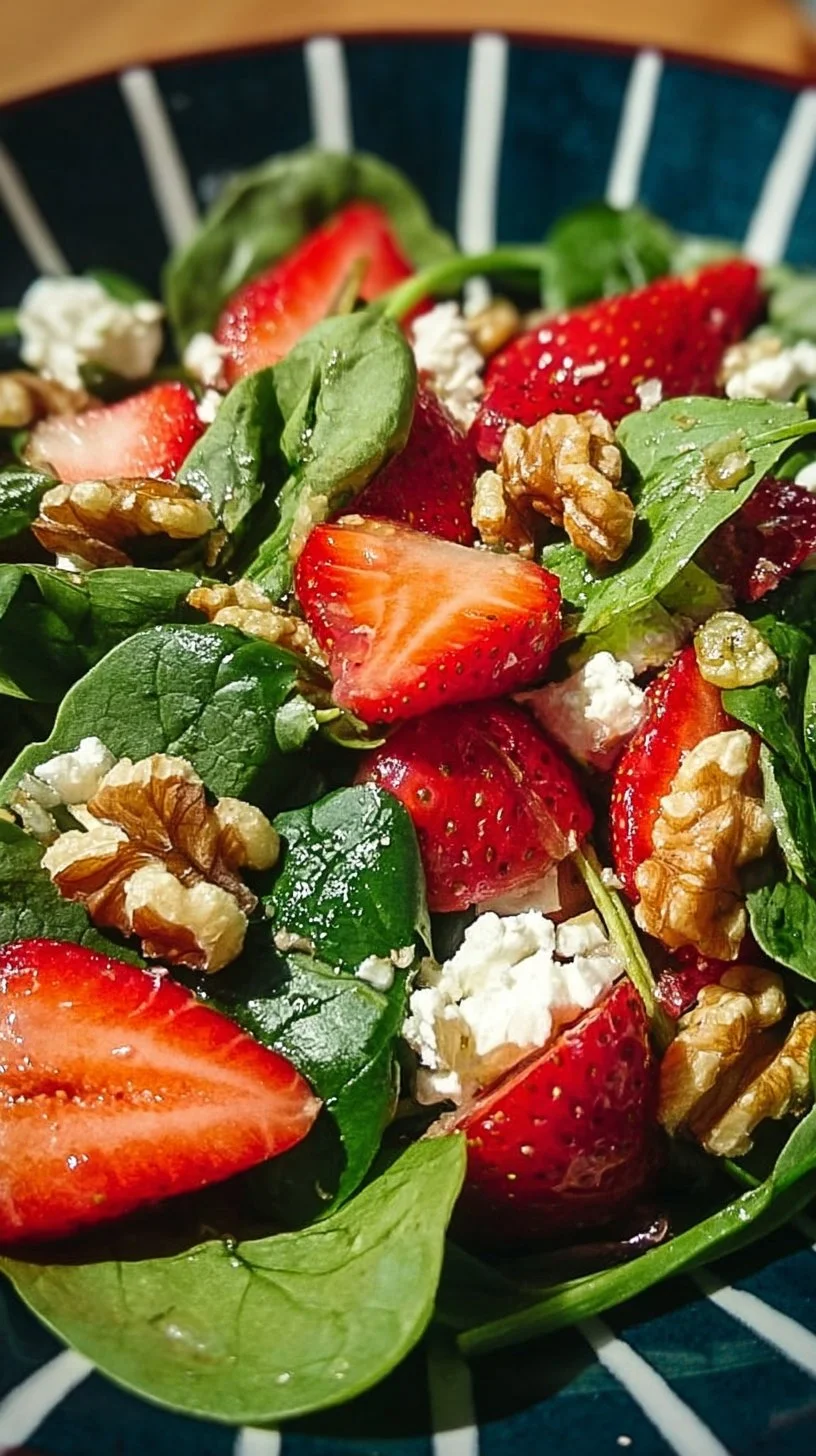
Strawberry Feta Salad is one of those simple combinations that feels fresh without asking for much fuss — bright fruit, salty tang, a little crunch, and a dressing that ties it all together. I turn to recipes like this when I want a meal that feels lighter and clean but still satisfying enough to stand on its own for lunch or pair with something small for dinner. It’s the kind of recipe that works on a busy weeknight, shines packed into a lunchbox, and becomes a repeat in the rotation because it’s reliable and unfussy.
If you enjoy the contrast of creamy cheese and sweet fruit in a straightforward salad, you may also appreciate a heartier bowl like my Chickpea Feta Avocado Salad, which uses the same idea of balancing textures and flavors but leans into plant-based protein. In this post I’ll walk through why this particular mix of ingredients is so effective, how to make it without overthinking, and small ways to adapt it while keeping the spirit of a lighter, everyday meal.
How this recipe fits into a balanced lifestyle
This salad supports balance in a practical way: it combines bright produce with a touch of fat and salt, which helps you feel satisfied without requiring heavy cooking or long prep. The feta gives a savory anchor that contrasts the strawberries’ natural sweetness, and mixed greens add volume for fewer calories per plate without making the meal feel skimpy. The optional walnuts introduce a crunch and a dose of healthy fat that lengthens satiety in a pleasant, food-focused way.
A lighter feeling here comes from portioning and ingredient quality rather than strict restriction. You get the pleasure of a creamy cheese and a slightly indulgent dressing, but the overall composition remains vegetable-forward. That makes this salad easy to slot into a varied weekly rotation: enjoy it solo one day, use it as a side the next, or pair it with a modest protein when you want something a bit heartier. The idea is variety over rigidity — keeping meals honest and enjoyable while making sensible choices that fit into daily life.
How to make Strawberry Feta Salad
Think of the overall flow as three small actions: prepare, assemble, and finish. Prep the strawberries and any nuts, lay out the greens and cheese, and then dress at the last minute. Simplicity matters most in timing: don’t dress the salad until you’re ready to serve to keep greens crisp and strawberries fresh.
Start with clean, dry greens and ripe, firm strawberries; those two choices affect texture more than anything else. Crushing or toasting the walnuts is optional but enhances flavor and aroma. When tossing, be gentle — you want the fruit and cheese distributed, not pulverized. If you’re looking to add a protein for a fuller meal, consider a companion like a seared fish or my quick Buffalo Tuna Salad for a contrasting flavor profile that still feels light and efficient.
The approach I recommend is practical: take small, confident steps and rely on good ingredients rather than complicated techniques. This keeps the salad approachable and repeatable week after week.
Ingredients
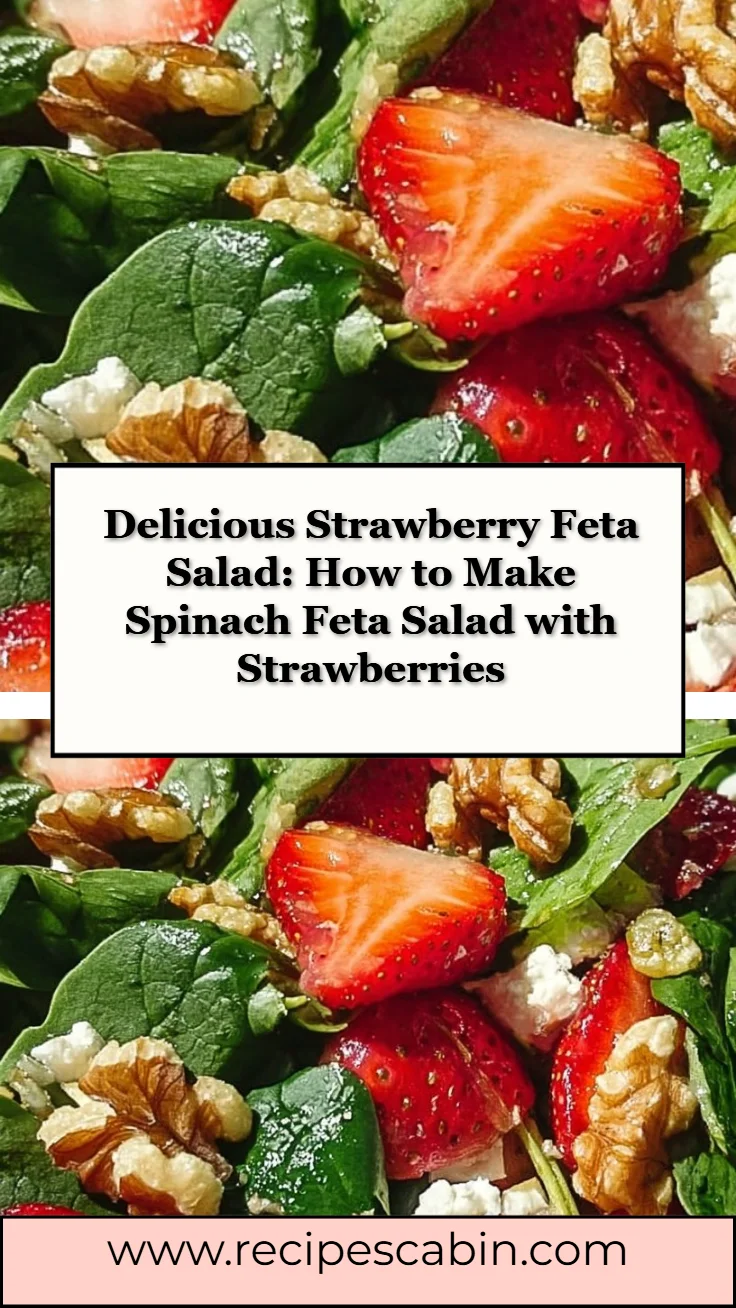
Fresh strawberries, Feta cheese, Mixed greens (e.g., spinach, arugula), Walnuts (optional), Balsamic vinaigrette, Salt and pepper to taste
Each ingredient here plays a clear role:
- Fresh strawberries: They bring sweet acidity and a juicy, slightly firm texture when they’re ripe. Their natural juices mingle with the vinaigrette and act as a light glaze for the greens, so choose strawberries that are fragrant and bright.
- Feta cheese: Feta contributes creamy, salty notes that offset the strawberries’ sweetness. Because feta is crumbly, it distributes in small bites throughout the salad, so each forkful gets a little savoriness.
- Mixed greens: Using a mix like spinach and arugula provides both bulk and variety in leaf texture. Spinach is tender and grounding, while arugula adds peppery lift; together they make the salad feel substantial without heaviness.
- Walnuts (optional): When included, walnuts add crunch and a toasty, slightly bitter counterpoint. They also provide a pleasing mouthfeel contrast to the softer berries and cheese.
- Balsamic vinaigrette: A simple balsamic vinaigrette amplifies the strawberry flavor and brings a sweet-tart finishing note that unifies the other components.
- Salt and pepper: Small amounts of seasoning sharpen the flavors and prevent the salad from tasting flat — a little salt on the feta or a light sprinkle on the greens goes a long way.
These are mindful choices: none are trying to be a stand-in for something else. Instead, they each add a dimension that makes the whole greater than the sum of its parts.
Directions
- Rinse and slice the strawberries.,
- In a large bowl, combine mixed greens, sliced strawberries, and crumbled feta cheese.,
- If using, add walnuts for extra crunch.,
- Drizzle with balsamic vinaigrette and season with salt and pepper.,
- Toss gently and serve immediately.
A few practical notes to keep these steps smooth:
- Rinsing and drying: After rinsing the strawberries and greens, spin or pat them dry. Excess water dilutes the vinaigrette and makes the salad soggy, which is the quickest way to lose that “light” feeling.
- How to slice strawberries: Slice them so pieces are bite-sized but not so thin they fall apart. Quartering large berries often works best; smaller berries can be halved.
- Combining ingredients: When you fold in the feta and strawberries, do so gently — use a large bowl and a wide spoon to lift rather than press. This keeps the strawberries from bruising and the feta from utterly disintegrating.
- Walnuts: If you choose to add walnuts, give them a quick toast in a dry skillet for 2–3 minutes until fragrant. Toasting sharpens their flavor and reduces any raw bitterness.
- Dressing timing: Dress the salad just before serving. If you’re making this ahead, keep the dressing separate and toss at the table or right before plating to preserve texture and color.
These small attentions make the difference between a rushed bowl and a composed plate that feels deliberate without being precious.
The role of preparation in keeping this dish light
Preparation, more than anything else, determines whether a salad feels light and satisfying. Cooking methods that add heavy coatings (thick creams, heavy frying) will instantly change the balance. Here we rely on raw and minimally handled ingredients: fresh berries, raw greens, and a basic vinaigrette. That’s not about restriction; it’s about choosing preparation methods that let ingredients shine and maintain their natural textures.
Technique matters too. Gentle tossing preserves the strawberries and keeps the feta as small, flavorful highlights instead of a single dominant lump. Toasting nuts briefly enhances flavor without adding oil or extra calories. Small touches like drying greens thoroughly and dressing at the end preserve the crispness that tricks the palate into perceiving a more substantial meal.
Finally, the order of operations — prep everything, then dress at the last moment — keeps the salad lively. A crisp, well-balanced salad satisfies by contrast: crunchy greens, juicy fruit, creamy cheese, and a little texture from nuts or seeds. Those contrasts are what make a lighter meal feel complete.
Simple ways to adjust without losing balance
You don’t need to change the ingredient list or steps to make this salad your own; think in terms of small, flavor-forward adjustments. Swap the type of greens you use for different textures (but keep them mixed), or switch a balsamic vinaigrette to a lighter herb vinaigrette if you prefer a greener note. Adjust the ratio of strawberries to greens to make the salad fruitier or more savory, depending on the meal.
If you want more crunch, use toasted sunflower seeds or slivered almonds instead of walnuts; for a smokier element, add a small amount of charred scallion or a few grilled halloumi slices on the side (served, not mixed in). Keep the dressing modest — a light coat is all that’s needed — and focus on enhancing contrast rather than piling on richness. Conceptual changes like these preserve the salad’s sense of balance while letting you personalize flavor.
Pairing ideas for a complete, well-rounded meal
The goal with pairings is to create contrast without excess. For a light dinner, serve the salad with a simple protein such as grilled chicken breast, a pan-seared fish, or a modest legume-based side. If you want something a little heartier on the side, a slice of warm bread adds comfort without tipping the scale — for example, a slice of Banana Strawberry Bread can be a friendly accompaniment, offering a sweet, homey texture that complements the salad.
For lunches, pair the salad with a small bowl of soup or a few whole-grain crackers and a spread of hummus. The idea is to build a plate that balances protein, carbohydrate, and produce without any one element overpowering the others. Pick one or two complementary items rather than piling on many, and match textures — something warm or crunchy pairs especially well against the cool, tender salad.
Storage, leftovers, and next-day enjoyment
This salad is best enjoyed immediately, but with a little planning you can make leftovers work. Store components separately if possible: keep the greens and strawberries in a loosely sealed container lined with paper towels to absorb moisture, and keep any dressing in a separate jar. Walnuts can be kept in an airtight container at room temperature for a day or two, or in the fridge for longer.
If you find yourself with extra strawberries, they’re lovely repurposed into small snacks or toppings. For example, leftover berries can become quick Chocolate Strawberry Yogurt Clusters or stirred into plain yogurt with a drizzle of honey. When you do reassemble the salad later, toss just before serving and check the greens for any limp pieces to remove; a brief chill in the refrigerator can refresh things.
Avoid reheating dressed greens — heat collapses the textures that make the salad appealing. Instead, recompose the bowl with fresh greens if you need to stretch the ingredients into another meal.
Common questions about lighter everyday cooking
How much should I serve per person? A good rule is to serve about 2–3 cups of mixed greens per person for a main-course salad when paired with a modest protein, or 1–1.5 cups if the salad is a side. Adjust the strawberries and feta to taste; the goal is a balance that feels satisfying on the fork.
How do I plan this salad for a week of lunches? Prep components in bulk: slice strawberries and store them briefly, keep greens dry and separate, and portion out feta and walnuts. Dress only at serving. If you plan to repeat salads during the week, vary the add-ins (different nuts, a sprinkle of seeds, or a change of vinaigrette) to prevent boredom while keeping prep minimal.
How can lighter meals feel more satisfying? Focus on texture contrast and a balance of flavors — a touch of salt, a bit of acid, and a crunchy element can make a modest plate feel complete. Small amounts of rich ingredients (like feta or toasted nuts) go a long way toward satiety.
What if I don’t like walnuts or feta? You can keep the structure of the salad while swapping in what you prefer, but if you want to stick closely to the recipe’s intent, look for ingredients that provide the same role: a crunchy nut or seed for texture and a salty, tangy cheese or dressing for contrast.
Final thoughts from Daniel
This Strawberry Feta Salad is a practical reminder that lighter meals can still be fully satisfying. It champions simple, thoughtful choices — ripe fruit, quality cheese, and a restrained dressing — and relies on technique over heavy-handed additions. Cook it when you want something that feels fresh, when time is tight, or when you want a balanced plate without gimmicks.
Trust your palate: adjust the proportions to suit your appetite and the occasion, and don’t be afraid to repeat meals that work for you. A small rotation of reliable, balanced recipes is often the most sustainable approach to everyday cooking. Enjoy the bright flavors and the ease of putting a composed, light, and nourishing plate on the table.
Conclusion
If you’re looking for similar ideas that play with fruit and greens, this Spinach Strawberry Salad with Balsamic Poppy Seed Dressing showcases another dressing that complements fresh berries. For a variation that adds cucumbers and walnuts in a slightly different composition, see this take on a Strawberry Feta Salad with Cucumbers & Walnuts. And if you want a straightforward version that emphasizes a classic balsamic pairing, check out this Strawberry Feta Salad with Balsamic Vinaigrette.
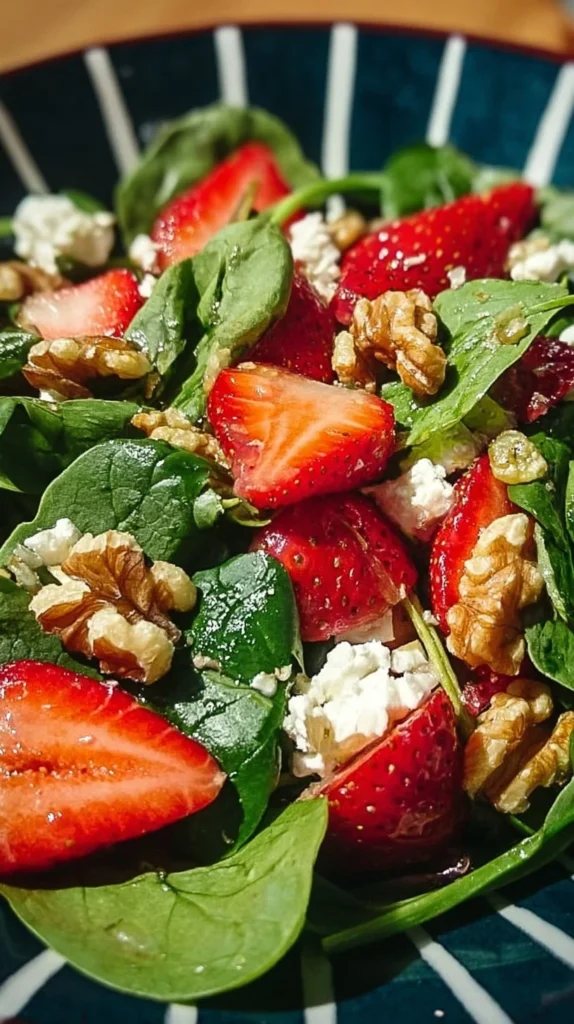
Strawberry Feta Salad
Ingredients
Method
- Rinse and slice the strawberries.
- Spin or pat the mixed greens dry.
- Toast walnuts in a dry skillet for 2–3 minutes if using.
- In a large bowl, combine mixed greens, sliced strawberries, and crumbled feta cheese.
- If using, add walnuts for extra crunch.
- Drizzle with balsamic vinaigrette and season with salt and pepper.
- Toss gently and serve immediately.