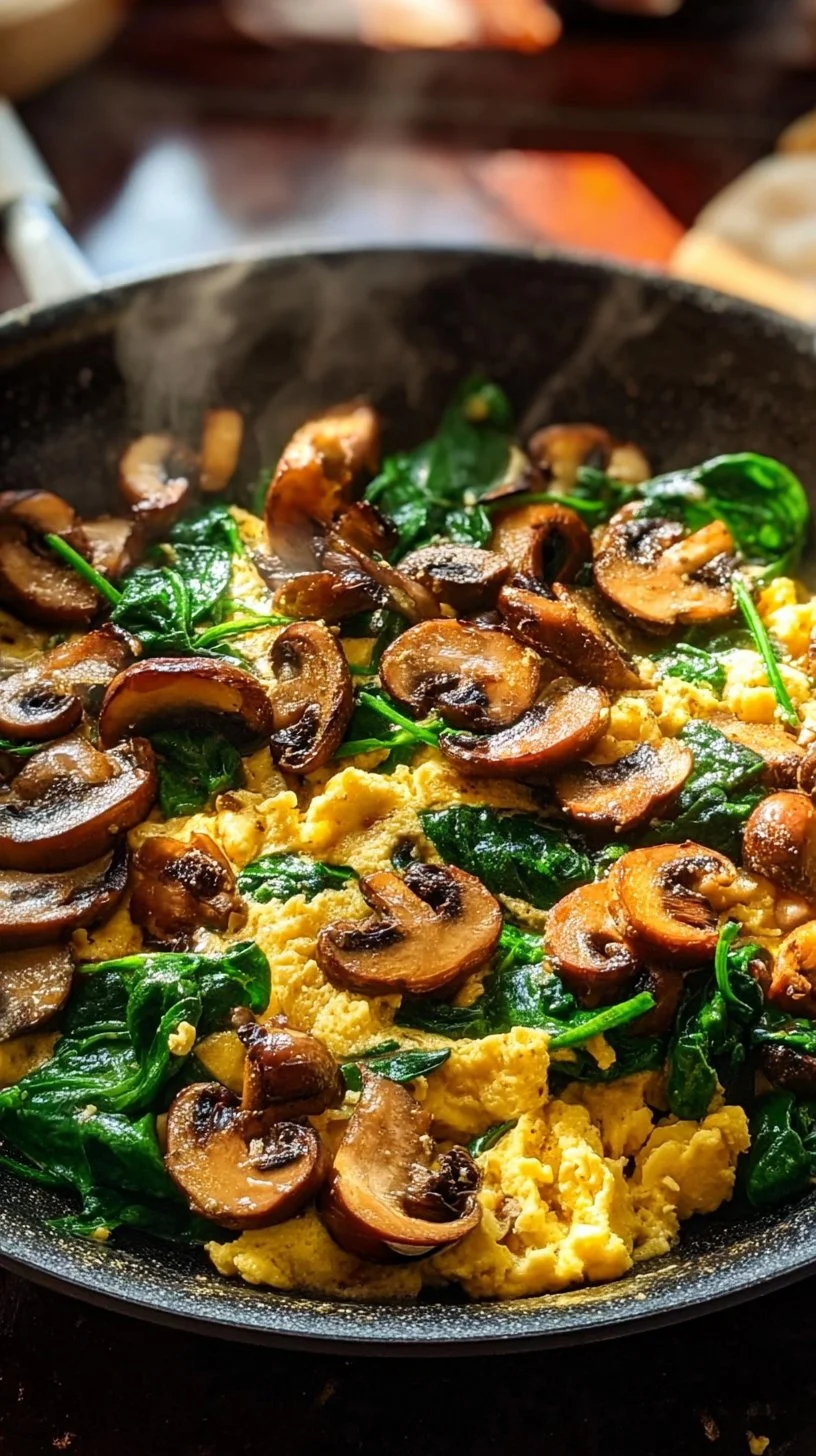
Mushroom Spinach Scrambled Eggs
Introduction
This Mushroom Spinach Scrambled Eggs recipe is one of those everyday wins: quick to make, gentle on the palate, and just substantial enough to carry you through a busy morning or light evening. I lean on dishes like this when I want something that feels nourishing without being heavy — the eggs provide protein, mushrooms bring an earthiness, and the spinach adds brightness and a fresh mouthfeel. It’s the sort of recipe you can make a few nights in a row without tiring of it, and it pairs well with a crisp piece of toast or a simple fruit salad. If you’re looking for practical, reliable meals, this fits the bill. For a similar make-ahead idea that’s also high in protein, I sometimes reach for a baked egg dish like the one I linked to here: baked cottage cheese eggs.
This dish works best when you want something uncomplicated that still tastes like effort was put into it. It’s a weekday staple — fast on weeknights, portable for lunches, and easy to scale for repeat cooking when you’re prepping a few breakfasts at once.
How this recipe fits into a balanced lifestyle
Mushroom Spinach Scrambled Eggs align with a balanced approach because they combine straightforward ingredients to deliver both flavor and satiety. Rather than relying on heavy sauces or large portions to feel satisfied, the balance here comes from portion control, ingredient quality, and technique. Eggs give you a filling base without excess bulk; mushrooms and spinach add volume and nutrients while keeping the overall dish light. That’s what “feeling lighter” means in practice — you have a satisfying plate that doesn’t leave you sluggish afterward.
This recipe is naturally flexible in a weekly rotation. It can be a core breakfast most mornings, a quick lunch served with a small salad, or a late-night comfort when you want something warm without complexity. If you enjoy layering flavors, you can rotate small changes across the week — different mushrooms, a squeeze of lemon with the spinach, or a sprinkle of herbs — and keep the meal interesting without becoming elaborate. For other straightforward spinach-forward ideas that fit into a weekly routine, I like turning to simple, versatile recipes like this savory flagel variation: spinach cottage cheese flagels.
How to make Mushroom Spinach Scrambled Eggs
At its core, this recipe is a three-part flow: gently cook the mushrooms to build flavor, wilt the spinach to add freshness, then fold in beaten eggs and scramble to your preferred doneness. The simplicity is the point — you don’t need fancy equipment or elaborate timing. Where most cooks overthink things is in the egg stage: cook them patiently and quietly, and you’ll get better texture.
Simplicity matters most at two moments: when you’re sautéing the mushrooms and when you’re scrambling the eggs. A hot pan and steady attention build savory depth in the mushrooms; gentle heat and occasional stirring give the eggs a soft, creamy texture. Treat each step as a small, deliberate action rather than a race. If you want a quick reminder to slow down, I often walk away for thirty seconds between stirs and return to assess texture — it keeps the process calm and the result predictable. If you need another idea that keeps things simple but satisfying, check a comparable scramble approach here: spinach cottage cheese flagels.
Ingredients
4 fresh eggs, 1 cup fresh spinach, 1 cup mushrooms, sliced, 2 tablespoons olive oil or butter, Salt, to taste, Pepper, to taste
Each ingredient has a clear role:
- 4 fresh eggs: The backbone of the dish. Eggs bring protein, a silky texture when cooked gently, and a neutral base that carries the other flavors.
- 1 cup fresh spinach: Adds brightness, color, and a subtle fresh flavor. Wilted spinach increases the volume of the dish without heaviness and adds a slightly crisp, tender contrast to the eggs.
- 1 cup mushrooms, sliced: Mushrooms contribute savory, umami depth. When sautéed until tender, they become meaty and satisfying, which helps the dish feel complete.
- 2 tablespoons olive oil or butter: The fat is where flavor lives. Olive oil keeps the dish feeling lighter and clean; butter lends a buttery richness if you prefer that comfort-edge. Either works — choose based on mood.
- Salt, to taste: Brings out the natural flavors of the eggs and vegetables. A light hand keeps the dish balanced; you can always adjust at the table.
- Pepper, to taste: Adds a gentle warmth and helps balance the dish without overwhelming it.
The balance in this recipe isn’t about cutting things out; it’s about combining modest portions of ingredients that complement each other. Choosing good-quality eggs, fresh spinach, and firm mushrooms makes a surprisingly large difference because you’re relying on the ingredients themselves for taste.
Directions
- In a pan, heat the olive oil or butter over medium heat.
- Add the sliced mushrooms and sauté for 3-4 minutes until they are tender.
- Add the spinach and cook until wilted.
- In a bowl, beat the eggs with salt and pepper.
- Pour the eggs into the pan with the vegetables and scramble until fully cooked.
- Serve warm.
Those steps are intentionally straightforward. Here are a few practical notes to keep the process calm and predictable:
- What to watch for when heating fat: you want the oil to shimmer or the butter to foam gently — not brown or burn — before adding mushrooms. That gives you even cooking and prevents bitter notes.
- Mushrooms should go into a hot pan and be left mostly undisturbed for the first minute or two so they can develop a little color; then stir occasionally. Tenderness is the cue they’re ready for the spinach.
- Spinach wilts quickly; it’ll shrink dramatically. Once it’s just wilted and still bright green, it’s time to move on. Overcooking spinach turns it limp and can make the dish feel heavier.
- When beating the eggs, aim for an even color and texture, but you don’t need to aerate them vigorously. Lightly beaten eggs give a pleasant, tender scramble.
- After adding eggs to the pan, lower the heat slightly and stir slowly and purposefully. Gentle heat yields creamy curds; high heat makes dry, uniform bits.
- The eggs are done when they’re set but still glossy — carryover heat will finish them. Remove the pan just before they look completely dry if you prefer a softer result.
Avoid overcomplicating the process by sticking to the order above and focusing on sensory cues (sizzling sound, color change, texture) rather than timing alone.
The role of preparation in keeping this dish light
How you cook these ingredients changes the way the finished plate feels. Sautéing mushrooms in moderate fat and at medium heat concentrates their flavor without making the dish oily. Wilting spinach rather than overcooking it preserves its bright color and delicate texture, which keeps each bite feeling fresh. And, perhaps most importantly, the way you scramble the eggs — low and slow or quick and hot — determines whether the dish will be creamy or dry.
Technique matters as much as ingredient choice. For example, starting with a properly heated pan prevents mushrooms from releasing too much moisture and becoming soggy; similarly, removing the eggs from heat while they’re slightly underdone uses residual heat to finish cooking them, which prevents the curds from becoming rubbery. These small, intentional practices are how you preserve lightness while also achieving a pleasant, satisfying texture.
Preparation also extends to little habits that make the meal feel less heavy overall: a modest portion of olive oil, using fresh produce, and plating with a contrast like a crisp vegetable or citrus wedge. Those choices balance the richness of eggs and the umami of mushrooms without sacrificing comfort.
Simple ways to adjust without losing balance
You can personalize this recipe without modifying the listed ingredients or steps by focusing on small, flavor-forward adjustments:
- Change the mushroom type for variety: cremini, shiitake, or button mushrooms each offer slightly different textures and depths of flavor without changing the recipe structure.
- Finish with an acid or herb at the table: a light squeeze of lemon or a sprinkle of fresh herbs like chives or parsley brightens the dish and lifts the richness.
- Swap the fat mindfully: olive oil keeps things on the lighter, Mediterranean side; butter makes it feel more indulgent. Either choice is valid — it’s about what complements your meal that day.
- Use temperature and texture contrasts: serve with a crisp slice of whole-grain toast or a handful of raw cherry tomatoes to add freshness and crunch.
- Adjust the scramble texture: if you prefer creamier eggs, cook on lower heat and remove slightly earlier; for a firmer scramble, increase the heat briefly at the end.
These ideas keep the dish familiar while letting you tailor it to the occasion, whether that’s a relaxed weekend breakfast or a quick evening meal.
Pairing ideas for a complete, well-rounded meal
Because this scramble is flavorful yet light, pairings should echo that balance. Think about texture and temperature contrasts and simple, complementary flavors:
- A slice of toasted whole-grain bread or sourdough for crunch and a neutral counterpoint.
- A small green salad dressed with lemon and olive oil to add freshness and a palate-cleansing bite.
- Roasted cherry tomatoes or lightly dressed cucumber slices for a bright, juicy contrast.
- A side of fresh fruit — orange segments or berries — to bring subtle sweetness and acidity.
- If you want a heartier plate, add a small portion of roasted sweet potato cubes; they’re dense without being heavy.
Pairings that contrast the silky eggs with crisp or acidic elements will make the meal more satisfying without pushing it into heaviness.
Storage, leftovers, and next-day enjoyment
This scramble keeps well for short-term storage. Cool it to room temperature and transfer to an airtight container; it will last in the refrigerator for up to 2 days. Reheating gently is key to preserving texture:
- Reheat over low heat in a nonstick pan with a tiny splash of water or oil, stirring frequently until warm. The steam helps loosen the curds and prevents drying.
- Alternatively, reheat in the microwave in short bursts (20–30 seconds), stirring between bursts, and adding a small splash of water or milk to retain moisture.
- Avoid reheating at high temperatures, which will make the eggs rubbery and the spinach overly wilted.
Leftovers also work well folded into a wrap or used as a filling for a warm pita with a sprinkle of fresh herbs. The eggs will firm up after chilling, so refreshing them with a quick gentle reheat brings them back.
Common questions about lighter everyday cooking
Q: How large should portions be for a balanced meal?
A: A balanced plate often includes a modest protein portion (like these four eggs split between one or two people), vegetables to add volume (spinach and mushrooms), and a small carbohydrate if desired. Portion sizes depend on appetite and activity level; focus on including different textures and flavors rather than strict measurements.
Q: How can I make similar meals without getting bored?
A: Rotate small elements — change the mushroom type, add different fresh herbs, switch between olive oil and butter, or pair the scramble with different sides. These minor shifts create variety without changing the core technique.
Q: Is this good for meal prep?
A: Yes. The scramble keeps well for a day or two and reheats nicely if done gently. For longer storage, consider separating components (store mushrooms and spinach separately from eggs) to preserve texture, though the recipe as written is intended for short-term use.
Q: How do I keep meals feeling satisfying without overeating?
A: Prioritize flavor-rich ingredients, include a vegetable or two for volume, and be mindful of the interplay between fat and acidity. Richness can be balanced with bright components (like fresh herbs, lemon, or a crisp salad) so you feel satisfied without excess.
Final thoughts from Daniel
Give this Mushroom Spinach Scrambled Eggs recipe a regular spot in your rotation. It’s the kind of simple, honest cooking that rewards a calm approach: moderate portions, mindful ingredients, and small techniques that make a big difference. Cooking intuitively — paying attention to the way mushrooms brown, how spinach wilts, and how eggs set — helps you deliver consistent results without stress. Balance in everyday meals is flexible; a dish like this proves you can have comfort and lightness at the same time. Keep it simple, stay curious about small adjustments, and let this become a dependable meal you enjoy often.
Conclusion
If you’d like ideas from other cooks who approach similar combinations, I sometimes look to recipes like the Mushroom-Spinach Scrambled Eggs – Skinnytaste for inspiration on seasoning and timing. For another take on the classic spinach and mushroom scramble, this version from Spinach Mushroom Egg Scramble Recipe | Gimme Some Oven is a helpful reference. And if you enjoy slightly different technique notes and serving suggestions, see the Healthy Spinach and Mushroom Scramble – Simply Scratch write-up for more ideas.

Mushroom Spinach Scrambled Eggs
Ingredients
Method
- In a pan, heat the olive oil or butter over medium heat.
- Add the sliced mushrooms and sauté for 3-4 minutes until they are tender.
- Add the spinach and cook until wilted.
- In a bowl, beat the eggs with salt and pepper.
- Pour the eggs into the pan with the vegetables and scramble until fully cooked.
- Serve warm.