Meal Prep Breakfast Bowls
Introduction
If you’re someone who wants mornings to feel calmer and more in control, Meal Prep Breakfast Bowls are a gentle place to start. These bowls were created for busy folks — parents, shift workers, students, or anyone who wants a warm, reliable breakfast without weekday panic. They’re straightforward, forgiving, and built so you can make a week’s worth of breakfasts in one calm session.
I like to say these bowls are perfect for cooks who are new to meal prep and for anyone returning after a cooking slump. You won’t need special skills or fancy tools — just a skillet, a blender or whisk, and oven-safe containers. If you like the idea of batch cooking, this recipe pairs well with other simple breakfasts; for example I often alternate these bowls with my roasted sweet potato option to keep mornings interesting — here’s a relatable recipe for that sweet potato breakfast you can try on an easier day.
Throughout this article I’ll walk you through each step, explain what to look for, and help you feel confident when you pull the bowls from the oven. Take a breath — we’ll go through it together.
Why this recipe is easy to get right
This recipe is forgiving in three big ways. First, it uses hearty ingredients that stand up to small timing or temperature differences — cooked sausage and frozen hash browns won’t fall apart if you’re a few minutes off. Second, the egg-and-cottage-cheese mix is tolerant: it won’t split or curdle like some delicate custards, and it will set reliably in the oven. Third, the assembly is simple: layers go in a bowl and bake. There’s no complicated folding, no tempering, and no need for precise whipping.
Flexibility matters here. If your sausage cooks a little longer than planned, it’s still fine. If the hash browns are a touch frozen in the center when you assemble, the oven time finishes everything. The recipe accepts small imperfections — browned edges, uneven cheese distribution — and still makes a satisfying breakfast. That makes it a great recipe to learn from because you’ll build confidence without worrying that one small mistake ruins the whole batch.
How to make Meal Prep Breakfast Bowls
At a high level, there are three parts: cook the sausage, mix the eggs, and assemble and bake. Start on the stovetop where the sausage browns and releases flavor. Browning develops color and a bit of caramelized flavor — you want browned, crumbled sausage pieces that are cooked through and no longer pink.
Next, the egg mixture comes together quickly. Blending eggs with cottage cheese smooths the texture and keeps the finished bowls tender. The cottage cheese creates small pockets of creaminess when baked and helps the eggs stay moist during reheating.
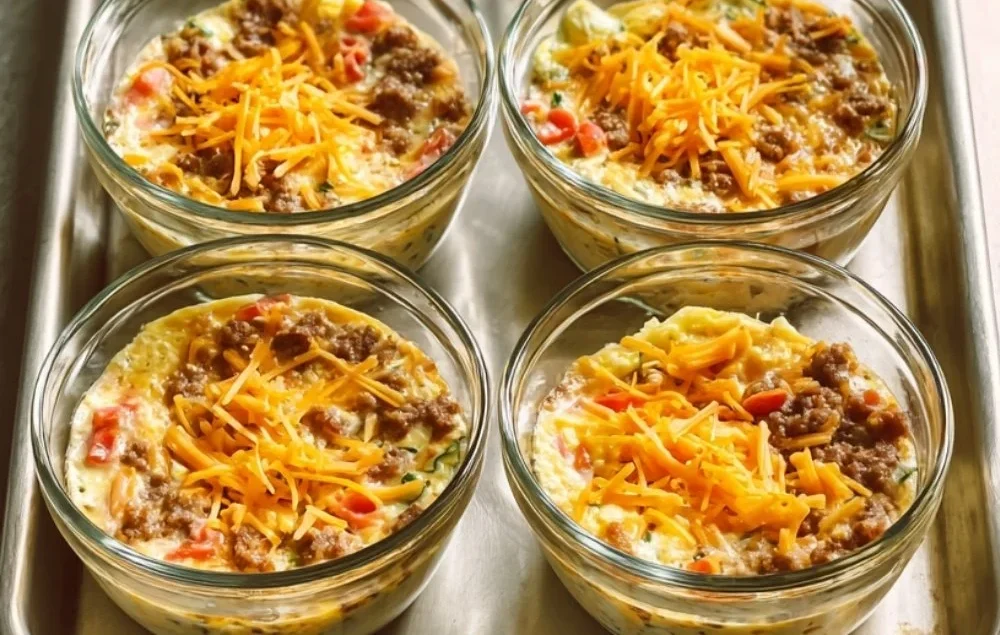
Finally, assembly: the hash browns form a base that crisps slightly around the edges while softening in the center, the sausage sits on top adding savory bites, and the egg mixture binds everything together in the oven. The last step is a short bake that sets the eggs but doesn’t overcook them. When you’re new, slow down at the assembly stage — make sure each container has an even base of hash browns so they reheat consistently later.
When you bake, watch for the egg mixture to puff slightly and look set rather than glossy. A gentle jiggle in the center is okay; it will finish setting as it cools.
Ingredients
1 lb ground breakfast sausage, 8 eggs, 1 cup cottage cheese, 1 tsp salt, ¼ tsp black pepper, 3 cups frozen shredded hash browns, 3 oz crumbled feta OR shredded cheddar cheese
Each ingredient plays a clear role:
- 1 lb ground breakfast sausage: This is the main savory component. It adds fat, seasoning, and meaty texture. Sausage often contains its own spices, so it brings flavor without extra effort.
- 8 eggs: Eggs bind the bowl together and provide protein. They set in the oven to create the “bowl” texture — think of them as the glue and cushion.
- 1 cup cottage cheese: Cottage cheese keeps the eggs from drying out and creates a tender, creamy interior. It also blends into the eggs to give a slightly denser, custardy texture without fuss.
- 1 tsp salt and ¼ tsp black pepper: These are the simple seasonings that ensure every bite tastes balanced. Salt enhances flavor throughout, and black pepper adds a gentle background note.
- 3 cups frozen shredded hash browns: The frozen hash browns form the starch base. They’re convenient and reliable — no peeling, shredding, or extra prep. They crisp at the edges and stay soft in the center after baking and reheating.
- 3 oz crumbled feta OR shredded cheddar cheese: Cheese adds a hit of salty, melty goodness on top. Feta brings tang and crumbly texture; cheddar gives a classic, melty finish. Both work well, so this choice is a small personal preference rather than a technical requirement.
None of these ingredients are intimidating: they’re familiar, easy to buy, and straightforward to work with. Together they balance protein, fat, and starch for a filling breakfast that reheats well.
Directions
Preheat oven to 350F and grease 6 oven friendly small containers – I use small rectangular glass tupperware containers, Brown and crumble breakfast sausage on the stovetop. Remove any excess oil left in the pan., Blend the eggs with cottage cheese, salt and pepper., Assemble the breakfast bowls with hash browns and crumbled sausage on the bottom. Then, pour in the egg mixture. Top each bowl with ½ ounce of your favorite cheese., Bake at 350F for 25 minutes. Enjoy immediately or allow to cool completely before placing a lid on top., Store in the refrigerator for up to 5 days. Reheat in the oven at 275F for 20 minutes or in the microwave for 2 minutes.
Supportive guidance for each step:
- Preheat and grease: Make sure the oven reaches 350F before you slide the bowls in. Greasing the containers prevents sticking and makes cleanup easier. If you don’t have glass tupperware, any oven-safe ramekins or metal tins of similar size will work.
- Brown and crumble sausage: Cook over medium heat until no pink remains and you see little dark bits on the sausage — that browning is flavor. Use a spatula to break it up into small crumbles. If you notice a lot of rendered fat, you can scoop a tablespoon off the pan so the bowls aren’t overly greasy; a little fat is fine and helps flavor the hash browns.
- Blend the egg mixture: A blender creates a very smooth mix, but a whisk works perfectly — you’re aiming for uniform color and small bubbles, not stiff peaks. The mixture should look homogenous, with cottage cheese blended in mostly but small curds are fine.
- Assemble: Place hash browns in an even layer so each bowl reheats consistently. Scatter the sausage in pieces so every scoop has meat. Pour the egg mixture slowly so it nests around the hash browns and sausage rather than splashing to one side. Weighing or eyeballing out ½ ounce cheese per bowl is forgiving; if one has slightly more, that’s okay.
- Bake: At 25 minutes you want the eggs set and slightly puffed. A gentle shake of the container should show a tiny wobble in the very center but no liquid. If the tops brown more than you like, tent a small piece of foil loosely over the containers for a few minutes.
- Cool and store: Let the bowls cool fully before sealing with lids to avoid trapping steam which can make them soggy. Stored in the fridge, they’ll be good for up to 5 days — perfect for a weekly routine.
- Reheat: The oven reheat preserves texture best; microwave is quickest. If microwaving, heat in short bursts and check so the eggs don’t overcook and get rubbery.
If something looks different than you expected — maybe a bowl seems denser or the top browned more — don’t worry. Those are small variations, and the bowls will still taste satisfying.
Key techniques you’ll practice in this recipe
This recipe reinforces a few fundamental kitchen skills that travel to many other dishes:
- Proper browning: Learning to brown meat without burning teaches you heat control and how flavor develops from caramelization.
- Mixing eggs and dairy: Blending eggs with cottage cheese helps you understand how to create a uniform liquid base for baking; it’s the same idea behind quiches and frittatas.
- Layering and portioning: Assembling consistent layers so each portion reheats and serves evenly is a basic meal-prep skill that improves batch-cooking confidence.
- Baking to set: Recognizing the visual cues for set vs. overcooked eggs — from glossy and loose to matte and just-barely-set — will help you with any baked egg dish.
These are simple, repeatable skills. As you practice them, your timing and feel in the kitchen will become more intuitive.
Common mistakes and how to avoid them
A few mistakes tend to come up when people try this for the first time:
- Underbrowned sausage: If you don’t brown the sausage enough, the flavor will be milder and the texture softer. Avoid this by letting it get small brown bits and breaking it up as it cooks.
- Overfilling containers: If you pour in too much egg mixture, it can overflow. Keep an eye on the fill line; the mixture will puff slightly as it bakes.
- Trapping steam when storing: Putting lids on warm containers makes condensation and soggy tops. Always allow the bowls to cool to room temperature before sealing.
- Overbaking: Eggs that bake too long can become rubbery. Start checking a few minutes before the time is up; you want a slight jiggle in the center.
- Uneven hash brown layer: If some containers have thicker hash browns, they’ll reheat differently. Aim to divide the hash browns evenly by scooping with a measuring cup or your eye for consistency.
If something goes off track — say the eggs are slightly underdone after 25 minutes — don’t start over. Return them to the oven for 3–5 more minutes, or finish briefly under a broiler at low distance if you want quick surface color. If a bowl is very greasy, drain a bit on a paper towel before storing.
How to adjust confidently without changing the recipe
You’re asked not to change the ingredient list or steps, but you can adjust conceptually:
- Portion scaling: To double or halve yields, keep the ratios and baking time similar for same-sized containers. If you use larger containers, the bake time may need a few extra minutes because of volume. Think in terms of container size rather than raw totals.
- Flavor preferences: While you won’t alter the ingredients here, you can choose sausage varieties with different seasonings or pick feta versus cheddar to shift the flavor. These swaps don’t require recipe changes — they’re just different starting points.
- Texture tweaks (conceptual): If you prefer a firmer base, press the hash browns a little more into the container so they compact. If you like a softer texture, leave them looser. Small changes in compactness will alter mouthfeel without changing ingredient amounts.
These are safe, low-risk adjustments that let you make the recipe your own while keeping the method intact.
Serving, storage, and reheating made simple
Serving:
- Serve warm straight from the oven for a tender, freshly baked texture. A quick garnish — a sprinkle of fresh herbs, a little extra cheese, or a few hot sauce drops — lifts the bowl without changing the core recipe.
- If you’re eating cold or room temperature, these still hold up well because the cottage cheese keeps the eggs moist.
Storage:
- Cool completely before sealing lids. Place the bowls in the fridge for up to 5 days. Labeling with the date helps you cycle through them.
- For longer storage, these freeze reasonably well. Let them cool, wrap each tightly, and freeze up to 2 months. Thaw overnight in the refrigerator before reheating.
Reheating:
- Oven method: Reheat at 275F for about 20 minutes — this gently warms through and restores texture.
- Microwave method: Microwave on medium power for around 2 minutes, checking halfway. Short bursts prevent overcooking and help retain a pleasant texture.
- If you want crisp edges again, pop the reheated bowl under a broiler for a minute or heat briefly in a hot skillet to re-crisp the hash brown edges.
Questions new cooks often ask about this recipe
Q: How do I know the sausage is cooked through?
A: Look for no pink and small browned bits across the crumbles. Sausage should feel firm and break apart easily.
Q: Can I mix the eggs by hand if I don’t have a blender?
A: Yes. Use a whisk and beat until the mixture looks uniform and a little frothy. Small cottage cheese curds are fine — they become creamy after baking.
Q: Is a tiny wobble in the center normal after baking?
A: Yes. A slight jiggle means the eggs are just set and will finish firming as they cool. Overly runny means a few more minutes in the oven.
Q: What if my cheese browns quickly?
A: If you notice rapid browning, tent loosely with foil for the remaining bake time. The inside should still set without burning the top.
Q: Do I need special containers?
A: No. Any oven-safe container of similar size works. I use rectangular glass containers because they’re easy to stack and reheat, but ramekins or metal tins are fine too.
Final encouragement from Carla
Cooking is a collection of small, repeatable wins. These breakfast bowls are designed to be one of those wins — a simple preparation that builds your confidence and rewards you with warm, steady breakfasts all week. If your first batch looks a little uneven, that’s normal and part of learning. Each time you make them, you’ll notice small improvements in timing and technique. Keep going — you’re doing the right thing by practicing and making a plan for your mornings.
Conclusion
Thanks for taking the time to learn this simple meal-prep routine — small habits in the kitchen add up. If you want another approachable make-ahead idea to pair with these bowls, I like to reference reliable options like Easy Make-Ahead Breakfast Bowls – The Girl on Bloor for inspiration and variations. Keep practicing, be kind to yourself, and remember: progress matters more than perfection.