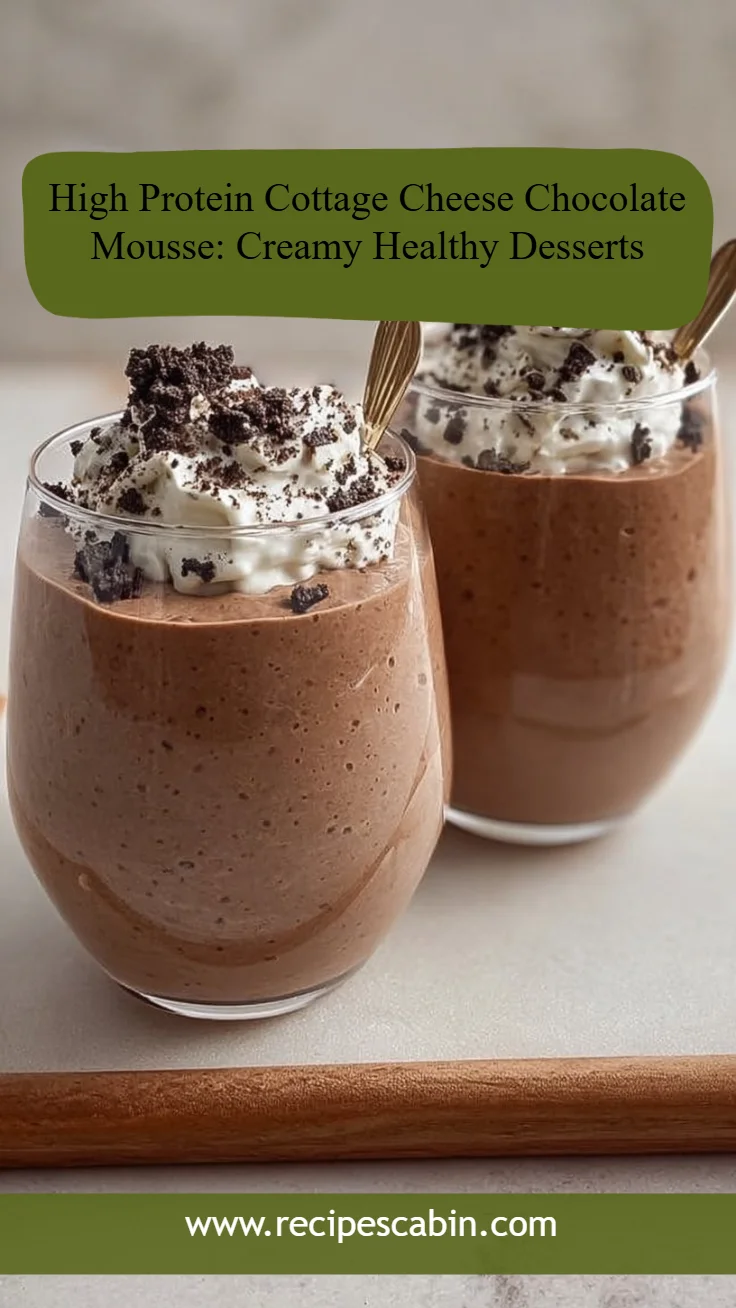
High Protein Cottage Cheese Chocolate Mousse
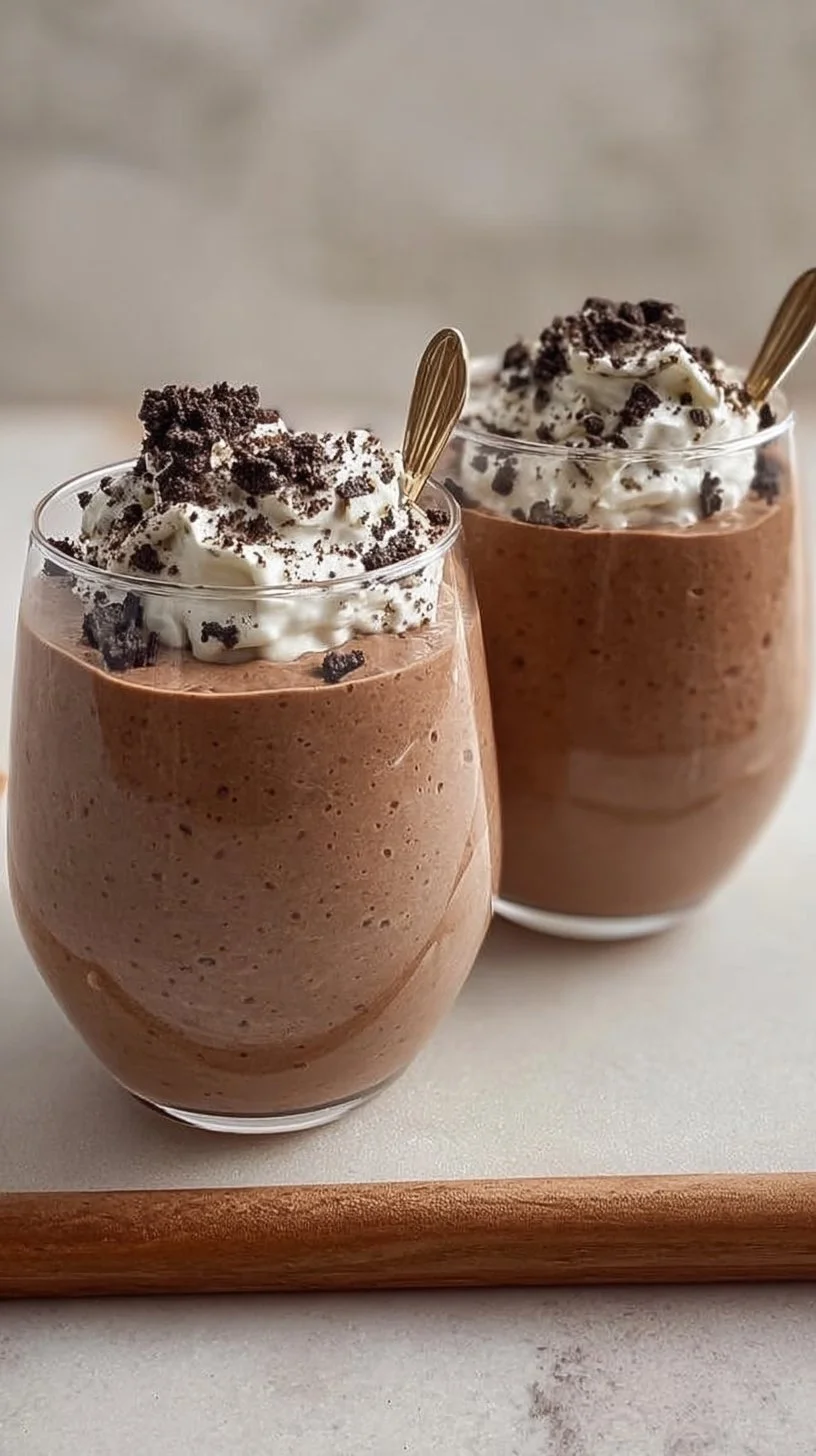
If you’re looking for a dessert that feels indulgent but is actually built from simple, wholesome ingredients, this High Protein Cottage Cheese Chocolate Mousse is for you. I’m Carla Carter, Founder & Recipe Developer of RecipesCabin, and I created this recipe for people who want something chocolatey, satisfying, and quick — without the fuss. It’s especially friendly for anyone who is new to cooking or returning to the kitchen after a break: there’s no baking, no special equipment beyond a blender, and the steps are straightforward.
This mousse is approachable because it relies on texture and balance rather than complicated technique. If you enjoy easy, protein-forward recipes, you might like my take on an easy high-protein cottage cheese pizza bowl, which uses the same idea of turning cottage cheese into something more interesting with a few pantry ingredients. Read on and I’ll walk you through everything you need to know to get a creamy, chocolatey result on your first try.
Why this recipe is easy to get right
What makes this mousse forgiving is its simplicity. The recipe uses a small number of ingredients and one motion — blending — so there’s less room for error. Cottage cheese acts as the creamy base and carries the chocolate flavor beautifully, while cocoa and a touch of sweetener do the rest. You’re not trying to reach a precise internal temperature or manage a finicky emulsion: you’re blending until smooth.
There’s flexibility in sweetness and intensity: taste as you go and adjust the honey or maple syrup. If your blender leaves a few tiny curds, that’s fine — the mousse will still be delightful, and small textural differences are part of home cooking. Because no heat is involved, timing is not critical beyond a short chill to let the mousse settle. This is a recipe that rewards a gentle, relaxed approach rather than perfection.
If you want more recipes that turn cottage cheese into crowd-pleasing dishes, try this high-protein cottage cheese cookies for another simple, forgiving idea.
How to make High Protein Cottage Cheese Chocolate Mousse
The process here is short and logical: combine, blend, taste, chill. First, you gather your ingredients so you’re not hunting for things while the blender runs. Next, you blend everything until the texture looks like chocolate pudding — glossy and smooth. The third step is tasting and making small adjustments to sweetness or vanilla. Finally, you spoon the mousse into serving dishes and let it rest briefly in the refrigerator to firm up slightly.
At each stage, focus on a few simple checkpoints: clean, labeled ingredients; a blender lid secured; and a smooth, glossy appearance in the blender. If you’re new to blending, it’s fine to stop and scrape down the sides with a silicone spatula once or twice — that helps everything incorporate evenly. Beginners should slow down when tasting: a small spoonful goes a long way when deciding whether to add a touch more sweetener. I also recommend using a shallow bowl or clear glass so you can see the mousse’s texture while it chills.
This is an excellent recipe to practice turning humble ingredients into something that feels special. As you make it, notice the change from lumpier cottage cheese to a silky mousse — that transformation is one of the small, rewarding wins in the kitchen.
Ingredients
1 cup cottage cheese, 1/4 cup cocoa powder, 2 tablespoons honey or maple syrup, 1 teaspoon vanilla extract, A pinch of salt
Each ingredient here plays a clear and friendly role:
1 cup cottage cheese — This is the protein-rich base and the source of the mousse’s creamy body. Cottage cheese blends into a surprisingly smooth texture; the small curds break down and create structure without needing eggs or heavy cream. Using regular cottage cheese is fine — you don’t need specialty versions.
1/4 cup cocoa powder — Cocoa brings the chocolate flavor without adding too much fat. It’s concentrated, so a little goes a long way. Using unsweetened cocoa gives you control over sweetness; if your cocoa is particularly bitter, you can increase the sweetener slightly.
2 tablespoons honey or maple syrup — Either sweetener will dissolve easily in the blended mixture and adds a pleasant flavor. Honey is slightly floral and thick, while maple syrup adds a warm, rounded sweetness. Neither is intimidating — choose what you enjoy or what you have on hand.
1 teaspoon vanilla extract — Vanilla brightens the chocolate and rounds the flavors. It’s a small ingredient that makes a big difference in perceived richness.
A pinch of salt — Salt is a flavor amplifier. Even a tiny pinch will help the chocolate and sweetness shine without tasting salty.
None of these ingredients are complex or hard to find. Together, they form a balanced combination: protein and texture from cottage cheese, chocolate from cocoa, sweetness from honey or maple, and depth from vanilla and salt.
Directions
- In a blender, combine the cottage cheese, cocoa powder, honey (or maple syrup), vanilla extract, and salt.
- Blend until the mixture is completely smooth and creamy, resembling chocolate pudding.
- Taste and adjust sweetness if necessary.
- Spoon the mousse into serving dishes and refrigerate for about 30 minutes before serving.
Supportive guidance around the steps:
Step 1: Combine ingredients — Place everything in the blender in the order listed. Adding cottage cheese first helps the blades get traction. If your cocoa powder is clumpy, sprinkle it across the top rather than dumping in one heap; this helps it hydrate more evenly.
Step 2: Blend until smooth — Watch for a glossy, even texture. It usually takes 30–60 seconds in a mid-powered blender; high-speed blenders can do it even faster. If you see tiny lumps or if the mixture looks too thick to move, stop and scrape the sides, then blend again. The mousse should flow like pudding, not be totally thin like chocolate milk.
Step 3: Taste and adjust — Take a small spoonful. If the mousse tastes flat, add a tiny pinch more salt or a few drops more vanilla. If it’s too bitter, add 1/2 teaspoon to 1 teaspoon more of honey or maple syrup and blend briefly. Small adjustments matter more than big ones — add little by little.
Step 4: Chill for 30 minutes — This short rest helps the mousse thicken slightly and the flavors settle. It’s not mandatory if you’re in a hurry, but refrigerated mousse has a cleaner mouthfeel and is easier to spoon attractively into serving dishes.
If your first attempt isn’t perfectly smooth, don’t worry — tiny curds are normal and will still taste good. The goal is a pleasant, chocolatey texture you enjoy.
Key techniques you’ll practice in this recipe
Blending to a smooth emulsion: You’ll learn how to turn a lumpy dairy product into a uniform, creamy texture. That same skill applies when making dips, smoothies, or silky sauces.
Tasting and adjusting: You’ll practice balancing sweetness, salt, and vanilla by small increments — a foundational habit for confident cooking.
Simple mise en place: Gathering ingredients before you start helps reduce stress and makes the steps flow naturally. This habit is one of the easiest ways to improve success in the kitchen.
Each of these skills is broadly useful. Once you’re comfortable blending cottage cheese into creamy textures, you’ll find other recipes that use the same approach — from savory spreads to chilled desserts.
Common mistakes and how to avoid them
Blender won’t blend evenly: If the blender stalls or the mixture sticks to the sides, stop and scrape down the bowl with a spatula, then continue. It’s normal and simple to fix.
Mousse tastes flat or too bitter: Cocoa intensity varies. If it’s flat, add a touch more vanilla or a pinch more salt. If it’s bitter, add a small amount of sweetener and blend again. Always add small amounts to avoid over-sweetening.
Texture too thin or too thick: If it’s too thin, a short chill in the fridge will firm it up. If it’s too thick and hard to blend, add a teaspoon of water or a splash of milk to help the blades move, then blend again and chill.
Over-blending: While unlikely, over-blending at very high speeds can warm the mixture slightly, which may change mouthfeel. If your blender runs extremely hot, pulse in short bursts and check texture between pulses.
If something goes off track, remember recovery is usually simple: adjust seasoning, scrape and re-blend, or chill briefly. You rarely need to start over.
How to adjust confidently without changing the recipe
Scaling portions: The recipe scales predictably. If you double the recipe for two or four servings, use the same proportions. When increasing volume in a blender, work in batches if your blender is small so blades can do their job. Conceptually, proportions remain the same even if you’re not measuring precisely by weight.
Flavor preferences: If you prefer a deeper chocolate flavor, consider using a darker cocoa and tasting for sweetness. If you like it sweeter, increase the honey or maple syrup in small steps. These are adjustments in taste — not changes to the core ingredients or steps.
Texture tweaks (conceptual only): To lighten the mousse, gently fold in a small amount of plain yogurt after blending; to make it denser, chill longer or serve slightly colder. Remember, don’t change the listed ingredients or steps — these notes are about how to think about texture so you can decide on small finishing touches within your preferences.
Serving, storage, and reheating made simple
Serving: Spoon the mousse into small cups, ramekins, or clear glasses so the chocolate color can be admired. Top with fresh berries, a sprinkle of cocoa, a few chopped nuts, or a mint leaf if you like. A small portion is satisfying because the mousse is rich in flavor and protein.
Storage: Store leftovers in an airtight container in the refrigerator for up to 3 days. The texture may firm up slightly over time; a quick stir or gentle whisk before serving will restore a smooth consistency. For ideas that use leftover cottage cheese in other meals, try this high-protein veggie bake with cottage cheese, which translates the same idea of making cottage cheese work in different formats.
Reheating: This mousse is best served cold or at room temperature. Do not heat it — warming will change the texture and flavor. If you prefer a slightly warmer serving, let it sit at room temperature for 10–15 minutes before serving rather than using heat.
Questions new cooks often ask about this recipe
How long does blending usually take? Most blenders make this smooth in 30–60 seconds. If your blender is lower-powered, it might take 90 seconds with a scrape-and-blend step.
What if I don’t have a blender? A food processor will work similarly. If you have neither, you can try whisking vigorously after mashing the cottage cheese with a fork, but the texture will be less smooth.
Is it normal to see tiny curds? Yes. Small curds that aren’t fully broken down are normal and won’t affect taste. If you want total smoothness, use a high-speed blender or pass the mousse through a fine mesh strainer, but neither is necessary.
Can I use flavored cottage cheese? Plain is best because it gives you control over the chocolate flavor. Flavored cottage cheese might add unexpected sweetness or fruit notes that change the dessert.
How do I know when to add more sweetener? Taste after the first blend. If the chocolate tastes sharp or bitter, add a half teaspoon of sweetener and blend again, then taste. Small additions prevent over-sweetening.
These small clarifications are the kinds of things I remind home cooks of — there’s always a simple fix and no need to feel discouraged.
Conclusion
If you want more ideas that use cottage cheese in creative, protein-rich ways, check out this detailed High Protein Cottage Cheese Mousse Recipe for inspiration, and this lovely write-up on an Easy High Protein Cottage Cheese Chocolate Mousse to see another home cook’s take on the same concept.
Final encouragement from Carla
You don’t need to be a seasoned cook to make something delightful. This High Protein Cottage Cheese Chocolate Mousse is a gentle recipe to practice blending, tasting, and trusting simple ingredients. If it’s not perfect the first time, that’s okay — small tweaks and tasting will get you where you want to be. The goal is enjoyment and growth, not perfection.
Keep experimenting with confidence; every recipe you try teaches you something. I’m proud of you for taking time to make something nourishing and delicious. Come back to the kitchen often — progress matters more than perfection.
Warmly,
Carla Carter, Founder & Recipe Developer of RecipesCabin

High Protein Cottage Cheese Chocolate Mousse
Ingredients
Method
- In a blender, combine the cottage cheese, cocoa powder, honey (or maple syrup), vanilla extract, and salt.
- Blend until the mixture is completely smooth and creamy, resembling chocolate pudding.
- Taste and adjust sweetness if necessary.
- Spoon the mousse into serving dishes and refrigerate for about 30 minutes before serving.