High-Protein Creamy Philly Cheesesteak Mac & Cheese Bliss
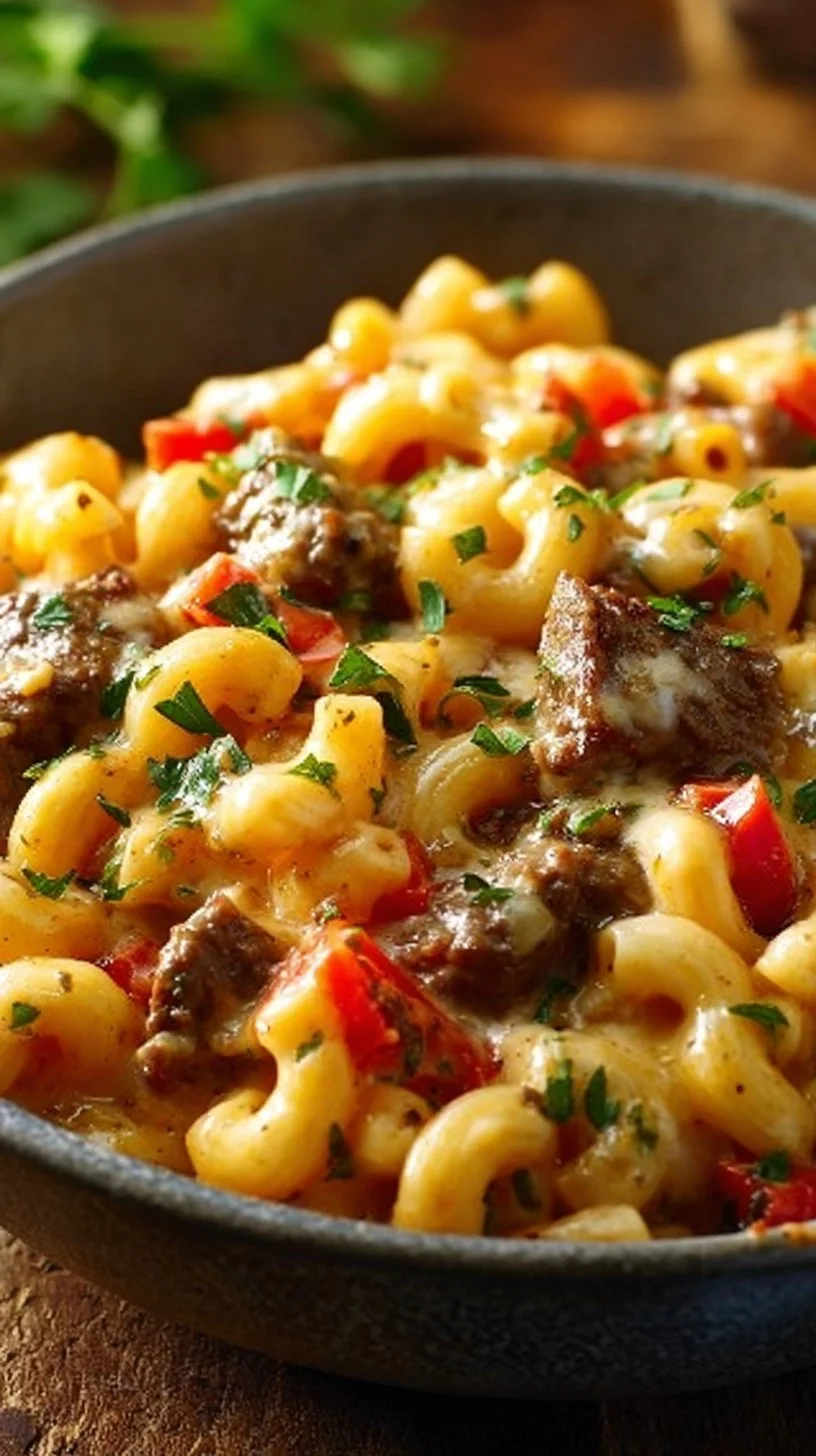
Hello — I’m Carla Carter, Founder & Recipe Developer of RecipesCabin. If you’re looking for a comforting, protein-forward meal that feels indulgent without being fussy, this High-Protein Creamy Philly Cheesesteak Mac & Cheese Bliss is for you. It’s a great one-pan dinner that brings together familiar flavors—savory beef, soft sautéed peppers and onions, and a velvety cheese sauce—without any complicated techniques.
This recipe is approachable for busy weeknights and for cooks who feel nervous about timing or making a sauce. I designed it so you can focus on a few clear steps and still get a rich, restaurant-style result at home. If you enjoy simple, hearty meals, you might also like this easy protein-packed breakfast option I developed earlier: Baked Cottage Cheese Eggs. Keep reading and I’ll walk you through everything you need to feel confident at the stove.
Why this recipe is easy to get right
There are a few things about this recipe that make it forgiving and friendly:
- It’s built around basic techniques: boiling pasta, sautéing vegetables, browning ground meat, and melting cheese. Each step has clear visual cues so you know what’s happening.
- The sauce is forgiving. Because you’re melting several cheeses together with cream cheese, it’s forgiving if the heat isn’t perfect—low and steady is better than frantic high heat.
- Timing is flexible. If the pasta finishes a minute or two before the meat and veggies, that’s okay. You can reserve a little pasta water and use it to loosen the sauce later.
- Substitutions are simple and safe: whole wheat or chickpea pasta, ground turkey, or even chickpeas can work without upsetting the balance.
If you need another creamy, savory side to serve with this, my creamy cucumber salad with bacon and cheese is a fresh complement and equally easy to make: Creamy Cucumber Salad with Bacon and Cheese.
How to make High-Protein Creamy Philly Cheesesteak Mac & Cheese Bliss
I like to think of the process in three clear phases: prepare, cook, and combine.
- Prepare: Gather your ingredients and measure the pasta. Fill the pot with water and bring it to a rolling boil so it’s ready when you need it. Preparing ahead reduces stress and lets you move smoothly from one step to the next.
- Cook components: While the pasta cooks, you’ll sauté the onions, garlic, and peppers, then brown the ground beef. Treat these as two short tasks rather than one long one—sauté the vegetables until translucent and softened, then move them to the side to give the beef direct contact with the skillet. That contact helps the beef brown evenly.
- Combine and finish: Lower the heat, add the cheeses, and stir slowly until the sauce turns silky. Add the drained macaroni and mix until every noodle is coated. If the sauce seems thick, a splash of the reserved pasta water will loosen it and help it cling to the pasta.
Where to slow down: melt the cheeses gently over low heat. It’s tempting to crank the heat to speed things along, but low and slow prevents grainy, separated sauces and gives you a smooth, glossy finish.
If you like the idea of turning savory bowls into a quick comfort meal, another recipe you may enjoy is this cottage cheese pizza bowl I put together: High-Protein Cottage Cheese Pizza Bowl.
{image_template}
Ingredients
8 oz Dry Macaroni (Whole wheat or chickpea pasta can be used), 1 lb Lean Ground Beef (Can be swapped with ground turkey or chickpeas), 1 cup Chopped White Onion (Yellow onion works well as a substitute), 2 cloves Minced Garlic (Use freshly minced for maximum flavor), 2 cups Bell Peppers (Red, Green & Yellow) (Use any mix based on preference), 2 tablespoons Butter (Olive oil can be used as a healthier alternative), 8 oz Light Cream Cheese (Regular cream cheese can be used for a richer sauce), 1 cup Shredded Mozzarella (Any favorite melting cheese can substitute), 4 slices Light Cheese Slices (Any good melting cheese slice will do), 1 teaspoon Salt, 1 teaspoon Pepper, 1 teaspoon Paprika, 1/2 teaspoon Chili Flakes (Adjust to taste), 1/4 cup Fresh Parsley (Optional for garnish)
A quick look at what each ingredient brings to the party:
- Dry Macaroni: The classic shape holds sauce well and becomes tender without getting mushy if you aim for al dente. Whole wheat or chickpea pasta adds fiber and protein if you prefer.
- Lean Ground Beef: Provides the Philly-style savory base and boosts protein. Ground turkey or chickpeas are simple swaps if you want to reduce red meat.
- Chopped White Onion & Minced Garlic: These are the flavor foundation. Onions soften and sweeten as they cook; garlic adds warm, aromatic depth—freshly minced gives the best flavor.
- Bell Peppers: They add color, sweetness, and a slightly crisp texture that contrasts the creamy sauce.
- Butter (or olive oil): Used for sautéing; butter adds a rounded, rich mouthfeel while olive oil works if you’re watching saturated fat.
- Light Cream Cheese: The backbone of the creamy sauce. It melts into a thick, velvety base without needing flour or milk as a thickener.
- Shredded Mozzarella & Light Cheese Slices: These give stretch and melty texture. Using a mix creates a balanced, smooth sauce.
- Salt, Pepper, Paprika, Chili Flakes: Simple seasonings that round out flavor. Start with these amounts and adjust to your taste.
- Fresh Parsley: A bright, fresh garnish that lifts the richness on the plate.
None of these are complicated. They’re everyday ingredients that combine to create a familiar, pleasing flavor profile. Think about how each contributes—texture, richness, or brightness—and it becomes easier to swap or adapt confidently.
Directions
- Cook the macaroni: Bring a pot of salted water to a boil and add the pasta. Aim for al dente – tender but with a little bite. Drain and reserve a bit of pasta water.,
- Sauté aromatics and peppers: In a large skillet, melt butter over medium heat. Add chopped onion and sauté until translucent. Add minced garlic and cook for 30 seconds, then add bell peppers and cook until softened.,
- Brown the ground beef: Push the vegetables to the side and add the ground beef. Cook until no pink remains, then drain excess fat if necessary.,
- Season and combine: Sprinkle in salt, pepper, paprika, and chili flakes. Add cream cheese, shredded mozzarella, and cheese slices, stirring over low heat until melted into a creamy sauce.,
- Bring it all together: Add the drained macaroni to the skillet, mixing until every noodle is coated in the cheese mixture. Garnish with chopped parsley.,
- Serve hot, pairing with a green salad or steamed vegetables.
Supportive guidance for each step:
- Step 1 (Pasta): Watch for the “give”—al dente will feel tender with a slight resistance when you bite into a noodle. If you finish a minute early, rinse briefly with hot water or toss with a little oil to prevent sticking. Keep about 1/4 to 1/2 cup of the pasta water; that starchy water is your secret weapon for smoothing the sauce.
- Step 2 (Sauté): The onion should look glossy and translucent, not browned. When you add the garlic, the smell will become fragrant quickly—30 seconds is enough to avoid burning it. The peppers should soften but still hold some shape and color.
- Step 3 (Browning): Don’t overcrowd the pan. Pushing the vegetables to the side lets the meat make contact with the hot pan and brown instead of steam.
- Step 4 (Cheese stage): Reduce to low heat. You’ll see the cream cheese start to loosen and the shredded cheese begin to melt; stir gently and steadily until everything is a smooth, glossy sauce. If it feels too thick, add a tablespoon of reserved pasta water at a time.
- Step 5 (Finishing): Toss gently but thoroughly so every noodle is coated. Taste and adjust salt or chili flakes as needed.
- Step 6 (Serving): This dish is best enjoyed hot. A simple green salad or steamed veggies provides a bright contrast to the richness.
If the sauce seems grainy or separated, lowering the heat and stirring in a little reserved pasta water usually brings it back together. Small imperfections are normal—what matters is the final bite.
Key techniques you’ll practice in this recipe
This recipe helps you build practical, reusable kitchen skills:
- Boiling pasta to al dente: You’ll learn to judge doneness by bite, which is useful for any pasta dish.
- Sautéing aromatics: Watching an onion go translucent and knowing when garlic is fragrant are quick wins for flavor.
- Browning ground meat: Learning to give meat space in the pan so it browns rather than steams is a technique you’ll use in countless recipes.
- Emulsifying a cheese sauce: Melting cheeses slowly and using starchy pasta water to smooth the sauce is a small technique with big payoff—this will improve your mac, risotto, and creamy sauces.
These are foundational skills that translate to soups, stir-fries, casseroles, and more. Practicing them here will make many future recipes feel less intimidating.
Common mistakes and how to avoid them
Here are a few things that commonly go off track and simple ways to fix them:
- Pasta overcooked and mushy: Watch the cooking time and test a noodle a minute or two early. If it’s already soft, toss with a little cold water to stop the cooking and use it sooner rather than later.
- Burnt garlic: Garlic turns bitter quickly if left on high heat. Add it after the onion has softened, and stir for only about 30 seconds until fragrant.
- Sauce too thick or clumpy: Add reserved pasta water a tablespoon at a time and stir; the starch will smooth the sauce.
- Meat not browned: If the pan is overcrowded, the meat will release moisture and steam. Brown in batches or push vegetables aside so the meat is in direct contact with the hot pan.
- Sauce breaking (separating): Lower the heat and stir gently. A little pasta water often brings it back together.
If something looks or tastes different from what you expected, I promise you can usually adjust rather than starting over. Simple additions—hot water, a pat of butter, or a squeeze of lemon—can rescue texture or brighten flavor.
If you enjoy baking treats to go with weeknight meals, consider making a batch of these high-protein cookies for a portable snack: High-Protein Cottage Cheese Cookies.
How to adjust confidently without changing the recipe
You’re not changing the recipe when you adjust portions or preferences—think of these as conceptual tweaks:
- Scaling portions: To serve more people, you can double the recipe, but cook the meat in a larger skillet or in batches so it browns properly. For fewer servings, reduce quantities proportionally.
- Flavors: If you like more heat, increase the chili flakes slightly at the seasoning step. If you prefer milder food, omit them or serve them on the table.
- Texture: For a creamier sauce, use regular cream cheese and full-fat shredded cheese; for a lighter texture, choose whole wheat or chickpea pasta which holds a bit more firmness.
- Protein swaps: The recipe works well with ground turkey or a vegetarian option like chickpeas—those choices will alter flavor but not the technique.
Remember: these adjustments are about preserving the method while tailoring the outcome to your household’s preferences. Small changes are fine; the structure of the recipe stays the same.
Serving, storage, and reheating made simple
Serving: This is happiest hot from the stove. Pair it with a crisp green salad or steamed vegetables to cut through the richness. Sprinkle chopped parsley on top for a fresh pop of color and flavor.
Storage: Cool leftovers within two hours and store in an airtight container in the refrigerator for up to 3–4 days. Because it contains dairy and meat, keep it chilled.
Reheating: Reheat gently on the stovetop over low heat with a splash of water or milk to help loosen the sauce, stirring until warmed through. If using a microwave, cover and heat in 30-second intervals, stirring between each, and add a tablespoon or two of liquid if the sauce tightens.
Leftovers often taste even better after a day, as flavors meld—just take care with reheating to preserve creamy texture.
Questions new cooks often ask about this recipe
- How long will this take? From start to finish expect about 25–35 minutes, depending on your pasta and how quickly you chop vegetables.
- Do I need special equipment? No—just a pot for pasta and a large skillet for the sauté and sauce will do.
- Is it normal for the sauce to look thick at first? Yes. As you stir the cheeses over low heat and add pasta, the sauce loosens and becomes glossy.
- What if my cheese clumps? Lower the heat, stir patiently, and add a splash of reserved pasta water. Clumping usually comes from too-high heat or not enough moisture.
- Can I make this ahead? You can prepare components separately—cook the pasta and the meat/veg, then cool and store. Reheat and combine with the cheeses just before serving for the best texture.
If a step feels unfamiliar, slow down and focus on the visual cues I’ve described. Cooking is a process of learning through doing, and every attempt builds confidence.
Final encouragement from Carla
Cooking is a kind, practical skill. This High-Protein Creamy Philly Cheesesteak Mac & Cheese Bliss is designed to give you a delicious win with straightforward steps and flexible choices. If things aren’t perfect the first time, that’s okay—small adjustments are part of learning, and your next try will feel easier. Keep practicing these basic techniques and celebrate the progress, not perfection.
Warmly,
Carla Carter
Founder & Recipe Developer, RecipesCabin
Conclusion
If you want more pasta ideas that follow simple, reliable methods, check out this collection of pasta and noodle recipes for inspiration: Pasta & Noodles | Zoe Dishes. For another take on cozy, comforting mac and cheese-style cooking, this baked boxed mac and cheese write-up is a helpful reference: Baked Boxed Mac and Cheese Recipe | Good. Food. Stories.
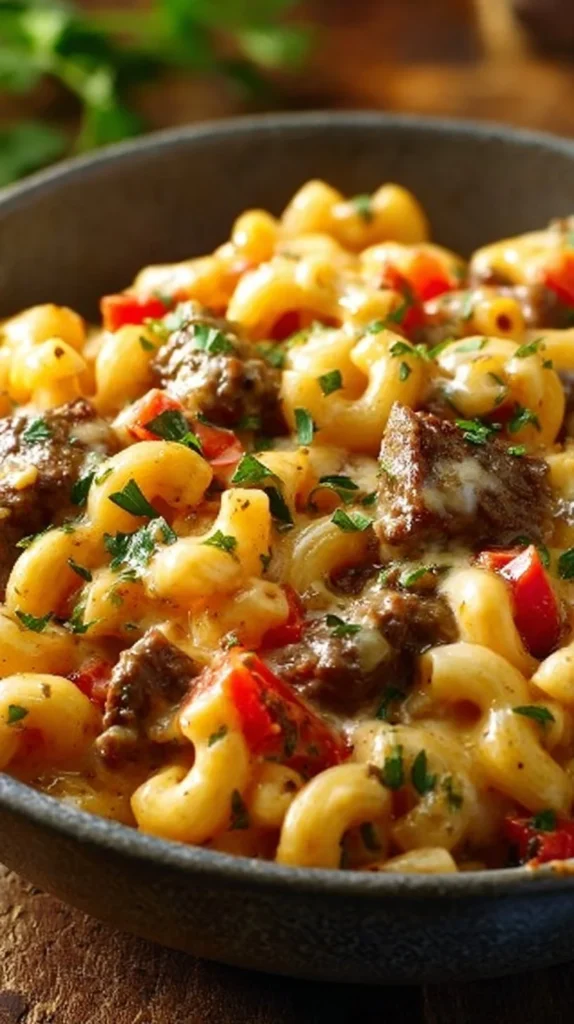
High-Protein Creamy Philly Cheesesteak Mac & Cheese Bliss
Ingredients
Method
- Bring a pot of salted water to a boil and add the pasta. Aim for al dente – tender but with a little bite. Drain and reserve a bit of pasta water.
- In a large skillet, melt butter over medium heat. Add chopped onion and sauté until translucent. Add minced garlic and cook for 30 seconds, then add bell peppers and cook until softened.
- Push the vegetables to the side and add the ground beef. Cook until no pink remains, then drain excess fat if necessary.
- Sprinkle in salt, pepper, paprika, and chili flakes. Add cream cheese, shredded mozzarella, and cheese slices, stirring over low heat until melted into a creamy sauce.
- Add the drained macaroni to the skillet, mixing until every noodle is coated in the cheese mixture. Garnish with chopped parsley.
- Serve hot, pairing with a green salad or steamed vegetables.