High-Fiber High-Protein Vegetarian Taco Skillet
Introduction
This High-Fiber High-Protein Vegetarian Taco Skillet is the kind of weeknight recipe I keep returning to because it balances familiarity and ease without feeling heavy. It brings together simple pantry and produce items into a single skillet meal that tastes like comfort—think warm spices and melty cheese—while staying reasonably light through portion and ingredient choices. It’s the sort of dish that fits neatly into a busy week: quick enough for a weeknight dinner, flexible enough for a reheated lunch, and sturdy enough to be part of a repeat-cooking rotation alongside other reliable recipes like my take on the High-Protein Vegetarian Taco Skillet recipe I reference when I want a similar crowd-pleasing base.
I approach meals like this as building blocks: modest prep, dependable flavors, and room to personalize without complicating the process. The skillet finishes quickly, it’s satisfying because of the protein and fiber combo, and it uses cooking methods that keep textures bright rather than heavy. If you appreciate practical meals that feel lighter and still comforting, this one will likely become a regular.
How this recipe fits into a balanced lifestyle
This taco skillet is less about restriction and more about sensible combinations that keep you satisfied. The quinoa and black beans provide plant-based protein and fiber, which helps meals feel filling while supporting steady energy. Vegetables—bell pepper, zucchini, onion, and corn—bring fresh textures and volume so you can eat a good portion without piling on richness. A modest amount of cheese and a bit of avocado or Greek yogurt on top give the meal its indulgent notes without dominating the plate.
Because the recipe is straightforward, it fits naturally into a weekly routine where you might alternate heavier or more elaborate dinners with lighter, efficient ones. It’s easy to pair with a simple salad or a couple of warmed tortillas depending on the mood of the night. If you enjoy rotating flavors, this skillet sits comfortably next to other well-rounded options—like an easy cottage cheese pizza bowl or a weekend brunch spread—and won’t make you feel like you’re missing out.
The point is balance: enough flavor and comforting elements to be satisfying, with thoughtful ingredient choices and sensible portions to keep the meal feeling lighter overall. No extremes, just good everyday cooking.
How to make High-Fiber High-Protein Vegetarian Taco Skillet
Overall cooking flow is simple: cook the quinoa, sauté the vegetables, bring everything together with the beans and spices, melt the cheese, and finish with fresh toppings. The sequence is forgiving—quinoa can be prepared ahead, and the sauté step rewards attention to texture rather than speed. Where simplicity matters most is in seasoning and timing: modest spices and a short sauté keep vegetables lively, and covering the pan briefly lets cheese melt without overcooking the mix.
Approach this recipe without overthinking. Read the ingredient list once, get the quinoa going, and use that time to chop the vegetables. Use medium heat for the sauté so the onion softens and the pepper releases sweetness without burning. At the end, taste and adjust salt and pepper; small tweaks there make a big difference. If you enjoy batch-friendly meals, cook extra quinoa and beans at the start of the week so assembly becomes even faster.
I often keep a few go-to, small techniques in mind while making skillet meals like this: control moisture by not overcrowding the pan, build flavor by softening aromatics first, and finish with a cool, creamy top (avocado or yogurt) to balance warmth and spice. If you’re short on time, you can also reheat leftovers gently and refresh them with a squeeze of lime or a handful of fresh herbs.
I like to pair tips for quick assembly with inspiration from other simple recipes—when I’m planning a week, I think about how this skillet complements quick bites like high-protein bagel bites or easy breakfast options so mornings and evenings feel cohesive.
Ingredients
1 cup quinoa, 1 can black beans, rinsed and drained, 1 bell pepper, chopped, 1 zucchini, chopped, 1 onion, chopped, 1 cup corn (frozen or fresh), 1 teaspoon cumin, 1 teaspoon chili powder, Salt and pepper to taste, 1 cup shredded cheese (cheddar or your choice), 1 avocado, sliced, Sour cream or Greek yogurt for topping
Each part of this ingredient list plays a clear role:
- 1 cup quinoa: Quinoa is the backbone here—it brings texture, a neutral nutty flavor, and plant-based protein. It cooks quickly and holds up well in a skillet without collapsing into mush if not over-stirred.
- 1 can black beans, rinsed and drained: Beans add bulk and creamy, savory body. Rinsing removes excess sodium and the canned brine, keeping flavors clean.
- 1 bell pepper, chopped: Bell pepper contributes sweetness, color, and crispness. It brightens the dish visually and texturally.
- 1 zucchini, chopped: Zucchini softens quickly and offers a gentle, fresh bite that keeps the skillet feeling lighter than denser veggies might.
- 1 onion, chopped: Onion is foundational for flavor—softening it first builds savory depth that carries the spices.
- 1 cup corn (frozen or fresh): Corn adds kernels of sweetness and a pop of texture; frozen is fine and convenient.
- 1 teaspoon cumin, 1 teaspoon chili powder: These spices give the skillet its taco-inspired flavor without needing a complicated mix. They’re warming and aromatic, not overpowering.
- Salt and pepper to taste: Simple seasonings that make everything sing—season thoughtfully and taste as you go.
- 1 cup shredded cheese (cheddar or your choice): Cheese ties the ingredients together, adding creaminess and a satisfying finish. Use what you like—cheddar is classic, but a milder or sharper cheese changes the note subtly.
- 1 avocado, sliced: Avocado brings a cool, buttery contrast to the warm skillet, balancing spices and melted cheese.
- Sour cream or Greek yogurt for topping: A dollop adds tang and silkiness that contrasts the textures and keeps the overall mouthfeel from feeling too heavy.
Mindful ingredient choices matter here: pick a good-quality canned bean, a sturdy quinoa, and fresh produce when you can. The balance is achieved by combining volume (vegetables) with protein and a small amount of richness (cheese and avocado), not by rigid limits.
Directions
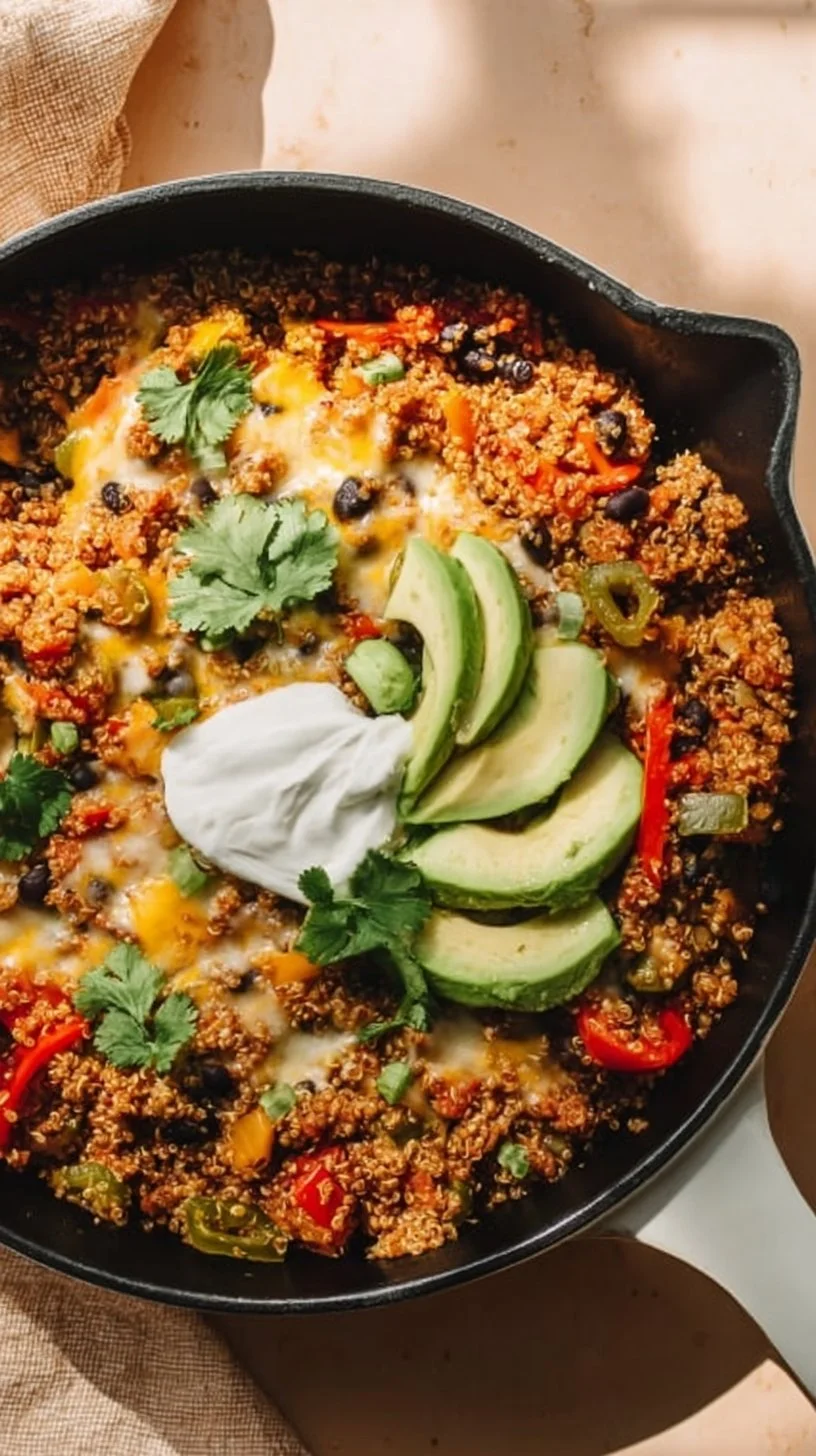
- In a skillet, cook quinoa according to package instructions., 2. In another pan, sauté onion and bell pepper until soft., 3. Add zucchini and corn, and cook for a few more minutes., 4. Stir in black beans, cooked quinoa, cumin, chili powder, salt, and pepper., 5. Mix well and sprinkle cheese on top., 6. Cover until the cheese is melted., 7. Serve topped with sliced avocado and a dollop of sour cream or Greek yogurt.
As you work through these steps, here are practical signposts and gentle reminders:
- Step 1 (quinoa): Follow package instructions for liquid ratio and timing. A common ratio is 2 parts water to 1 part quinoa; bring to a simmer, cover, reduce heat, and cook until the grains are fluffy and the little germ ring appears. Fluff with a fork and set aside to keep the texture light.
- Step 2 (sauté onion and bell pepper): Look for translucent onion and softened pepper with a bit of browning at the edges—this develops flavor. Use medium heat and don’t rush; good flavor comes from gentle caramelization.
- Step 3 (add zucchini and corn): Zucchini cooks fast. You want it tender but not mushy—bite through a piece to check. If using frozen corn, a few minutes will thaw and cook it through.
- Step 4 (stir in beans, quinoa, spices): Warm the black beans through so they’re integrated but still hold their shape. Add spices incrementally and stir, then taste. A small pinch more salt or pepper toward the end often balances everything.
- Step 5 and 6 (cheese and melting): After mixing, sprinkle the cheese across the surface so it melts evenly. Covering the pan traps steam and melts the cheese without overcooking the vegetables; 1–2 minutes is usually enough.
- Step 7 (serve): Finish with sliced avocado and a dollop of sour cream or Greek yogurt for cool contrast. Serve immediately to enjoy the interplay of warm, melted cheese and cool, creamy toppings.
Avoid overcomplicating by keeping the seasoning straightforward and focusing on texture: a little char on the veg, fluffy quinoa, and intact beans. Taste as you go, and use the resting time of cooked quinoa to complete the produce prep so the workflow stays smooth.
The role of preparation in keeping this dish light
Preparation choices—how you cook and assemble—dictate whether a meal feels heavy or lively. Quick sautéing at moderate heat preserves vegetable texture and brightness. Overcooking zucchini or peppers turns them soft and homogenous, which can make a skillet feel denser. The goal is contrast: tender quinoa, slightly crisp vegetables, soft beans, and a creamy topping.
Using modest amounts of high-satisfaction ingredients (cheese, avocado, yogurt) rather than large quantities achieves richness without heaviness. Similarly, rinsing canned beans removes excess sodium and can prevent an overly dense bean flavor. Pre-cooking quinoa until fluffy and allowing it to steam off keeps grains separate, which helps the overall mouthfeel feel lighter and more satisfying.
Technique—heat control, timing, and tasting—matters as much as ingredient choices. A little patience during the sauté and a brief covered melt for the cheese yield a finished dish that feels composed and satisfying, rather than weighed down.
Simple ways to adjust without losing balance
You can personalize this skillet while keeping its balanced essence:
- Flavor-forward swaps: Add a squeeze of lime at the end or a sprinkle of fresh cilantro to add brightness without adding calories or heaviness.
- Texture tweaks: Toasted pumpkin seeds or a handful of chopped raw radish add crunch and contrast, keeping the meal lively.
- Spice adjustments: Increase cumin and chili powder slightly for a bolder profile, or introduce smoked paprika for a hint of smokiness—small changes in spice will shift character more than bulk.
- Protein variation conceptually: If you want more plant-protein, think about mixing in cooked lentils or extra beans in future batches, but don’t change the ingredient list for this recipe—consider these as conceptual options for different occasions.
- Making it more festive: Serve the skillet in warmed tortillas with fresh salsa for a heartier meal, but keep portions mindful to maintain balance.
These adjustments keep the dish flavorful and adaptable while preserving its intention: satisfying, light, and straightforward.
Pairing ideas for a complete, well-rounded meal
A few thoughtful sides will round this out without excess:
- A simple green salad with a citrus vinaigrette offers a bright counterpoint and adds volume to the plate.
- Warm corn or whole-grain tortillas provide a hand-held option without heavy sides—use one or two per person, with the skillet as the filling.
- A light pickled slaw (cabbage, a little salt, sugar, and vinegar) brings acidity and crunch that complements the creamy avocado.
- For a heartier option, a small side of roasted sweet potatoes adds sweetness and substance without overwhelming the balance.
Aim for complementary textures—crisp raw, creamy cool, warm and savory—so one meal feels complete without adding unnecessary heaviness.
Storage, leftovers, and next-day enjoyment
This skillet stores and reheats well, which is part of its everyday usefulness. Cool the dish to room temperature within an hour, then transfer to airtight containers. Refrigerate for up to 3–4 days. If you want to keep things even fresher, store avocado slices separately and add them at serving time.
When reheating, do so gently: a skillet over low-medium heat with a splash of water or a few drops of oil helps loosen any clinging bits and prevents drying. Microwave reheating works too—cover loosely and stir halfway through to keep textures even. If you pair leftovers with warm tortillas the next day, the meal feels new; this same approach helps when you plan to mix it into scrambled eggs or use as a filling for a quick wrap—ideas I often borrow from planning weekday meals alongside options like high-protein breakfast burritos.
Label containers with the date and use within the recommended timeframe for best taste and texture.
Common questions about lighter everyday cooking
Q: How do I know the right portion size?
A: Think in balanced plates: a palm-sized portion of protein-rich elements (quinoa + beans), a generous scoop of vegetables, and small amounts of richer items (cheese, avocado). Portion sizes are personal; tune them to your appetite and activity level.
Q: Can I meal-prep this for the week?
A: Yes—quinoa and beans can be cooked in advance, and vegetables can be chopped ahead. Assemble and lightly reheat for quick dinners. Keep creamy toppings separate until serving.
Q: How do I keep repeated meals interesting?
A: Small finishing touches change the experience: swap herbs, add citrus, change toppings, or serve with a different side. Repeating the core recipe feels less monotonous when you vary condiments and textures.
Q: How can lighter meals still feel comforting?
A: Use modest amounts of elements you love—melty cheese, a touch of sour cream, avocado—and focus on satisfying textures: chew from quinoa, creaminess from beans, pop from corn. Comfort comes from those sensory contrasts more than sheer richness.
Final thoughts from Daniel
Cook this skillet with intention, not rigidity. It’s designed to be practical: approachable ingredients, straightforward steps, and flavors that please without requiring fuss. Balance is a practice—some nights you’ll want more richness, other nights more simplicity—and recipes like this give you that flexibility. Trust your seasoning, pay attention to texture, and allow yourself small, enjoyable finishing touches. This High-Fiber High-Protein Vegetarian Taco Skillet earns a spot in regular rotation because it’s reliable, adaptable, and consistently satisfying.
Conclusion
If you enjoy one-pan comfort with a lighter feel, you might also appreciate a similar approach in other kitchens—this One Pan Vegetarian Mexican Taco Skillet from Nourished by Nic is a nice companion idea for when you want that same ease with a slightly different twist.