Ground Beef Hot Honey Bowl
Introduction
The Ground Beef Hot Honey Bowl is a simple, satisfying meal that’s built for real life: busy evenings, small kitchens, and cooks who want a flavorful dinner without a lot of worry. This recipe is for anyone who wants comfort food with a bright kick — whether you’re new to the stove or returning to cooking after a break.
It’s approachable because the flavors are straightforward and the steps are familiar: roast, sauté, assemble, and finish with a sweet-spicy drizzle. If you enjoy bowls that balance warm roasted vegetables and seasoned meat with creamy coolness, you might also like my honey sriracha salmon bowls, which play with a similar sweet-and-spicy idea. I’ll walk you through each part so you feel calm and capable — I promise you can do this.
Why this recipe is easy to get right
This recipe is forgiving in a few important ways. First, the two main components — roasted sweet potatoes and seasoned ground beef — are both tolerant of small timing differences. Roasted sweet potatoes that cook a few minutes longer will still be tasty; browned beef that’s a little more well-done still works in the bowl. Second, textures and flavors contrast so well that small imperfections are hidden: a slightly under-roasted piece of potato is cushioned by creamy cottage cheese, and the hot honey ties everything together.
You don’t need precise technique. The roast step is mostly about giving the potatoes time to caramelize; if your oven runs hot or cool, watch for color rather than a strict time. For the beef, breaking it apart and letting it brown creates flavor — you can practice a gentle hand and adjust seasoning to taste. The assembly is visual and intuitive: arrange components in layers and drizzle the hot honey where you like it. That flexibility makes this bowl perfect for cooks at any level.
How to make Ground Beef Hot Honey Bowl
Overall flow: roast the sweet potatoes, cook the seasoned ground beef, prepare the avocado and cottage cheese, then assemble and finish with hot honey and any garnishes. Start with the potatoes because they take the longest. While they are roasting, you’ll sauté the onion and cook the beef so several things finish around the same time.
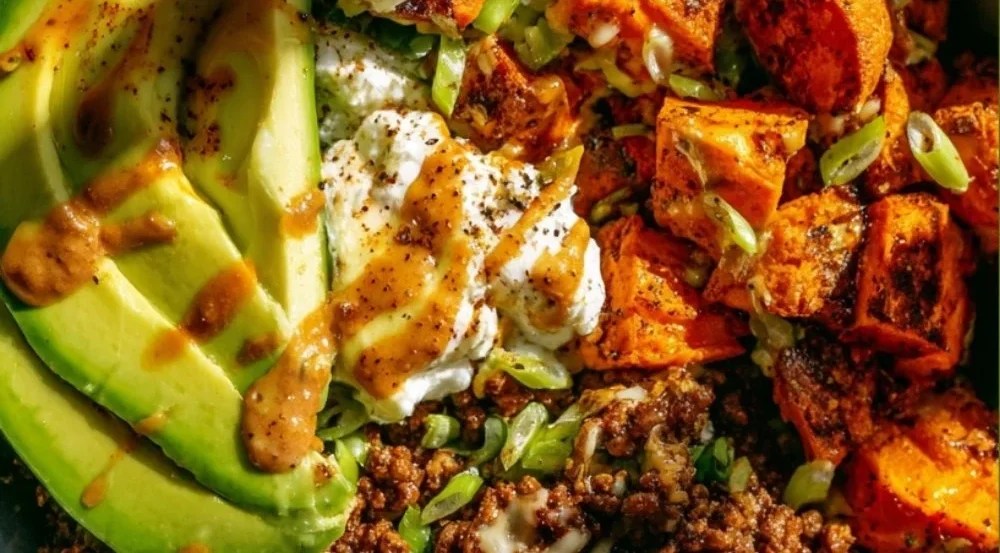
First: get the oven going and toss the sweet potatoes with oil and spices. You’re aiming for pieces that are browned and tender — that texture is what makes the bowl cozy. Second: sauté the onion until it’s soft, then add the beef and taco seasoning. Watch for moisture to release and then evaporate so the beef browns rather than stews. Last: assemble — potatoes on the bottom, beef next, then avocado and cottage cheese, and finish with the hot honey.
Beginners should slow down at two places: when you flip or stir the potatoes (so they brown evenly rather than break apart) and when you break up the beef in the skillet (so you get nice browned bits). If you want a pattern to follow, check the potatoes at about 30 minutes and the beef at about 6 minutes — those are checkpoints that tell you you’re on track. If anything seems off, small fixes can often bring it back without starting over.
Also, if you enjoy bowls with other flavor profiles, you can look at different bowl ideas for inspiration; for example, this potsticker noodle bowl gives another way to think about layering textures and sauces.
Ingredients
1 lb lean ground beef (93%), 2 medium sweet potatoes, peeled and diced, 1 sliced avocado, 1 cup cottage cheese, 1 diced yellow onion, 2 tbsp olive oil, 1 packet taco seasoning (or 2 tbsp), 2 tbsp hot honey, ½ tsp paprika, ½ tsp garlic powder, ¼ tsp ground cinnamon, Salt and pepper, to taste, Optional: chopped cilantro, red pepper flakes, lime juice
- 1 lb lean ground beef (93%): This is the protein and savory anchor of the bowl. Using lean beef keeps the texture light and prevents too much oil in the pan.
- 2 medium sweet potatoes, peeled and diced: Sweet potatoes roast beautifully — they become tender with caramelized edges that add sweetness and a soft, pleasant bite.
- 1 sliced avocado: Adds creaminess and a cooling contrast to the hot honey, and it makes the bowl feel indulgent without effort.
- 1 cup cottage cheese: Another creamy element; it’s slightly tangy and pairs well with the sweet potatoes and spicy honey.
- 1 diced yellow onion: Adds sweetness and savory depth when sautéed.
- 2 tbsp olive oil: Divided use — one for roasting, one for sautéing; it helps carry flavor and promote browning.
- 1 packet taco seasoning (or 2 tbsp): A shortcut for a balanced flavor: savory, salty, and a little smoky.
- 2 tbsp hot honey: The finishing touch. It adds heat and sweetness, the main personality of the bowl.
- ½ tsp paprika, ½ tsp garlic powder, ¼ tsp ground cinnamon: The spice trio for the sweet potatoes — paprika adds color and mild smoke, garlic powder keeps a savory note, and cinnamon enhances their natural sweetness.
- Salt and pepper: Basic but crucial for lifting flavors.
- Optional: chopped cilantro, red pepper flakes, lime juice: Small extras that brighten and lift the finished bowl if you like.
None of these items are complicated — they’re pantry-friendly and easy to measure. Together they form a balanced plate: sweet, savory, spicy, creamy, and tangy.
Directions
Preheat oven to 400°F (200°C). Toss diced sweet potatoes with 1 tbsp olive oil, paprika, garlic powder, cinnamon, salt, and pepper. Roast for 40–45 minutes, stirring halfway., id=”instruction-step-2″>2. Heat 1 tbsp olive oil in a skillet over medium heat. Sauté diced onion until soft, about 3–4 minutes., “instruction-step-3″>3. Add ground beef to the skillet. Cook for 6–8 minutes, breaking apart. Stir in taco seasoning, salt, and pepper. Cook until browned., nstruction-step-4″>4. Assemble bowls: sweet potatoes on bottom, then ground beef, avocado slices, and a scoop of cottage cheese., nstruction-step-5″>5. Drizzle hot honey generously over each bowl. Add optional garnishes if desired., nstruction-step-6″>6. Serve immediately and enjoy while warm.
Supportive guidance around the steps:
- Roasting the sweet potatoes: You’re looking for golden-brown edges and a soft interior. At about 30 minutes, give them a stir and press one piece gently with a spatula — it should mash slightly if it’s done. If they’re browning quickly but still firm, reduce oven temp slightly and give them a few more minutes.
- Sautéing the onion: Watch for the pieces to turn translucent and smell sweet — that’s when the sugars have released and they’ll mix beautifully with the beef. If the pan looks dry, add a splash of the second tablespoon of oil.
- Cooking the beef: As you add the ground beef, press it down and then let it sit for 30–60 seconds before stirring. That gives the beef a chance to brown and develop flavor. Break it apart with a spatula; when the meat is mostly browned and no longer pink, that’s your cue to add the taco seasoning so the spices toast slightly and coat the beef.
- Assembling: There’s no “wrong” way to layer the bowl. Put the potatoes down first for a warm base, top with beef so the flavors meet, and add avocado and cottage cheese so their coolness offsets the honey. Drizzle the hot honey slowly — you can always add more.
- Serving: Right after assembly is best, so the contrast between warm and cool components is at its peak. If your bowl looks a bit less neat, that’s totally fine — the flavors are what matter.
Key techniques you’ll practice in this recipe
- Roasting for caramelization: You’ll learn how dry heat transforms the sugars in vegetables into brown, sweet edges. The key is even-sized dice and periodic stirring so pieces cook consistently.
- Browning ground beef: This teaches you to control heat so meat develops savory browning instead of steaming. Watch for moisture to evaporate, then let the meat touch the pan to get color.
- Layering flavors: Balancing hot, sweet, and cool components is a fundamental bowl-building skill. You’ll practice tasting and adjusting — a small sprinkle of salt or a squeeze of lime can change the whole balance.
- Simple finishing — drizzling a sauce: The hot honey finish shows how a small final touch can elevate the entire dish. Learning to add a sauce at the end preserves both texture and flavor contrast.
These basics transfer to many recipes: roasted vegetables, skillet meats, composed salads, and so on. They’re foundations that build confidence.
Common mistakes and how to avoid them
- Potatoes not browning: If your sweet potatoes steam instead of roast, the likely causes are crowding the pan or using too little oil. Spread them on a single layer and don’t be afraid to use that tablespoon of oil — you want some contact with the hot pan or baking sheet.
- Beef steaming in the pan: That happens when the pan is too crowded or not hot enough. Work with a wide skillet and a moderate medium heat. If the pan looks like it has a lot of liquid, increase heat slightly and let the liquid evaporate before stirring.
- Avocado turning brown: Slice it right before serving and, if you have lime juice on hand, a light squeeze slows oxidation. But even a slightly browned edge won’t ruin the bowl — it’s still delicious.
- Over-salting: Taste before adding extra salt. The taco seasoning packet already contains salt, and cottage cheese can be salty too. Add sparingly, then adjust at the end.
- Hot honey too strong: If the honey feels too spicy, drizzle less and offer more on the side. The goal is a balance that enhances rather than overwhelms.
If something goes off track, small fixes often work: drain excess liquid from the beef, roast potatoes a little longer, or add a squeeze of lime to brighten up the whole bowl.
How to adjust confidently without changing the recipe
You asked me not to change the ingredients or steps — and that’s exactly what we’ll do. But you can still adjust conceptually:
- Portion scaling: For more people, multiply ingredients evenly; for fewer, divide by two. The timing for roasting and skillet cooking won’t change much for the same thickness of sweet potato dice or the same skillet size.
- Flavor preferences: Prefer more heat? Add red pepper flakes as a garnish rather than mixing them in — that keeps the base recipe intact. Want more creaminess? Add an extra dollop of cottage cheese at serving time.
- Texture tweaks: If you like crispier potatoes, cut them slightly smaller for more surface area. For softer potatoes, cut larger or roast a few minutes longer. These are conceptual tweaks — the written steps and ingredient list remain the same, but you’re choosing how those elements finish.
These small choices let you personalize the bowl while keeping the recipe intact.
Serving, storage, and reheating made simple
Serving: Build individual bowls and finish each with hot honey. Offer optional garnishes like cilantro, red pepper flakes, or a lime wedge so everyone can customize. Serve promptly so warm and cool components contrast.
Storage: Store leftovers in an airtight container in the fridge for up to 3 days. Keep any extra hot honey separate if possible to preserve its texture and flavor. If you plan to store for a couple of days, consider keeping avocado slices apart; they’re best fresh.
Reheating: Warm leftover roasted sweet potatoes and beef gently in a skillet over medium-low heat with a splash of water or oil to prevent drying. Reheat in short bursts if using a microwave (30–45 seconds), then stir and check the temperature. Add fresh avocado and cottage cheese after reheating so they stay cool and creamy. A final drizzle of hot honey right before eating brings everything back to life.
Questions new cooks often ask about this recipe
- How do I know when the potatoes are done? They’ll be golden around the edges and tender when pierced with a fork. The texture should be soft inside with some crisp on the outside.
- What size pan should I use for the beef? A medium to large skillet gives the beef room to brown. A crowded pan traps steam.
- Is it normal if the beef has a little liquid? Yes — as it cooks, juices release. Allow a minute or two for the liquid to evaporate so the beef can brown. If there’s too much, drain a little.
- My potatoes stuck to the pan — what went wrong? Either the pan was too hot initially or they were crowded and didn’t get a chance to form a crust. Use a single layer and stir halfway through roasting.
- Can I make parts ahead? Yes — roast the sweet potatoes and cook the beef ahead, then reheat and assemble. Keep avocado and cottage cheese until serving.
If you feel uncertain at any point, pause and check: look at the color, smell for toasted aromas, and use gentle presses to test texture. Those visual and tactile checks are your best friends.
Final encouragement from Carla
Cooking is practice, not perfection. This Ground Beef Hot Honey Bowl is designed to teach small, transferable skills while delivering a warm, satisfying meal. If something isn’t perfect the first time, that’s okay — you’re learning the look, smells, and textures that tell you when something is done. Every time you cook, you get a little more comfortable, and that confidence grows quickly.
Be patient with yourself, taste as you go, and remember that small adjustments are part of the process. You can make this bowl your own, and the next time you’ll know exactly what to look for.
Conclusion
If you want to see a viral take that inspired many similar bowls, take a look at this Viral Hot Honey Ground Beef Bowls – Jar Of Lemons for visual ideas and to feel inspired. Keep practicing, and enjoy the process — you’re doing great.