One-Pan Chicken Sausage and Orzo
Introduction
This One-Pan Chicken Sausage and Orzo is for anyone who wants a comforting, home-cooked meal without a lot of fuss. If you’re new to cooking, returning after a kitchen hiatus, or have had past dinner mishaps, this recipe is gentle and predictable — the kind of dish that helps build confidence. It uses simple ingredients, one skillet, and clear checkpoints that tell you what’s happening at every stage.
If you enjoy hands-off, skillet meals, this recipe sits in the same family as other easy weeknight favorites — I often pair it mentally with dishes like Creamy Chicken and Rice when I plan a low-stress dinner week. You’ll learn small, useful skills while making something that looks and tastes special, even when you’re not trying to impress anyone but yourself.
Why this recipe is easy to get right
There are a few reasons this recipe is forgiving. First, it’s one-pan: everything cooks together, so flavors blend and there’s less chance of overcooking separate components. The orzo absorbs the chicken broth gradually, which gives you visual cues — you can see the liquid level drop and the pasta plump up. If the broth reduces a little sooner than expected, a splash more will save the day.
Texture tolerance is generous here; orzo is small and quick to reach al dente, and the sausage is already cooked or easy to brown. You don’t need precise timing for perfect results — aim for the pasta to be tender with a slight bite, and the sausage to be golden. The recipe allows flexibility with salt and pepper to suit your taste, and the parmesan at the end ties everything into a creamy finish even if the sauce isn’t perfectly silky.
How to make One-Pan Chicken Sausage and Orzo
At the stove, the flow is straightforward: brown the sausage, add aromatics, combine grains and vegetables, add broth, simmer until the orzo is nearly done, then finish with cheese.
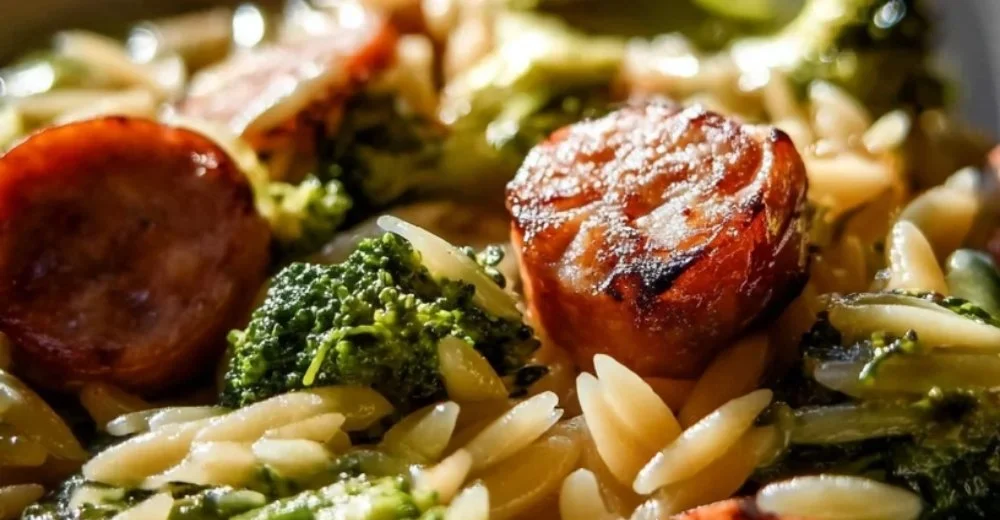
First: heat the oil and brown the chicken sausage. Browning adds flavor and a slightly caramelized edge; look for a golden color and a confident sizzle when the sausage hits the pan.
Next: add the minced garlic. Garlic cooks fast — you’re just softening it to release aroma. It should smell fragrant and take on a faint golden tint, not burn.
Then: add orzo and broccoli, pour in the broth, and season. At this point the orzo will float, and the broccoli will be bright green. Bring everything to a boil to start cooking the pasta, then reduce heat to a gentle simmer so the liquid can be absorbed steadily without boiling over.
Finally: simmer until the orzo is al dente and most of the liquid is absorbed, then stir in parmesan to melt into a creamy finish. Focus on texture — the orzo should be tender, the broccoli cooked through but still crisp-tender, and the sausage heated and well integrated.
If you’re a beginner, slow down at the browning stage so you learn how the skillet behaves and how aromas change. That’s where you’ll get the most feedback from the food.
Ingredients
1 pound chicken sausage, 1 cup orzo pasta, 2 cups broccoli florets, 2 cloves garlic, minced, 1 cup parmesan cheese, grated, 4 cups chicken broth, Salt and pepper to taste, Olive oil
Each ingredient plays a clear role:
- 1 pound chicken sausage: Provides protein, savory flavor, and richness. Chicken sausage often contains herbs or mild spices that add character without extra steps.
- 1 cup orzo pasta: Acts as the starchy base that soaks up broth and carries flavor. Orzo cooks quickly and creates a comforting texture similar to rice.
- 2 cups broccoli florets: Add color, nutrition, and a crisp contrast to the soft orzo. Broccoli’s bright green signals it’s cooked just right.
- 2 cloves garlic, minced: Gives an aromatic backbone. A small amount goes a long way, and it softens quickly, releasing a warm, inviting scent.
- 1 cup parmesan cheese, grated: Melts into the hot orzo to create a glossy, creamy finish. It also adds a savory, salty lift.
- 4 cups chicken broth: The cooking liquid that flavors and hydrates the orzo. Using broth instead of water deepens the overall taste.
- Salt and pepper to taste: Simple seasonings that sharpen flavors. Taste before and after adding cheese because parmesan adds saltiness.
- Olive oil: For browning the sausage and gently cooking garlic. It helps build the initial flavor foundation.
None of these are intimidating — they’re pantry-friendly and behave predictably. Together they balance protein, starch, vegetables, and seasoning for a satisfying one-pan meal. If you enjoy light sides, try a crisp salad like my Creamy Cucumber Salad with Bacon and Cheese to round out the plate.
Directions
- Heat a splash of olive oil in a large skillet over medium heat.
- Add the chicken sausage and cook until browned.
- Stir in the minced garlic and cook for another minute.
- Add the orzo pasta and broccoli to the skillet.
- Pour in the chicken broth, and season with salt and pepper.
- Bring the mixture to a boil, then reduce the heat and simmer until the pasta is al dente and the liquid is absorbed, about 10-12 minutes.
- Stir in the parmesan cheese until melted and creamy.
- Serve hot and enjoy!
Supportive guidance for these steps:
- Step 1: When you heat the oil, warm the pan for about 30–60 seconds before adding sausage. The oil shimmers when ready. This helps prevent sticking and encourages a nice sear.
- Step 2: Browning the sausage should produce a golden color and a pleasant aroma. If your sausage is in slices or whole links, either works; sliced sausage exposes more surface for browning. If the pan looks crowded, work in batches or nudge pieces so they can brown rather than steam.
- Step 3: Garlic cooks very quickly — about 30–60 seconds — and should smell fragrant without turning dark. If it browns too fast, lower the heat and remove the pan from the heat briefly.
- Step 4: Add the orzo and broccoli so the orzo can start to toast slightly and the broccoli warms through. You’ll see tiny grains of orzo glisten and broccoli brighten.
- Step 5: Pour in the broth so the orzo has enough liquid to absorb. Taste the broth before adding salt if it’s store-bought — some are saltier than others. Season lightly at first.
- Step 6: Bring to a boil so the contents start cooking evenly, then reduce to a simmer. Watch the liquid level; the orzo will swell and the broth will lower. Stir occasionally to prevent sticking and to check doneness. The given time of 10–12 minutes is a good guideline — test the orzo at 8 minutes for a bite, then every couple minutes until you like the texture.
- Step 7: Stir in parmesan off the heat or on very low heat so it melts into a glossy, slightly creamy coating. If the mixture looks a bit dry, a splash of broth or a drizzle of olive oil will help.
- Step 8: Serve right away. The dish is best warm, when the orzo is tender and the cheese is melted into a silky finish.
If things don’t look perfect — perhaps the liquid is absorbed but the orzo still feels slightly firm — add 1/4 cup extra broth or water and simmer a few more minutes. Small adjustments are part of cooking and don’t mean failure.
Key techniques you’ll practice in this recipe
- Browning: Learning to brown sausage builds flavor and teaches you how heat and contact with the pan change food color and taste. It’s a technique you’ll use for many proteins.
- Sautéing aromatics: Cooking garlic briefly until fragrant without burning it is essential for flavor. You’ll practice controlling heat and sensory cues.
- Simmering and timing starches: Watching orzo absorb liquid helps you understand how pastas and grains cook and how to judge doneness by texture rather than time alone.
- Finishing with cheese: Adding parmesan at the end to melt in shows how a final ingredient can transform a dish’s texture, binding liquids into a creamy sauce.
These are foundational skills that transfer to soups, risottos, pasta dishes, and many one-pan meals. They’ll give you confidence in handling heat and timing.
Common mistakes and how to avoid them
- Mistake: Garlic burning during step 3. Fix: Reduce heat, stir immediately, or remove the pan briefly. Burnt garlic tastes bitter — if that happens, start over with fresh garlic; the rest of the dish may be salvageable, but the burnt flavor can dominate.
- Mistake: Orzo sticking to the pan or clumping. Fix: Stir every few minutes as it simmers and make sure there’s enough broth to keep it moving. Using a wide skillet helps spread the orzo so it cooks evenly.
- Mistake: Broth evaporates too quickly and the orzo is undercooked. Fix: Add a small amount of hot water or broth (1/4 cup at a time) while simmering until the orzo is done.
- Mistake: Overcooked broccoli becomes mushy. Fix: Add the broccoli a little later in the process if you prefer it firmer, or use smaller florets that cook quickly. Bright green color and a slight resistance when you bite them are good signs.
- Mistake: Too salty at the end. Fix: Taste before adding salt and remember parmesan contributes salt. If it’s too salty, add a squeeze of lemon or a bit more orzo or plain cooked pasta to dilute the saltiness.
Most issues are fixable with small adjustments; you rarely need to start over.
How to adjust confidently without changing the recipe
Portion scaling: To make more servings, increase ingredients proportionally — double everything for a larger pan, but use a larger skillet so the orzo has room to cook evenly. If you’re halving the recipe, keep the same proportions and watch the liquid-to-orzo ratio carefully since evaporation behaves differently in smaller volumes.
Flavor preferences: If you like more herbal notes, add a small handful of chopped fresh parsley or basil when you stir in the parmesan. If you prefer a brighter flavor, a squeeze of lemon just before serving lifts the whole dish. These are finishing touches that don’t alter the recipe’s balance.
Texture tweaks: If you like creamier textures, stir in a tablespoon of butter with the parmesan. If you prefer a looser sauce, reserve a little extra warm broth to stir in at the end. These adjustments are conceptual ways to tailor mouthfeel without changing core ingredients or steps.
Remember: these are ideas for after you’ve mastered the basic recipe. The main goal is to get comfortable with timing and heat; small finishing changes are the fun part once you’re confident.
Serving, storage, and reheating made simple
Serving: Plate the dish hot, spooning the creamy orzo and sausage into bowls so the steam and aroma invite people to the table. A simple green salad or crusty bread pairs nicely. If you want a finishing flourish, sprinkle a touch more grated parmesan and a grind of black pepper.
Storage: Cool leftovers promptly and store in an airtight container in the refrigerator for up to 3–4 days. Because this dish has cheese, keeping it chilled helps maintain texture and food safety.
Reheating: Reheat gently on the stovetop over low heat with a splash of water or broth to loosen the orzo and restore creaminess. Microwave reheating works too — break up the cold orzo, add a tablespoon of liquid per portion, and heat in short bursts, stirring in between. Avoid high heat which can dry the dish or make the broccoli mushy.
Questions new cooks often ask about this recipe
- How do I tell when sausage is done? If you’re using pre-cooked chicken sausage, you’re looking for a golden brown color and a hot center. If it’s raw, use a meat thermometer aiming for 165°F (74°C). If you don’t have a thermometer, cut a piece open to check there’s no pink inside.
- What if my orzo finishes before the broccoli is tender? Remove the broccoli earlier or cut florets smaller so they cook faster, or add the broccoli a few minutes before the end so both finish together.
- Can I use a different grain? Conceptually yes, but timing and liquid will change. Stick to orzo for this recipe to match the directions exactly.
- Is it normal for the sauce to be a little loose or a little thick? Yes. Variations in broth absorption, pan size, and heat mean texture can vary. A splash of broth can loosen it; a bit more cheese or a quick simmer can thicken it.
- What equipment do I need? A large skillet with a lid or a big sauté pan works best so the liquid circulates and the orzo cooks evenly. No fancy tools required.
These are all normal questions — cooking is full of small decisions, and each one teaches you a little more.
Final encouragement from Carla
You don’t need perfect timing or fancy equipment to make a satisfying meal. This One-Pan Chicken Sausage and Orzo is a gentle, reliable recipe that rewards attention without demanding perfection. If the first attempt isn’t flawless, that’s okay — each time you make it you’ll notice small improvements: a slightly better sear, crisper broccoli, or creamier finish. Celebrate the progress because that’s how cooks grow.
If you’d like another simple skillet idea with a protein-forward approach and bold flavors, I often turn to dinner bowls and easy fish recipes that teach similar skills, like Honey Sriracha Salmon Bowls. Keep practicing, trust sensory cues (how food looks, smells, and feels), and remember that the goal is enjoyment and learning, not perfection.
Conclusion
If you want another take on a single-skillet orzo meal, see this helpful version of a one-pan orzo recipe on One Balanced Life, which offers a slightly different twist that can inspire small variations. For more ideas and a bright, fresh perspective on one-pan meals, check out a similar recipe by Eating Bird Food that shows how versatile this formula can be.

One-Pan Chicken Sausage and Orzo
Ingredients
Method
- Heat a splash of olive oil in a large skillet over medium heat.
- Add the chicken sausage and cook until browned.
- Stir in the minced garlic and cook for another minute.
- Add the orzo pasta and broccoli to the skillet.
- Pour in the chicken broth, and season with salt and pepper.
- Bring the mixture to a boil, then reduce the heat and simmer until the pasta is al dente and the liquid is absorbed, about 10-12 minutes.
- Stir in the parmesan cheese until melted and creamy.
- Serve hot and enjoy!