Honey Sriracha Salmon Bowls: A Sweet and Spicy Delight
Introduction
If you’re the kind of home cook who wants something that tastes special without feeling fussy, these Honey Sriracha Salmon Bowls are for you. This recipe brings together sweet, spicy, and savory flavors in a way that feels deliberate but is actually very forgiving. It’s approachable whether you’re cooking for one, feeding the family, or inviting friends over.
If you’re new to marinades, searing fish, or building a bowl meal, I’ll walk beside you through each step so you know what to watch for and why it matters. Start here if you enjoy quick dinners with bold flavor and simple ingredients — and if you want a little encouragement for the kitchen. If you’d like to learn more about how I test recipes and why I develop simple weeknight meals, you can read a bit about RecipesCabin.
Why this recipe is easy to get right
This recipe is forgiving because it relies on a few consistent ideas rather than precise, intimidating techniques. You use a short marinade to give the salmon flavor, a quick sear to create texture, and fresh, no-cook components to assemble the bowls. None of these steps require advanced tools or exact timing down to the second.
Where it allows flexibility:
- The marinade time ranges from 20 minutes to an hour — both work. A longer time just increases flavor.
- You can cook the salmon in a non-stick skillet or a well-heated stainless pan; both will produce a good result.
- Garnishes like red pepper flakes or sesame seeds are optional and adjustable.
Because the recipe encourages tasting and simple visual cues (color change, slight crust on the fish, sauce reduction), it’s perfect for cooks at any level. If you want other bowl-style dinners that are similarly forgiving, try a comforting family favorite like my take on Creamy Chicken and Rice for more practice with layering flavors and textures.
How to make {name}
Making Honey Sriracha Salmon Bowls is a short, logical flow: marinate, sear, reduce the sauce, then assemble. Here’s a straightforward view of the process so you can look up from the recipe and feel confident.
First: Prepare the salmon and the marinade. Cut the fish into cubes and whisk the sauce so everything is blended evenly. This is where the flavor goes into the salmon — think of it as gentle seasoning time rather than a complicated chemical reaction.
Next: Marinate in the fridge. This both flavors and slightly firms the fish. If you’re short on time, 20 minutes is fine; if you have an hour, the flavors deepen. Keep things cold for safety.
Then: Heat the skillet and sear the salmon. You want a medium-high heat so the outside browns quickly and the inside stays tender. Don’t crowd the pan — the pieces should sizzle gently, not steam.
After: Add the reserved marinade to the skillet and let it reduce. This turns the leftover liquid into a glossy coating that clings to the salmon cubes.
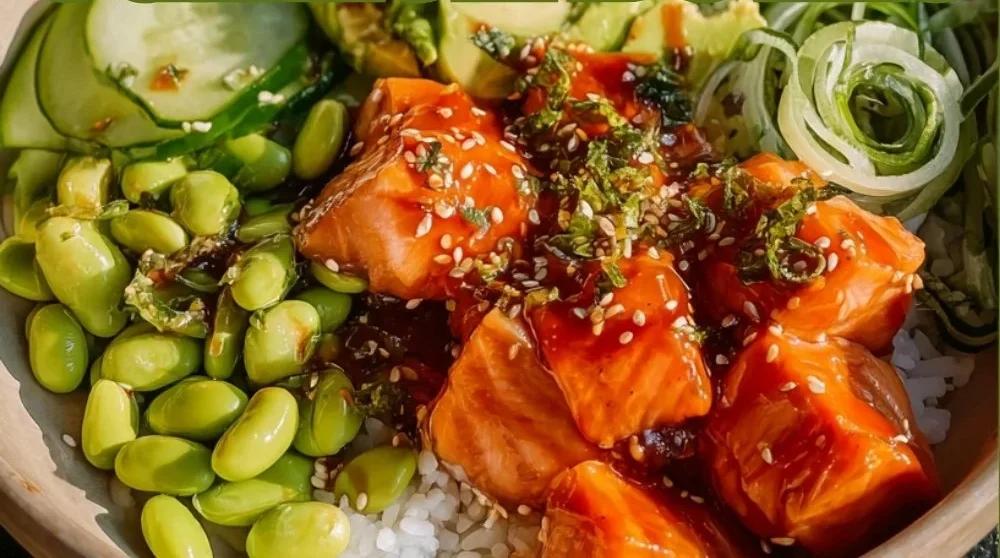
Lastly: Assemble the bowls. The contrast between warm rice and salmon and cool avocado and cucumber is part of the charm — arrange things so each bite is balanced.
Where beginners should slow down:
- When cutting the salmon: take your time, use a sharp knife, and remove skin if it bothers you.
- When searing: watch the color change; 2–3 minutes per side is the usual guideline, but stove variations exist. Look for a golden edge and slightly firm center.
If you’d like another easy bowl idea to practice assembling while the salmon rests, try a bright, family-friendly option like Blueberry Maple Pancakes for weekend breakfasts — the concept of building a composed plate transfers easily across meals.
Ingredients
4 (4-6 ounce) salmon fillets, 3 tablespoons low-sodium soy sauce or tamari, 2 tablespoons honey, 2 tablespoons sriracha, 2 teaspoons minced garlic, 3 tablespoons water, 2 cups cooked white rice, 1 avocado, diced, 1 cucumber, sliced, 1 cup cooked edamame, ½ cup sriracha mayo, Red pepper flakes, Sesame seeds
What each ingredient does and why none are intimidating:
- Salmon fillets: The main protein. Salmon is forgiving because its fat helps keep it moist. Cutting into cubes shortens cook time and makes even searing simple.
- Low-sodium soy sauce or tamari: Provides the salty, umami backbone of the marinade. Low-sodium is kinder to the palate and easier to balance.
- Honey: Adds sweetness that balances the sriracha heat and helps the sauce caramelize when reduced.
- Sriracha: Brings the spicy kick and a little tang. Two tablespoons is lively but not overwhelming; you can adjust later at the bowl.
- Minced garlic: Gives a familiar savory lift. Minced is easy to distribute through the marinade for even flavor.
- Water: Lightens the marinade so it coats rather than overwhelms the salmon.
- Cooked white rice: The neutral bed that absorbs sauce and balances texture. You can use leftover rice or quickly make a pot.
- Avocado: Adds creaminess and coolness to contrast the warm, spicy salmon.
- Cucumber: Crunch and freshness; it keeps the bowl bright.
- Cooked edamame: A simple, protein-rich vegetable that pairs well with the flavors and adds chew.
- Sriracha mayo: A creamy drizzle that echoes the bowl’s spicy-sweet profile and adds richness.
- Red pepper flakes and sesame seeds: Optional finishing touches for heat and nutty crunch. They’re small but bring visual and textural interest.
All these items are straightforward to buy and use. They combine into a balanced bowl where each part supports the others: protein, starch, fat, fresh veg, and a saucy finish.
Directions
Cut your salmon fillets into 1-inch cubes. Remove the skin if you prefer (it’s edible, but some people don’t like it). Beginner Note: Using kitchen shears makes it easier to remove the skin from the salmon., In a large bowl, whisk together all the ingredients for the marinade: soy sauce (or tamari), honey, sriracha, minced garlic, and water. Beginner Note: Whisking ensures all the ingredients are fully combined., Add the salmon cubes to the marinade and marinate for up to 1 hour, but ideally at least 20 minutes. The longer the salmon marinates, the more flavorful it will be. Beginner Note: Marinating the salmon in the refrigerator is recommended for food safety., Once the salmon is done marinating, heat a large skillet (a non-stick skillet is ideal) over medium-high heat with a splash of oil. Add the salmon cubes to the skillet, reserving the remaining marinade for later. Cook for 2-3 minutes on each side, until the salmon is cooked through and has a nice crisp. Beginner Note: Don’t overcrowd the skillet, as this will cause the salmon to steam instead of sear. Cook the salmon in batches if necessary. The salmon is cooked through when it flakes easily with a fork., Add the reserved marinade to the skillet with the cooked salmon. Cook for a few minutes, until the sauce thickens slightly. Beginner Note: The sauce will thicken as it reduces., Assemble your bowls with a bed of cooked rice. Add the honey sriracha salmon, diced avocado, sliced cucumber, and cooked edamame. Beginner Note: Get creative with the arrangement of the ingredients in your bowls., Drizzle the sriracha mayo over the bowls. Sprinkle with red pepper flakes and sesame seeds, if desired. Beginner Note: Adjust the amount of sriracha mayo to your liking., Serve the Honey Sriracha Salmon Bowls immediately and enjoy!
Supportive guidance around the steps:
- Visual cues to watch for: When you cut the salmon, the flesh should be a bright, even color with no strong odor. While searing, watch for a golden-brown outside and small white lines (albumin) that sometimes appear — that’s normal and indicates moisture cooking out.
- Texture and timing hints: Cubed salmon cooks quickly; 2–3 minutes per side on medium-high heat creates a crisp edge while leaving the inside tender. If you have thicker pieces, give them a little extra time, but check often. The fish is done when it flakes with a gentle fork press.
- Reassurance if things don’t look perfect: If a piece looks slightly overdone, don’t worry — small flakes mixed into rice still taste great. If the sauce reduces too quickly, lower the heat and add a splash of water to loosen it; you’re aiming for a glossy coating, not a dry candy.
Remember: the reserved marinade becomes the sauce for finishing. Bringing it to a simmer after the salmon has seared concentrates the flavors and helps the honey stick to the fish. Just cook it until it thickens slightly — you’ll see it become shiny and a bit syrupy.
Key techniques you’ll practice in this recipe
- Cutting fish into uniform pieces: This helps everything cook evenly and quickly. It’s a simple knife skill that builds confidence and carries into making stir-fries, kebabs, and other bowl meals.
- Making a quick marinade and whisking: Learning to balance salty, sweet, spicy, and acidic components is a foundational flavor skill.
- Searing at medium-high heat: Controlling pan temperature to create color without overcooking is a useful technique for many proteins.
- Reducing a sauce to coat food: This teaches patience and observation — you’ll learn to look for a glossy finish and the way sauce clings to food.
These skills are approachable and apply to many home-cooked meals, from simple weeknight dinners to weekend projects.
Common mistakes and how to avoid them
- Overcrowding the skillet: If you add too many cubes at once, the pan temperature drops and the fish steams instead of searing. Fix: Cook in batches. It takes a little longer but the texture improves dramatically.
- Skipping refrigeration during marinating: Leaving fish at room temperature can be unsafe. Always marinate in the fridge.
- Letting the sauce burn: Honey reduces quickly and can stick to the pan. Fix: Keep a close eye when you add the reserved marinade and reduce heat if it starts to darken too fast.
- Cutting uneven pieces: If the salmon pieces vary widely, smaller ones will overcook. Fix: Aim for roughly 1-inch cubes; a steady hand is all you need.
- Worrying about perfection: Uneven browning or little white lines on salmon are normal. The bowl is about balance, not perfection.
If something goes off track — say the sauce gets too dark — remove the pan from heat, stir in a little water or extra soy sauce to balance, and taste. Most issues are fixable with small adjustments.
How to adjust confidently without changing the recipe
Portion scaling: To serve more people, multiply everything by the number of servings. The cooking time per batch stays the same because the pieces remain 1-inch cubes. You’ll just need to cook in more batches.
Flavor preference adjustments (conceptual only): If you like it milder, imagine reducing the sriracha portion in the marinade or using less sriracha mayo on top. If you prefer brighter tang, consider adding a squeeze of lime at the bowl level — a small change to the serving, not to the recipe steps.
Texture tweaks — conceptually: For an extra-crisp exterior, pat the salmon cubes dry briefly before marinating. For a silkier sauce, let the marinade reduce a bit longer until glossy. These are adjustments to technique and finish, not to the listed ingredients or steps.
Serving, storage, and reheating made simple
Serving: Build each bowl with warm rice first, then spoon the glazed salmon on top, and finish with avocado, cucumber, and edamame. Drizzle sriracha mayo last so it stays visually appealing and creamy.
Storage: Store leftovers in an airtight container in the refrigerator for up to 2 days. Keep rice and salmon in separate containers if you can — this preserves texture and makes reheating simpler.
Reheating: Gently reheat salmon in a skillet over low heat with a few drops of water to keep it from drying. Warm the rice separately (microwave with a damp paper towel or steam briefly). Reassemble and add avocado and cucumber fresh to retain their texture. If the glaze has thickened in storage, warm it with a splash of water to loosen it before coating the salmon again.
Questions new cooks often ask about this recipe
- How do I know when the salmon is cooked? Look for a slight firmness and for the fish to flake easily when nudged with a fork. Cubes will cook fast; check them after the first side sears.
- Do I have to remove the skin? No. The skin is edible and can crisp up nicely, but many people prefer the clean texture of skinless cubes. Kitchen shears make it easier to remove if you prefer.
- What if my skillet smokes? Lower the heat and add a small splash of oil or remove the salmon while the pan cools slightly. High heat is for searing but don’t let oil reach its smoking point.
- Is it okay if the marinade sits longer than an hour? For this short-marinade recipe, up to an hour is fine. Much longer can begin to change the texture of the fish.
- Can I make components ahead? Yes — cook rice and edamame in advance and keep cool. Assemble just before serving for the best texture.
If anything feels uncertain while you cook, pause and observe: color, smell, and texture will guide you more than numbers alone.
Final encouragement from Carla
Cooking is a practice, and each recipe is a small step forward. Honey Sriracha Salmon Bowls are a great one because they reward attention without demanding perfection. If parts of your bowl don’t look identical to the photo, that’s okay — they’ll still taste wonderful. Be patient with yourself, use the visual cues I’ve shared, and remember that every time you cook you’re improving.
Happy cooking, and enjoy the warm-sweet-spicy comfort of this bowl.
Carla Carter
Founder & Recipe Developer, RecipesCabin
Conclusion
If you want to see a similar bowl-style take or compare visual steps, there’s a helpful reference with step-by-step photos at Honey Sriracha Salmon Bowls – Eat With Clarity, which can offer an additional visual guide. For a quick alternate presentation of salmon bites and plating ideas, check out this simple inspiration at Quick and Easy Salmon Bowl Recipe: Delicious Salmon Bites!.

Honey Sriracha Salmon Bowls
Ingredients
Method
- Cut the salmon fillets into 1-inch cubes, removing the skin if preferred.
- In a large bowl, whisk together soy sauce, honey, sriracha, minced garlic, and water for the marinade.
- Add the salmon cubes to the marinade and let it sit for at least 20 minutes or up to 1 hour in the refrigerator.
- Heat a large non-stick skillet over medium-high heat with a splash of oil.
- Add the marinated salmon cubes to the skillet, reserving the remaining marinade. Cook for 2-3 minutes on each side until crispy and cooked through.
- Pour the reserved marinade into the skillet with the salmon and let it reduce for a few minutes until thickened slightly.
- Assemble the bowls starting with a bed of cooked rice.
- Top with honey sriracha salmon, diced avocado, sliced cucumber, and cooked edamame.
- Drizzle with sriracha mayo and sprinkle with red pepper flakes and sesame seeds if desired.