Anti Inflammatory Turmeric Chicken Soup
Introduction
This Anti Inflammatory Turmeric Chicken Soup is one of those recipes: familiar, soothing, and effortless enough to become a weeknight standby. It hangs around the line between a bowl of cozy comfort and a practical, make-ahead dish that fits real life. Whether you have a hurried weeknight, a picky eater to satisfy, or you want something that can be ladled out for lunches and then reheated, this soup does the job.
This soup works because it leans on simple techniques — sauté, simmer, shred — that don’t require constant babysitting. The flavors are straightforward and friendly: onion, carrot, celery, garlic, a warm spice mix and bright lemon at the end. Kids usually respond well to the mild, golden broth and tender shredded chicken, so it’s easy to serve with rice, noodles, or a piece of toast. If you like creamy chicken-and-rice comforters for nights when you want extra ease, this recipe pairs beautifully with a simple rice bowl approach like the one in creamy chicken and rice, which is a great companion idea when you want to vary textures across the week.
What makes this a go-to is its balance of hands-off cooking and reliable results. You can tweak it at the end to suit your family — add noodles for kids who love slurpy things, or extra greens for adults who want more veg — without changing the core steps. The method is forgiving: if you simmer a little longer, the flavor deepens; if you hurry, it still tastes like home. That kind of flexibility is exactly what busy households need.
How to make Anti Inflammatory Turmeric Chicken Soup
Think of this soup in three straightforward stages: build flavor with aromatics and spices, gently cook the chicken until it’s shreddable, then finish with bright and creamy touches. At every stage you’re doing simple, reliable things: sweating vegetables, briefly toasting spices to unlock their aroma, simmering until the meat is tender, and finishing with lemon and herbs to lift the whole pot.
Beginners should slow down during the aromatics and spice-toasting. That initial step — cooking the onions, carrots, and celery and then stirring in the spices — sets the tone for the whole soup. It’s where flavor is layered; rushing it or burning the garlic can leave the broth flat. Shortcuts naturally exist later: use pre-chopped carrots and celery from the store, buy rotisserie chicken to skip simmering (see notes below), or cook a double batch and freeze portions.
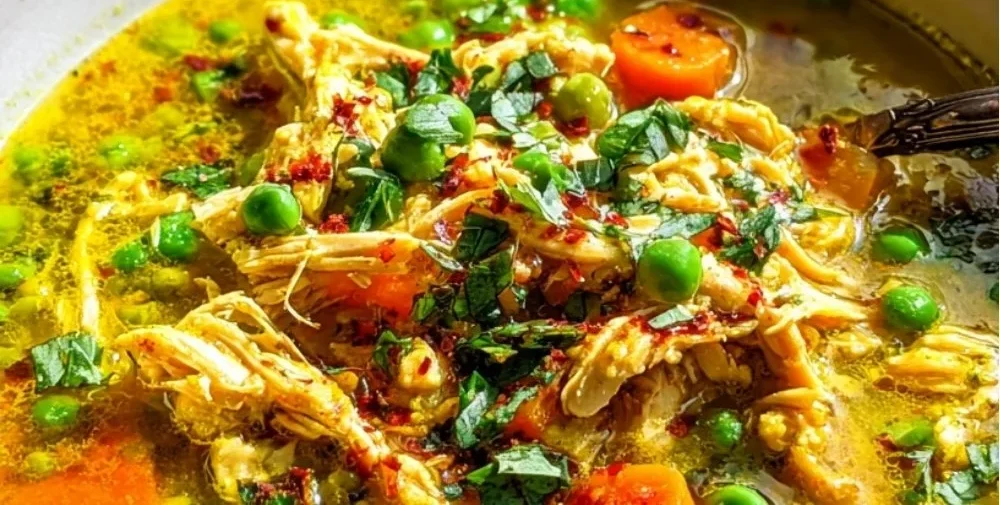
Expect a pleasant golden broth, a kitchen smelling of warm spices, tender chicken that shreds easily, and a final bowl that’s both familiar and a touch different thanks to turmeric and lemon. The method is forgiving and geared toward busy families who want a dependable outcome, every time.
Ingredients
- 2 lbs bone-in chicken thighs or whole chicken pieces, 2 tablespoons olive oil or coconut oil, 1 large yellow onion, diced, 3 medium carrots, sliced into rounds, 3 celery stalks, chopped, 4 cloves garlic, minced, 2 tablespoons ground turmeric (or 3 tablespoons fresh, grated), 1 tablespoon fresh ginger, grated, 1 teaspoon ground cumin, 1/2 teaspoon black pepper (essential for turmeric absorption), 1 bay leaf, Salt to taste, 8 cups low-sodium chicken broth, 2 cups water, 2 tablespoons fresh lemon juice, 1 cup cooked rice, quinoa, or noodles, 2 cups fresh spinach or kale, chopped, 1/4 cup fresh cilantro or parsley, chopped, 1 can (14 oz) coconut milk for creaminess
Here’s what those ingredients do in plain home-cook language:
- Chicken: Bone-in pieces give a richer, more flavorful broth than boneless chicken. They’re forgiving in the pot and shred into tender, comforting bites.
- Oil: Olive or coconut oil is just the medium to soften the onions and carry the spice flavors.
- Onion, carrots, celery: The classic base (mirepoix) — these soften into sweetness and give the broth body without fuss.
- Garlic, turmeric, ginger, cumin, black pepper: Garlic and ginger add warmth and depth; turmeric gives the soup its golden color and a gentle earthy note; cumin brings a subtle warmth; black pepper is included both for flavor and, as the recipe notes, to help turmeric work in the dish.
- Bay leaf and salt: Small seasoners that quietly enhance the broth’s savory character.
- Broth and water: The liquid foundation — low-sodium broth lets you control salt while water helps stretch the pot to feed a family.
- Lemon juice: Brightens and balances the earthier spices at the end.
- Rice, quinoa, or noodles: Easy ways to make this a hearty, kid-friendly meal that fills bellies.
- Greens and herbs: Spinach, kale, cilantro or parsley add color, freshness, and a little texture contrast.
- Coconut milk: Adds creaminess and a rounded mouthfeel if you want a softer finish.
All these are pantry and fridge-friendly items most home cooks already have or can easily keep on hand. The combination reads familiar, so even if turmeric feels new to some family members, the overall bowl is solidly comforting.
Directions
- Prepare the Aromatics, Heat the oil in a large, heavy-bottomed pot over medium heat. Add the diced onion and cook for 3-4 minutes until it begins to soften and turn translucent. The gentle sizzling sound tells you you’re on the right track. Add the carrots and celery, cooking for another 3 minutes until the vegetables start to brighten in color., 2. Build the Flavor Base, Stir in the minced garlic, turmeric, ginger, cumin, and black pepper. Cook for about 30 seconds until the kitchen fills with that incredible golden aroma. This step is crucial – toasting the spices releases their essential oils and creates the complex flavor foundation that makes this soup so special., 3. Add the Chicken and Liquid, Nestle the chicken pieces into the pot, skin-side down if using skin-on pieces. Pour in the chicken broth and water, ensuring the liquid covers the chicken by about an inch. Add the bay leaf and bring the mixture to a gentle boil over medium-high heat., 4. Simmer to Perfection, Once boiling, reduce the heat to low and let the soup simmer gently for 45-60 minutes. You’ll know it’s ready when the chicken is tender enough to shred easily with a fork, and the broth has developed a beautiful golden color from the turmeric., 5. Shred and Season, Remove the chicken pieces and let them cool slightly before shredding the meat and discarding the bones and skin. Return the shredded chicken to the pot, stir in the lemon juice, and season with salt to taste. If using coconut milk or leafy greens, add them now and simmer for an additional 2-3 minutes., 6. Final Touches, Remove the bay leaf and taste for seasoning. The soup should be aromatic, golden, and perfectly balanced between the earthiness of turmeric and the brightness of lemon. Garnish with fresh herbs just before serving.
Friendly guidance around the steps without changing them:
- Step 1 (Aromatics): Look for the onion to go translucent and for the carrot and celery to “brighten” — that means their color looks fresher and they start to soften. If your pot is smoking, the heat is too high; you want a steady sizzle, not a hard fry.
- Step 2 (Spices): When you add the garlic and spices, they’ll bloom quickly — about 30 seconds is enough. Watch closely and stir so nothing burns. You’re aiming for a warm, fragrant smell, not browned garlic.
- Step 3 (Chicken and liquid): Nestling the chicken into the pot helps it heat evenly and stay moist. Covering by about an inch ensures there’s enough liquid for a rich broth without watering everything down.
- Step 4 (Simmer): A gentle simmer — small bubbles around the edges — is what you want. If it’s a roiling boil, reduce the heat; too aggressive a boil can toughen meat and cloud the broth.
- Step 5 (Shred and season): Let the chicken cool just enough to handle. Shredding by hand or with two forks gives little pieces kids like. Add lemon at the end so its brightness isn’t cooked away.
- Step 6 (Final touches): Taste before you salt heavily — the broth may already be flavorful. Herbs belong at the very end to keep their freshness.
Common small mistakes to avoid: don’t skip the spice-toasting (it’s quick but pivotal), don’t rush the simmer (it’s where tenderness and flavor deepen), and don’t add salt until you’ve tasted post-simmer — it concentrates as the soup reduces. If you follow the steps, the results are dependable.
Why families love this dish
This soup has familiar, comforting flavors: gentle onion and carrot sweetness, familiar chicken notes, and a warm, mildly spiced broth that isn’t intimidating for kids. The texture of shredded chicken mixed with rice, noodles, or quinoa is something most children and adults will accept without fuss. It’s the kind of bowl you can offer to everyone at the table and know it will land well.
It’s also versatile: serve it in a shallow bowl for little ones who prefer less liquid, or ladle it over rice for teens who want something more filling. The coconut milk is optional but makes the broth silkier for picky eaters who prefer creamy soups. The lemon at the end gives a lift that grown-ups appreciate while keeping the base simple.
For families with varying tastes, this soup is forgiving. If someone doesn’t like cilantro, swap parsley. If kids prefer noodles, add them in. The recipe’s mild spice profile means you can gently adjust at the end without changing the core process.
Pairing ideas for a complete, satisfying meal
The simplest approach is to round the soup with a few quick, family-friendly sides that require minimal effort:
- Crusty bread or warm dinner rolls — perfect for dunking and comforting to kids who like hands-on eating.
- A simple green salad dressed with olive oil and lemon — quick to toss and adds a fresh counterpoint.
- Roasted vegetables: sheet-pan roasted carrots or green beans are easy to prepare while the soup simmers.
- For a heartier spread, offer cooked rice, quinoa, or soft egg noodles on the side so everyone can build their preferred bowl.
If you want another low-effort skillet dish to rotate through the week, a one-pan pasta or skillet meal pairs well with bowls of soup; see a straightforward stovetop option like one-pan chicken sausage and orzo as inspiration for an easy companion dish.
Make-ahead tips, leftovers, and storage
This soup is friendly to planning ahead. Cool it completely before storing in airtight containers. In the fridge it will keep 3–4 days; in the freezer, portions are good for up to 3 months. When freezing, leave out cooked rice or noodles if you plan to reheat later — those can turn mushy when frozen and reheated. Instead, store the broth and chicken separately from any grains.
To reheat without drying the chicken, warm gently over low heat on the stove, adding a splash of water or broth if things look thick. If using coconut milk or greens, add them near the end of reheating so they retain texture and brightness. For microwave reheating, stir halfway through and cover to prevent drying.
Leftover ideas: turn cold leftovers into lunches by packing broth and chicken separate from rice, or reduce the soup down a bit and serve thickened over mashed potatoes for a cozy twist. The flavor often deepens after a day, so some families prefer it the next day.
Common questions home cooks ask about this recipe
Q: Can I use boneless chicken?
A: Yes. Boneless will cook a bit faster and won’t deliver quite as rich a broth, but the method still works. If you switch to boneless, keep an eye on cooking time so the meat stays tender.
Q: What if my kids don’t like turmeric?
A: The spice is gentle here; its color is more noticeable than an overwhelming flavor. If you’re concerned, use the lower amount or rely on the fresh grated option. Combine with familiar sides (rice, noodles) to make the bowl feel more like what they know.
Q: Can I make this in a slow cooker or Instant Pot?
A: The steps are written for stovetop, but you can adapt with care: use the saute function for aromatics, then cook on low in a slow cooker 4–6 hours, or use the pressure function on an Instant Pot for a quicker finish. The stovetop method is the most hands-on and easiest to watch for beginners.
Q: How do I scale the recipe up or down?
A: It scales well — halve the ingredients for a smaller household or double for meal prep. If you double, use a pot large enough to allow even simmering so flavors develop properly.
Q: Is the coconut milk required?
A: No — it’s optional for creaminess. Leave it out for a cleaner, brothy soup, or add half the can the first time to see how your family likes the texture.
Final thoughts from Sarah
This Anti Inflammatory Turmeric Chicken Soup is one of those everyday recipes that earns its place in a rotation because it is forgiving, adaptable, and reliably comforting. It respects busy schedules — a little hands-on at the start, then mostly waiting as gentle simmering does the work. It’s friendly to picky eaters, easy to reheat, and simple to tweak for adults who want a touch more brightness or creaminess.
If you give it a try, plan to make a pot and enjoy it for dinners, lunches, and quick family meals throughout the week. Keep extra rice or noodles on hand so everyone can build their preferred bowl, and remember: the small finishing touches — lemon, herbs, a pour of coconut milk — make the whole thing feel special without extra fuss.
Warmly,
Sarah Collins
Conclusion
If you’d like another version to compare notes, here’s a thoughtful variation on the same theme available at Anti Inflammatory Turmeric Chicken Soup. For a slightly different take with similar ingredients and home-style directions, check out the recipe at Anti-Inflammatory Turmeric Chicken Soup | Get Inspired Everyday!. And if you’re exploring turmeric-ginger combinations, this rendition is worth a look: Anti-inflammatory Turmeric Ginger Chicken Soup – rachLmansfield.