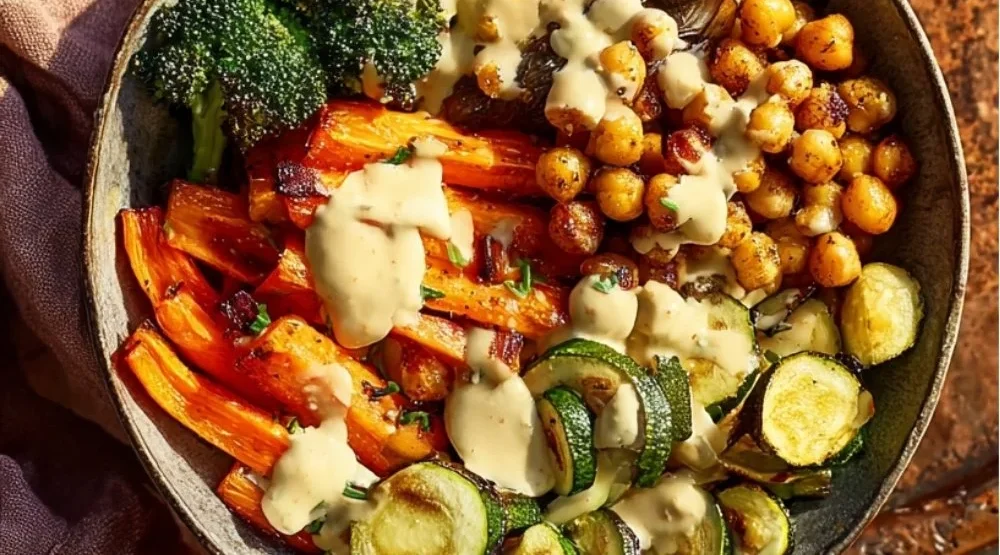
Roasted Veggie Chickpea Bowls with Maple Dijon Tahini Dressing
Introduction
If your weeknights are anything like mine, you’re looking for dinners that feel homemade and comforting but don’t demand three hours or a culinary degree. That’s exactly where these Roasted Veggie Chickpea Bowls with Maple Dijon Tahini Dressing come in. They’re simple, predictable, and just the kind of meal that grows on the whole family: colorful vegetables that roast up sweet and caramelized, nutty chickpeas that give the dish staying power, and a creamy, slightly tangy dressing that kids and adults both reach for.
This recipe is a go-to because it hits familiar flavors without fuss and can be adapted to whatever you have on hand. If you enjoy straightforward family-friendly swaps, you might also like my high-protein veggie bake—same practical spirit, different format. For busy evenings, this bowl is one of those reliably good dinners you can pull together while helping with homework, checking laundry, or sneaking in a short walk.
I write recipes for people who want food that’s comforting, sensible, and loved by kids without being complicated. This bowl checks all those boxes: it’s easy to prep, hard to mess up, and it plays well with leftovers and real-life schedules.
How to make Roasted Veggie Chickpea Bowls with Maple Dijon Tahini Dressing
Think of this as a three-part dinner: roast, whisk, assemble. First, you get the oven doing the heavy lifting—roasting concentrates flavor and makes vegetables more interesting to kids. While the tray is in the oven, you quickly whisk up the dressing; a little elbow grease is all it takes and it’s ready in minutes. Then you assemble bowls on the fly: grains, roasted veggies and chickpeas, a drizzle of dressing, and you’re done.
What to expect at each stage:
- Prep and roast: You’ll slice and toss in under 10 minutes. The oven handles the rest. Look for golden edges and slightly shriveled chickpeas — that’s when the flavor is right.
- Make the dressing: It comes together in the time the vegetables roast. Tahini can seize up if too cold, so whisk patiently and add water gradually to get a smooth drizzleable texture.
- Assemble: Use warm quinoa or rice as your base so the dressing loosens up and the flavors meld. Kids often like theirs with less dressing or veggies served separately—both totally fine.
Where beginners should slow down:
- Don’t over-crowd the pan. Give the vegetables and chickpeas a little space so they roast instead of steam.
- When whisking tahini, if it looks grainy at first, keep going — it will smooth out with the lemon juice and water.
- Taste as you go. Adjust salt, pepper or a touch more maple if you prefer it sweeter.
Where shortcuts naturally exist:
- Use pre-cooked quinoa or microwaveable rice if you’re short on time.
- Frozen chopped veggies can work in a pinch; just watch the roast time and spread them out well.
- Canned chickpeas are a shortcut already built into the recipe—just drain and rinse.
This approach keeps the steps simple and family-friendly without sacrificing flavor or texture.
Ingredients
1 zucchini, sliced, 1 carrot, sliced, 1 broccoli crown, cut into florets, 1 red onion, quartered, 1 can chickpeas (15 oz), drained and rinsed, 2 tablespoons olive oil, 1 teaspoon smoked paprika, Salt and pepper to taste, 2 cups cooked quinoa or rice, 1/4 cup tahini, 1 tablespoon Dijon mustard, 1 tablespoon maple syrup, 2 tablespoons lemon juice, 2 tablespoons water
Each ingredient has a clear job, and none are there to confuse you:
- Zucchini and carrot: These give a mild sweetness and different textures — zucchini softens and soaks up flavors; carrot keeps a little bite and caramelizes nicely.
- Broccoli crown: Adds heartiness and a familiar kid-friendly shape when cut into florets. Roasted broccoli gets those toasty edges that kids often like.
- Red onion: Brings a sweet-savory background note when roasted. It mellows a lot in heat, so the sharpness fades into sweetness.
- Chickpeas: The protein and texture star here. They’re filling and take on the smoky paprika flavor well.
- Olive oil, smoked paprika, salt and pepper: Small amounts make a big difference. The oil helps with browning; smoked paprika gives a warm, slightly smoky note without heat.
- Quinoa or rice: Serves as a neutral base that soaks up the dressing; use which your family prefers.
- Tahini, Dijon, maple, lemon, water: Together these make a dressing that’s creamy, tangy, and gently sweet. Tahini gives a sesame richness; Dijon cuts through with tang; maple balances with a cozy sweetness; lemon brightens, and water thins to the right consistency.
These are pantry-friendly ingredients for most homes, which is what makes this recipe practical on any night of the week.
Directions
Preheat your oven to 400°F (200°C) and line a baking sheet with parchment paper., In a mixing bowl, combine zucchini, carrot, broccoli, red onion, and chickpeas with olive oil, smoked paprika, salt, and pepper. Toss well., Spread the mixture on the baking sheet and roast for 20–25 minutes, stirring halfway through until golden., While roasting, whisk together tahini, Dijon mustard, maple syrup, lemon juice, and water in a small bowl until smooth. Adjust consistency with more water if needed; season with salt and pepper., To serve, divide cooked quinoa or rice into bowls. Top with roasted veggies and chickpeas then drizzle with dressing.
A few friendly notes while you follow the steps:
- Preheating: Make sure your oven is up to temperature before the pan goes in. You’ll get more reliable browning and a predictable roast time.
- Tossing: Use a large bowl so the pieces are evenly coated and not missing spots of oil or seasoning.
- Spacing on the pan: Arrange the vegetables and chickpeas in a single layer. If they’re piled up, you’ll get steaming instead of roasting.
- Stirring halfway: This is when pieces get those buttery-brown edges on multiple sides—set a timer for 10–12 minutes if you like a sure midpoint.
- Dressing texture: Tahini can be thick. Whisk the lemon and Dijon in first to loosen it, add the water slowly and aim for a pourable drizzle. If it tightens up after resting, whisk again or add a teaspoon of warm water.
If anything smells sweet and nutty from the oven and the vegetables have a little crispness at the edges, you’re on track.
Why families love this dish
There are a few reasons this meal becomes a family favorite:
- Familiar flavors: The maple and Dijon pairing is sweet-tangy in a very approachable way. Smoked paprika adds warmth without heat, so it’s friendly for kids.
- Comfort factor: Roasted vegetables and warm grains are the culinary version of a cozy blanket—filling and consoling without being heavy.
- Kid-friendly texture: Chickpeas have a satisfying bite that many children enjoy, and roasted vegetables often taste sweeter and more appealing than when raw.
- Minimal decision fatigue: Once the vegetables are prepped and in the oven, you have a clear finish line. That’s comforting for a busy parent juggling other tasks.
Smart substitutions and simple variations keep this dish reliable:
- If broccoli is a hard sell, swap with cauliflower or bell peppers — similar roasting behavior.
- For picky eaters who dislike mixed bowls, serve components deconstructed: grains on the plate, veggies in one bowl, dressing on the side.
- Want more protein for teen appetites? Fold in shredded rotisserie chicken or serve the bowls with a side of yogurt mixed with a little lemon for dipping.
If you’re feeding different tastes, this bowl plays well with small adjustments while keeping the core recipe intact.
Pairing ideas for a complete, satisfying meal
You don’t need much to round this out into a satisfying family dinner:
- Simple sides: A loaf of crusty bread or warm pita is great for mopping up drips of dressing. Store-bought or day-old bread warmed in the oven works perfectly.
- Quick salads: A basic green salad with a lemon-olive oil dressing adds brightness without extra work.
- Easy add-ons: Sprinkle toasted sunflower seeds or crumbled feta on top for texture and a little tang. If you have a protein-hungry crowd, serve with hard-boiled eggs on the side.
These small additions keep dinner varied and let everyone build their bowl the way they like it.
Make-ahead tips, leftovers, and storage
This recipe is forgiving with leftovers, which makes it ideal for weekly planning:
- Storage: Store roasted vegetables and chickpeas in an airtight container in the refrigerator for up to 3–4 days. Keep the dressing separate to preserve texture.
- Reheating: Gently reheat in a skillet over medium heat to refresh crisp edges, or pop in a 350°F oven for 8–10 minutes. If microwaving, cover loosely and add a splash of water or lemon to prevent drying.
- Lunchbox ideas: Pack the grain and veggies cold with the dressing in a small container; drizzle before eating. Leftovers make a filling, ready-to-go lunch.
- Weekend brunch: Repurpose leftovers into an omelet or frittata, or serve alongside pancakes for a casual family brunch — I often pair leftovers with blueberry maple pancakes for a relaxed weekend spread.
These practical storage and reuse ideas let this dish work as more than just a single-meal solution.
Common questions home cooks ask about this recipe
Q: How do I avoid soggy vegetables?
A: Give them space on the baking sheet and don’t overcrowd. That ensures hot air circulates and edges brown instead of steaming.
Q: My tahini dressing is too thick — what then?
A: Add water, one teaspoon at a time, and whisk until the dressing reaches a pourable consistency. Warmth helps it loosen, so a short rest at room temperature also helps.
Q: Can I scale this up for guests?
A: Absolutely. Use extra baking sheets so you don’t overcrowd, or roast in batches. The dressing scales easily — you can double it in a bowl and whisk.
Q: My kids don’t love broccoli — what’s a safe swap?
A: Try cauliflower, sweet potatoes, or thinly sliced bell peppers. The roasting principle stays the same.
Q: How do I know when the chickpeas are done?
A: They should look lightly golden and slightly shriveled — that texture gives them a pleasant bite rather than being soft and doughy.
These are all common, solvable concerns — and none require complicated fixes.
Final thoughts from Sarah
This bowl is the kind of recipe I make when I want something that feels both nourishing and uncomplicated. It’s forgiving, flexible, and suits the rhythms of a busy household: prep quickly, let the oven do the work, whisk a dressing in the in-between, and assemble with minimal mess. It’s a reliable weeknight winner that doesn’t demand a lot of culinary bravado but rewards you with real family-pleasing flavor.
If you try it and your kids ask for seconds (or your partner requests it again next week), consider that recipe success. Keep it in your dinner rotation — I promise it will become one of those dependable meals you turn to when life gets full.
Warmly,
Sarah
Conclusion
For more inspiration on roasted bowls and variations, you can compare techniques with a roasted chickpea & veggie bowl recipe and explore another maple-Dijon take at a maple Dijon roasted veggie bowls recipe.