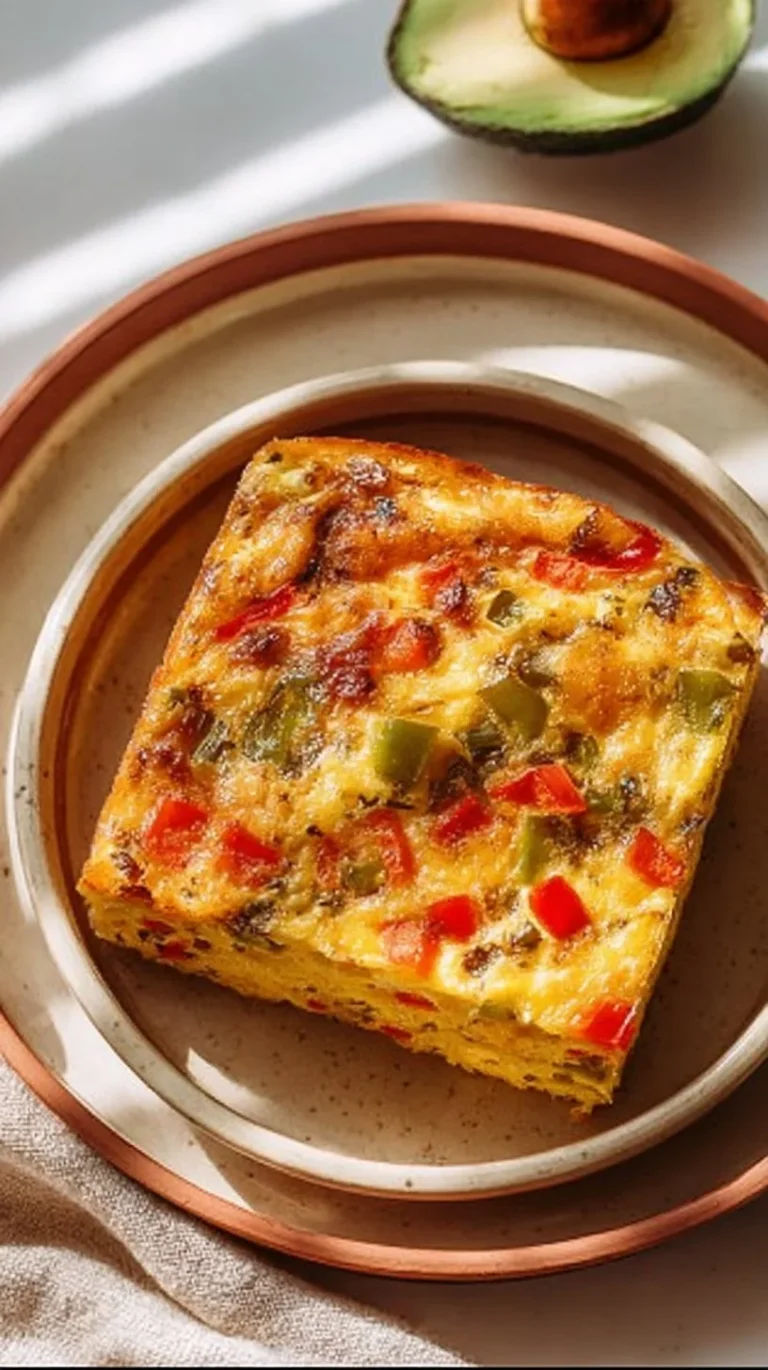
Sheet Pan Breakfast Burritos
Introduction
If you’re someone who wants a satisfying weekend breakfast without standing at the stove for an hour, this Sheet Pan Breakfast Burritos recipe is for you. I developed this as a friendly, no-fuss way to feed a crowd, simplify a busy morning, or build confidence with a straightforward technique. Whether you’re new to cooking or returning after a long break, this recipe is approachable and forgiving — the kind of recipe that helps you feel capable right away.
I like to say that sheet-pan meals let you see the whole process at once: bright peppers, soft eggs, melted cheese, and tortillas all meeting on one pan. If you enjoy learning one method and using it for other meals, this is a great place to start — similar in spirit to recipes like my Sheet Pan Chicken Pitas with Herby Ranch, which also uses a simple, hands-off oven method. Read on and I’ll walk you through how it all comes together, step by step, so you can feel calm and confident in the kitchen.
Why this recipe is easy to get right
This recipe is forgiving for several reasons. First, the main cooking is done in the oven at a moderate temperature; that removes the need to constantly babysit a pan on the stove. Second, the ingredients are familiar and work well together even if quantities shift slightly — the texture and flavor are resilient. Third, the visual cues are clear: you can tell when the eggs are set, when the cheese is melted, and when the tortillas have been folded and warmed through.
Flexibility helps make success likely. The filling is sturdy — cooked sausage and sautéed veggies won’t turn into a soupy mess — and the tortillas act like scaffolding, keeping everything where it belongs. Small imperfections, like a little uneven browning or a tortilla edge that doesn’t fold perfectly, won’t affect the taste. This recipe also gives you practice with one-pan timing, which translates directly to other simple oven meals and casseroles, so your confidence grows with each try.
How to make Sheet Pan Breakfast Burritos
At a glance, the order is simple: prep, assemble, bake, cool, slice, serve. First, you’ll preheat the oven so it’s at the right temperature when your assembled pan goes in. Next, whisk the eggs and milk until blended — this creates an even, custardy texture for the egg base. Then stir the rest of the filling into the eggs so flavors and textures are distributed. Lay your tortillas on a greased sheet pan, pour the mixture over them, fold into burrito shapes, and bake until set.
What to focus on at each stage:
- Preheat: Make sure the oven registers 350°F (175°C) before you put the pan in. This steady heat gives the eggs an even set.
- Whisking the eggs and milk: Aim for a smooth, uniform mixture. Tiny bubbles are fine; you’re simply helping the eggs and milk combine so baked eggs are tender.
- Stirring in fillings: Mix gently so the sausage and veggies are distributed but the eggs don’t foam up too much.
- Arranging tortillas and pouring: Lay tortillas flat and close enough that when you pour the egg mixture, it settles over them without running off the pan.
- Folding edges: Don’t worry about perfect seams — the bake will set them enough to slice.
- Baking: Watch the pan in the final five minutes for doneness; you want eggs set but still moist.
Beginners should slow down during the assembling step. Give yourself space to pour and fold without rushing. If something looks uneven, nudge it gently — you can always use a spoon to even things out before baking.
Ingredients
8 large eggs, 1 cup milk, 1 cup cooked and crumbled breakfast sausage, 1 cup shredded cheese (cheddar or your choice), 1 cup diced bell peppers, 1 cup diced onions, 8 large flour tortillas, Salt and pepper to taste, Salsa for serving
Each ingredient has a clear role and nothing is intimidating:
- Eggs: The structural heart of this dish. When baked with milk, they create a soft, custard-like texture that binds the filling.
- Milk: Lightens the eggs and helps produce an even, tender set — not dry, not rubbery.
- Cooked and crumbled breakfast sausage: Provides savory flavor and protein. Since it’s pre-cooked, it won’t release extra moisture while baking.
- Shredded cheese: Adds richness and helps the filling stick together. Cheddar melts well and complements sausage; use your favorite if you prefer another cheese.
- Diced bell peppers: Bring freshness, color, and a pleasant crunch, even after baking.
- Diced onions: Add sweet, savory depth as they soften in the egg mixture.
- Flour tortillas: Act as the edible vessel. Large tortillas are sturdy and fold neatly around the warm filling.
- Salt and pepper: Simple seasoning to bring out the ingredients’ natural flavors.
- Salsa: A bright, tangy finish that cuts through richness when you serve.
These are everyday, straightforward items. None of them require special handling or obscure equipment, which is part of why this recipe is so welcoming for cooks at any level. If you enjoy flavors like these in different breakfasts, you might also like my take on Baked Cottage Cheese Eggs, which uses the same comforting, hands-off approach.
Directions
- Preheat your oven to 350°F (175°C).
- In a large bowl, whisk together the eggs and milk.
- Stir in the cooked sausage, cheese, bell peppers, onions, salt, and pepper.
- Lay the tortillas on a greased sheet pan.
- Pour the egg mixture evenly over the tortillas.
- Fold the edges of the tortillas over the filling to create burrito shapes.
- Bake for 25-30 minutes or until the eggs are set.
- Let cool slightly, slice, and serve with salsa.
Supportive guidance for each step:
- Step 1 visual cue: The oven should feel consistently warm if you open it quickly. A digital oven that shows the temperature helps, but a little patience is fine if your oven takes a few extra minutes to reach 350°F.
- Step 2 texture hint: Whisk until the eggs are a smooth pale yellow. You’ll see the mixture lighten slightly and become uniform. A few streaks are okay; you can whisk a little longer if you like.
- Step 3 mixing note: After you add the sausage, cheese, and vegetables, stir just enough to distribute everything evenly. The mixture will look chunky and colorful — that’s good.
- Step 4 layout tip: Grease the sheet pan lightly so tortillas don’t stick. Lay them almost touching in a grid so the poured egg mixture doesn’t pool off the edges.
- Step 5 watching the pour: Pour slowly and evenly. The mixture will spread across the tortillas and begin to settle. If one tortilla looks overloaded, use a spoon to redistribute.
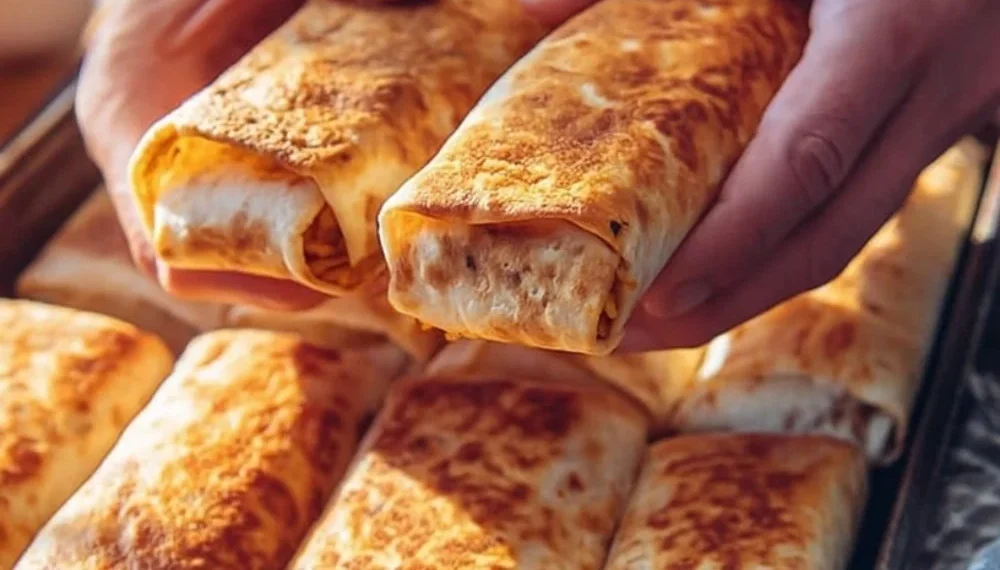
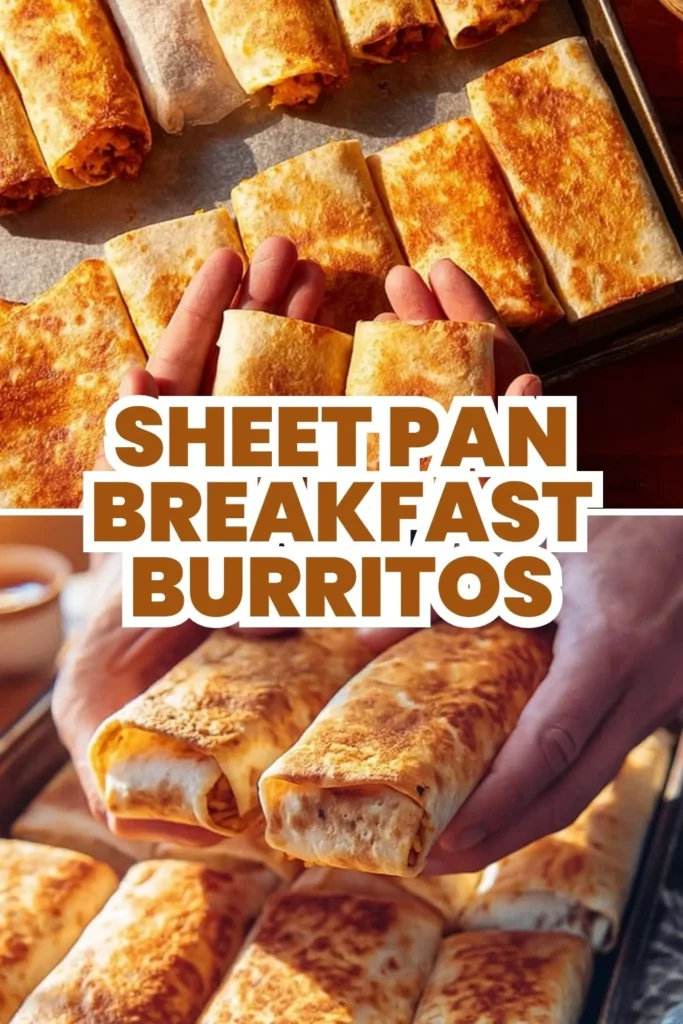
- Step 6 folding reassurance: Fold the tortillas’ edges toward the center to form rough burrito shapes. They don’t need to be perfect; you’re creating handheld-sized sections that will set in the oven.
- Step 7 doneness cue: Eggs are set when the center no longer jiggles and the surface looks matte instead of glossy. If you press gently and there’s a firm give, it’s done. If you’re unsure, a knife inserted in the center should come out clean.
- Step 8 serving hint: Letting the pan cool briefly makes slicing cleaner. Serve with salsa on the side — the acidity lifts the whole dish.
If your first attempt is a little uneven, that’s okay. Small differences in oven heat or the way ingredients were arranged won’t ruin the dish. Each bake will teach you a tiny bit more about how your kitchen behaves.
Key techniques you’ll practice in this recipe
This recipe is a great practice ground for fundamental kitchen skills:
- Whisking: You’ll learn to blend eggs and dairy into a uniform base — a skill used for quiches, frittatas, and custards.
- Even distribution: Stirring fillings so each portion gets a fair share is a useful habit for casseroles and stuffed dishes.
- Gentle folding: Folding tortillas without tearing helps with wraps and burritos in general.
- Judging doneness: Recognizing when eggs are set but still moist is transferable to baked egg dishes and omelets.
Mastering these techniques gives you confidence beyond this recipe. If you like building breakfast skills, try exploring different pancake or skillet recipes like my Blueberry Maple Pancakes for more practice with simple, repeatable methods.
Common mistakes and how to avoid them
Mistake: Overbrowning or drying the eggs.
- Why it happens: Oven runs hot or bake time extended.
- How to avoid: Set a timer for 25 minutes and check for a slight jiggle at the center. Remove when set but still moist.
Mistake: Tortillas tearing while folding.
- Why it happens: Tortillas are too cold or too dry.
- How to avoid: Use room-temperature tortillas and handle gently. If one tears, tuck the filling and press a piece of cheese over the seam; it will seal as it melts.
Mistake: Filling pools off the pan.
- Why it happens: Tortillas spaced too far apart or pan not greased.
- How to avoid: Grease the pan and arrange tortillas close enough to catch the egg mixture.
If something goes off track — say the center is undercooked after 30 minutes — you can return the pan to the oven for a few more minutes. If edges brown too quickly, tent the pan loosely with foil to slow browning while the center finishes. Small fixes like these keep you moving forward without starting over.
How to adjust confidently without changing the recipe
You can learn to scale and tweak conceptually while keeping this exact recipe as written:
- Portion scaling: For bigger servings, double everything and use two sheet pans or a larger pan with two racks in the oven. For fewer servings, halve the ingredients and use a smaller pan. The guiding idea is the same: even layer and similar bake time may change slightly.
- Flavor adjustments: If you prefer a milder or spicier taste, think about adjusting the sausage or salsa at the table rather than swapping out ingredients in the original recipe. This preserves the method while tailoring flavor to your family.
- Texture tweaks (conceptual): If you like a moister egg, a touch more milk will do that in future trials; for firmer eggs, reduce milk slightly. For a crisper tortilla edge, move the pan higher in the oven for the last few minutes.
All of these are conceptual ways to adapt — you’re not changing the written recipe, but you’re learning how small changes will affect the result. That mental map makes future adjustments feel safe.
Serving, storage, and reheating made simple
Serving: Slice into individual burritos and place salsa on the side for everyone to add as they like. A squeeze of lime, dollop of sour cream, or a sprinkle of fresh herbs can brighten the plate without altering the core recipe.
Storage: Cool the leftovers completely, then store in an airtight container in the refrigerator for up to 3–4 days. Because the components are cooked through, refrigeration keeps them safe and preserves texture.
Reheating: For best texture, reheat slices in a 350°F oven for 8–10 minutes until warmed through and the tortilla edges are crisp again. For a quicker option, microwave a slice for 45–60 seconds on a microwave-safe plate, then finish in a hot skillet for a minute to regain some crispness. Avoid reheating multiple times — heat only what you plan to eat.
If you’re planning breakfasts through the week, this method pairs well with simple sides like roasted sweet potatoes; for more ideas along those lines, take a look at my Breakfast Sweet Potato for a complementary approach.
Questions new cooks often ask about this recipe
- “How do I know the eggs are done?” Look for a mostly matte surface and no runny center. A gentle jiggle is okay, but if it moves like liquid, give it a few more minutes.
- “Do the tortillas get soggy?” They can soften under the egg mixture, but baking helps them set. Using fresh, pliable tortillas and serving soon after baking gives the best texture.
- “Can I assemble ahead?” You can pre-mix the filling and keep it covered in the fridge for a few hours, but I recommend assembling and baking on the same day for the best texture and flavor.
- “What equipment do I need?” A basic oven, a sheet pan, and a large bowl are sufficient. No special tools required.
If something feels uncertain while you’re cooking, slow down and look for simple visual cues: color, texture, and gentle movement. Those observations will guide you more reliably than guessing.
Final encouragement from Carla
Cooking is a practice, not a test. Each time you follow this sheet-pan method you’ll learn a little more about timing, texture, and how your oven performs. Celebrate the small wins — a clean slice, a well-folded edge, a perfectly set center — and remember that small imperfections are part of the journey. You’re building skills that will make many future meals easier and more enjoyable.
Keep going, keep trying, and trust that progress matters more than perfection. If this recipe feels welcoming, you’re right where you need to be.
Conclusion
If you want more sheet-pan inspiration, this variation from another home cook offers a similar hands-off approach and might spark ideas for flavors and assembly: Sheet Pan Breakfast Burritos – Joy to the Food. For a version with a creamy finishing sauce and different flavor layering, this helpful write-up shows how toppings can change the final experience: Sheet Pan Breakfast Burritos with Creamy Chipotle Sauce Recipe ….
Happy baking — I’m cheering you on from RecipesCabin.
Sheet Pan Breakfast Burritos
Ingredients
Method
- Preheat your oven to 350°F (175°C).
- In a large bowl, whisk together the eggs and milk.
- Stir in the cooked sausage, cheese, bell peppers, onions, salt, and pepper.
- Lay the tortillas on a greased sheet pan.
- Pour the egg mixture evenly over the tortillas.
- Fold the edges of the tortillas over the filling to create burrito shapes.
- Bake for 25-30 minutes or until the eggs are set.
- Let cool slightly, slice, and serve with salsa.