Easy Baked Oats
Introduction
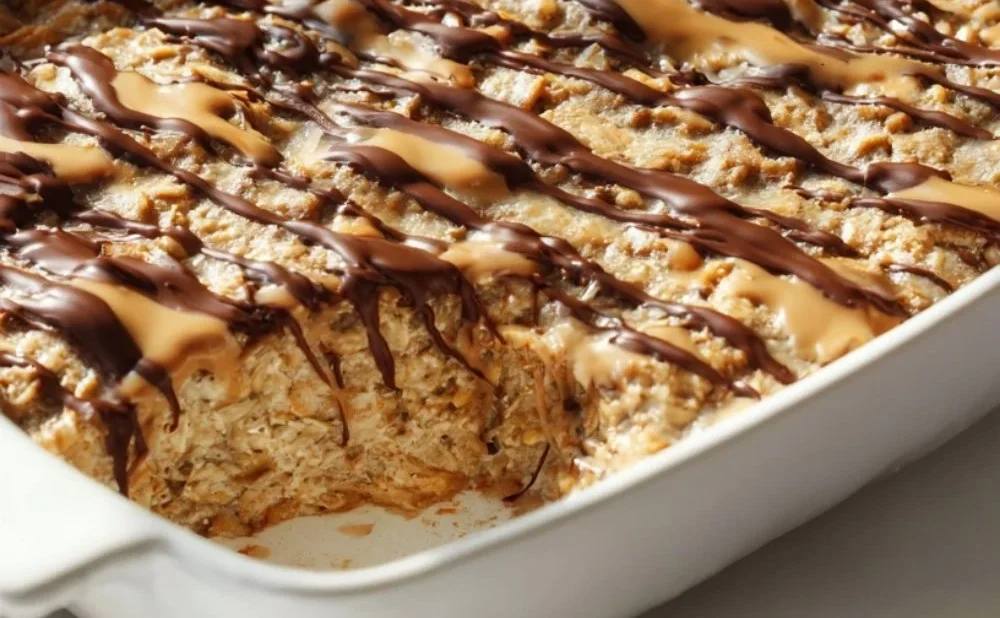
If you’re someone who wants a reliable, comforting breakfast without a lot of fuss, this Easy Baked Oats recipe is for you. I’m Carla Carter, Founder & Recipe Developer of RecipesCabin, and I design recipes with real kitchens and real lives in mind — the kind that help you feel capable and calm. Whether you’re new to cooking, getting back into the kitchen after a break, or simply want a breakfast that’s ready-to-go for a busy week, this baked oats dish is approachable and forgiving.
I often pair this kind of recipe with other simple, protein-forward breakfasts on the site because they’re dependable and wholesome; if you like starting simple, you may also enjoy a hearty option like baked cottage cheese eggs. This recipe is a gentle way to build confidence with oven-baked breakfasts — you’ll learn a few basic checks and techniques that pay off long term.
Why this recipe is easy to get right
What makes this baked oats recipe forgiving is its flexibility and the way the ingredients naturally support one another. Rolled oats provide structure but don’t demand exact timing like delicate pastries. Eggs and Greek yogurt bind and create a custardy texture; the mixture will hold together even if one measure is slightly off. The baking powder gives a little lift but the dish isn’t trying to be a perfect cake, so minor variations in rise are normal and okay.
You can be flexible with the milk you choose — dairy or non-dairy — and still get a satisfying result, so it’s kind to different preferences and dietary needs. The optional berries add freshness but aren’t critical to success, so don’t worry if you don’t have them. For more easy, approachable weeknight and weekend ideas that pair well with this kind of breakfast, check out our collection of easy recipes.
Because this recipe doesn’t require any whisking to a foam or perfect folding techniques, it’s a gentle place to practice basic mixing, measuring, and visual doneness cues — the things that turn nervous cooks into comfortable cooks.
How to make Easy Baked Oats
At a glance, this recipe moves in three clear stages: combine, fold, and bake. First you gather and mix the ingredients to a uniform batter. Next you fold in any add-ins, like berries. Last, you bake until the surface is golden and the center feels set. Each stage has small checkpoints that tell you what’s happening and what to do next.
Start by lining up your ingredients and equipment. Having everything in sight makes the mixing step calm and steady. When you mix the oats with the wet ingredients, you’re allowing the oats to hydrate — you’ll notice the mixture thicken slightly and the oats soften as they absorb liquid. If you slow down here you can see how the texture develops: it should be cohesive, moist, and easy to pour.
When you fold in the berries (if you’re using them), do it gently — you want to distribute them without turning the batter pink. Pouring into a greased baking dish is the final pre-bake step; a quick nudge to spread evenly is all that’s needed. In the oven, the top will turn lightly golden and the center will no longer look loose when it’s done. Beginners should take a moment to learn the visual and tactile cues at the end: a toothpick or the gentle press with a finger (it should spring back slightly) are both friendly tests.
If you’d like another easy example of a recipe that uses gentle mixing and folding like this one, consider this simple savory bake I developed: Irresistibly Easy Spinach Cottage Cheese Flagels — it uses the same calm, step-by-step approach.
Ingredients
2 cups rolled oats, 2 cups milk (dairy or non-dairy), 1/2 cup Greek yogurt, 1/4 cup honey or maple syrup, 2 eggs, 1 teaspoon baking powder, 1 teaspoon vanilla extract, 1 teaspoon cinnamon, 1/2 cup mixed berries (optional)
- 2 cups rolled oats: The oats are the structure of the bake. Rolled oats absorb liquid and soften in the oven, giving the dish body and that familiar oat texture. They’re not fussy — quick oats would change texture, but rolled oats give a pleasant bite without being hard to work with.
- 2 cups milk (dairy or non-dairy): Milk hydrates the oats and helps create a custard-like center. Use whatever you prefer — cow’s milk, almond milk, oat milk — they all do this job. A slightly richer milk will yield a creamier bake, but it’s not a precision point.
- 1/2 cup Greek yogurt: The yogurt adds tang, moisture, and protein. It helps the batter stay tender and gives the finished bake a pleasant creaminess. It also helps the crumbs hold together when you slice.
- 1/4 cup honey or maple syrup: This is the sweetener. Honey and maple syrup both dissolve easily into the batter and caramelize a bit on top in the oven, creating a subtle golden finish. You could lightly adjust sweetness to taste, but the amount here keeps the bake balanced.
- 2 eggs: Eggs provide lift and set the center as the bake cooks. They’re a key binding ingredient, creating a light, sliceable texture while still being forgiving — they don’t demand technical whipping.
- 1 teaspoon baking powder: This gives a small lift so the bake is not dense. It’s a modest amount — enough to add lightness but not intended to create a dramatic rise.
- 1 teaspoon vanilla extract: Vanilla rounds out flavors and makes the oats smell homey and warm as they bake.
- 1 teaspoon cinnamon: Cinnamon adds cozy warmth and pairs naturally with oats and berries. If you’re not sure about cinnamon, a small pinch still improves depth without being overpowering.
- 1/2 cup mixed berries (optional): Berries add bursts of brightness and moisture. They’re optional because the bake is delicious on its own. If you use frozen berries, fold them in gently straight from the freezer to avoid too much color bleed.
None of these items are complicated; together they make a straightforward, inviting breakfast that’s more about comfort and reliability than technical precision.
Directions
- Preheat the oven to 350°F (175°C)., 2. In a large bowl, mix the rolled oats, milk, Greek yogurt, honey (or maple syrup), eggs, baking powder, vanilla extract, and cinnamon until well combined., 3. If using, fold in the mixed berries., 4. Pour the mixture into a greased baking dish., 5. Bake for 25-30 minutes or until set and golden on top., 6. Let cool slightly before slicing into squares., 7. Store in the fridge for a quick, ready-to-go breakfast throughout the week.
Supportive guidance for the directions:
- Preheat the oven: Make sure your oven reaches 350°F (175°C) before you slide the dish in. An oven thermometer can be a friend if your oven runs hot or cold, but it’s not required — preheating ensures even cooking.
- Mixing the wet and dry: When you combine the oats with milk, yogurt, honey or maple syrup, eggs, baking powder, vanilla, and cinnamon, you’re creating a batter that should look homogenous — no dry oats clumped in one spot. It will be thicker than pancake batter but still pourable. If it feels too thick to pour, a tablespoon or two more milk is fine; if it’s too loose, a couple extra spoonfuls of oats can help. Small adjustments are okay.
- Folding in berries: Use a gentle motion. Fold until just incorporated so the berries keep shape and don’t bleed too much color into the batter.
- Pouring and greasing: Use a bit of butter, oil, or nonstick spray to grease the dish. Pour the batter in and give the dish a little shake to level the surface so it bakes evenly.
- Baking time and visual cues: Look for a lightly golden top and a center that’s set. A toothpick inserted in the middle should come out mostly clean with a few moist crumbs — that’s good. If it’s very wet, give it another 3–5 minutes. Don’t worry about a perfectly even golden top; slight unevenness is normal.
- Cooling and slicing: Let it cool slightly so the bake firms up and slices cleanly. A few minutes on a wire rack will help the texture stabilize.
- Storing: Once cool, cover and refrigerate. The flavor often improves after a day as the oats fully hydrate, so leftovers are a win.
If things don’t look perfect — perhaps a spot is a bit more browned — that’s okay. Small imperfections don’t affect flavor. The important checkpoints are a mostly set center and a pleasant aroma of vanilla and cinnamon.
Key techniques you’ll practice in this recipe
- Mixing to a uniform batter: This builds a feel for how wet and dry ingredients combine. You’ll learn when a batter is properly mixed — even and cohesive without overworking.
- Gentle folding: Adding berries is an opportunity to practice folding so add-ins are distributed without breaking down. This is useful in muffins, batters with fruit, and delicate mixtures.
- Visual doneness checks: Rather than relying only on time, you’ll practice looking for cues like a lightly golden top, a set center, and slight spring-back. These checks carry over to many baked goods.
- Cooling and slicing: Letting a baked item rest before slicing is a basic skill that improves presentation and texture consistently.
These techniques are foundational and broadly useful — mastering them here helps with quick breads, frittatas, and other simple bakes.
Common mistakes and how to avoid them
- Mistake: Batter has dry pockets of oats. Fix: Stir a bit longer to hydrate the oats or add a tablespoon or two of milk if needed. It’s okay to adjust slightly; the batter should be cohesive.
- Mistake: Berries sinking to the bottom. Fix: Toss berries lightly in a teaspoon of oats before folding them in. That small coating helps suspend them. If they still sink, don’t worry — it will taste great even if berries collect a bit.
- Mistake: The center remains very wet after 30 minutes. Fix: Bake a few extra minutes and check again. Oven temperatures vary. Use the toothpick test: if it comes out with wet batter, add 3–5 minutes.
- Mistake: Overbrowning on top while center isn’t set. Fix: Place a sheet of foil loosely over the dish partway through baking to prevent further browning while the center catches up.
- Mistake: Slicing while piping hot and too soft. Fix: Let the bake rest for 10–15 minutes; it will firm up and slice cleaner.
If something goes off track, small adjustments usually rescue it — extra minutes in the oven, a gentle stir to incorporate dry spots, or a rest period to firm up. These are not failures; they’re part of learning.
How to adjust confidently without changing the recipe
- Portion scaling concepts: If you want a larger batch, double everything and use a larger baking dish, but watch baking time — larger depth often needs extra time. For smaller portions, halve the recipe and use a smaller dish; check around 18–22 minutes for doneness. These are conceptual notes — the exact ingredients and steps remain unchanged.
- Flavor preference adjustments: To brighten flavor without changing amounts, top squares with fresh fruit, a drizzle of yogurt, or a sprinkle of nuts after baking. Small toppings change the experience without altering the recipe itself.
- Texture tweaks — conceptually only: For a creamier texture, serve slightly warm with a spoonful of additional yogurt. For a firmer texture, chill the baked oats before slicing — refrigeration firms the structure.
These are ways to tailor the result to your taste while keeping the recipe and steps intact.
Serving, storage, and reheating made simple
Serve warm or room temperature. A square with a dollop of Greek yogurt and a handful of fresh berries makes a satisfying breakfast. Cut into portions after a short rest; the bake is meant to be sliceable and ready-to-eat.
Store covered in the refrigerator for up to 4–5 days. For portability, slice into squares and store in single portions so mornings are effortless. To reheat, microwave a portion for 30–60 seconds (depending on your microwave) or warm in a 325°F (160°C) oven for 8–10 minutes until heated through. If you prefer a slightly crisp top, pop a slice under a broiler for a minute on low watchfulness, but generally gentle reheating preserves the soft, comforting texture.
Questions new cooks often ask about this recipe
- Timing concerns: “What if my oven is slow?” Use visual checks: color, set center, toothpick test. Add small time increments rather than guessing a long extra stretch.
- Equipment questions: You don’t need special pans. A standard baking dish (8×8 or similar) works. Greasing well prevents sticking. A mixing bowl and spoon are all you need.
- “Is this normal?” moments: If the top isn’t uniformly golden or the berries bleed a bit, that’s normal. If the center is slightly softer than you like, a few extra minutes in the oven will finish it.
- Confidence-building clarifications: This recipe is meant to be approachable. If a step feels unfamiliar, slow down and check the visual cues described. Small adjustments are expected and welcome.
Final encouragement from Carla
You’ve taken a lovely step by choosing a recipe designed to build confidence. Easy Baked Oats is forgiving, nourishing, and adaptable — perfect for practicing foundational baking checks without pressure. Remember: small imperfections are part of learning, and every time you make this you’ll notice something you like or a tiny tweak that makes it even better in your kitchen. Keep going — the more you cook, the more natural it feels.
Conclusion
If you want an alternate take or inspiration from others who’ve simplified this idea, these two resources offer variations and tips that many home cooks find helpful: a popular easy baked oats recipe with simple visual steps and a crowd-friendly baked oats guide with helpful serving ideas. Enjoy the process — and know that each batch is a step forward in kitchen confidence.
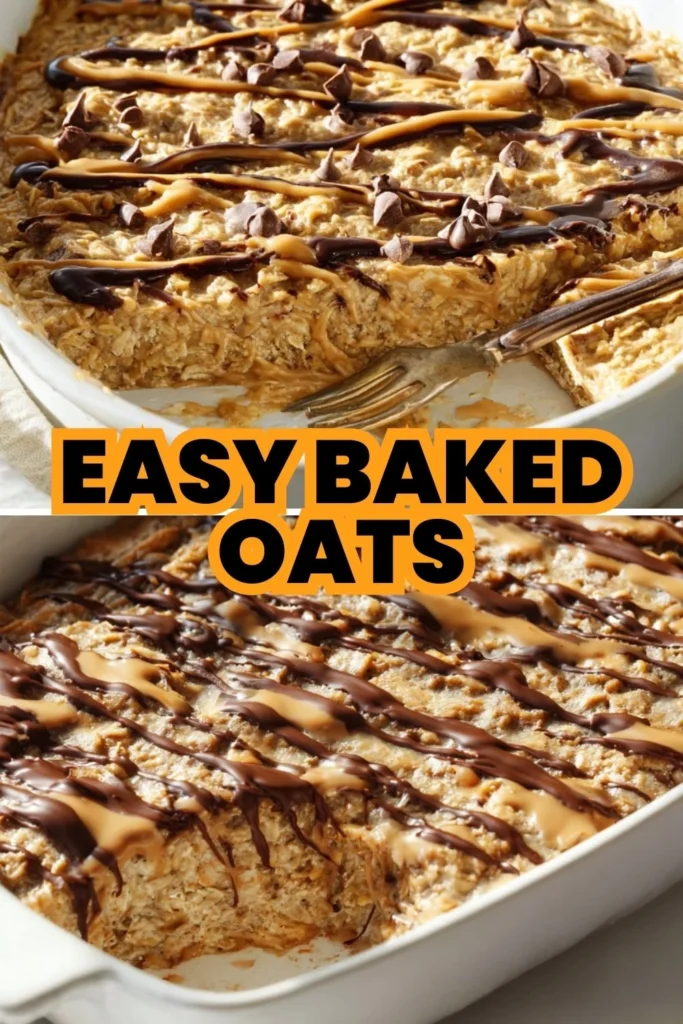
Easy Baked Oats
Ingredients
Method
- Preheat your oven to 350°F (175°C).
- In a large bowl, mix the rolled oats, milk, Greek yogurt, honey or maple syrup, eggs, baking powder, vanilla extract, and cinnamon until well combined.
- If using, gently fold in the mixed berries.
- Pour the mixture into a greased baking dish.
- Bake for 25-30 minutes or until set and golden on top.
- Let cool slightly before slicing into squares.