Crispy Rice Salmon
Introduction
Hello — I’m Carla Carter, founder and recipe developer at RecipesCabin. If you’re looking for a recipe that’s flavorful, comforting, and wonderfully approachable, Crispy Rice Salmon is a beautiful place to start. This dish is for anyone who wants a satisfying meal without feeling overwhelmed: home cooks who are new to frying, people returning to the kitchen after a break, or anyone who has worried about “messing up” a fancy-sounding recipe.
What makes this recipe approachable is its straightforward steps and familiar ingredients. You don’t need complicated tools or advanced techniques to get a great result — just a little patience and attention to the simple visual and textural cues I’ll point out along the way. It’s a great recipe to learn from because it teaches small, transferable skills (shaping rice, pan-frying to crispness, balancing a quick marinade) that you’ll use again and again. I’ll walk beside you as you cook so you feel confident and calm, not rushed or judged.
Why this recipe is easy to get right
Crispy Rice Salmon is forgiving for several reasons. The rice cakes are sturdy and tolerant of uneven shaping — they just need to hold together enough to be fried. The avocado component is forgiving because mashed avocado is naturally creamy and forgiving of small seasoning differences. The salmon cooks quickly and its spicy marinade is bold enough to carry small variations in time or temperature.
There’s flexibility built in: if your rice is a touch wetter than mine, the cakes might be softer and still crisp up nicely. If your jalapeño is mild, the extra sriracha drizzle adds kick. You don’t need to be exact to get a delicious outcome. Most steps benefit from attention (like getting a nice golden crust on the rice), but none require perfection. Small imperfections — a slightly uneven rice cake edge or a dollop of avocado that’s not perfectly smoothed — are part of the charm and won’t ruin the dish.
How to make Crispy Rice Salmon
Overall process in three parts: make and cool the rice, form and fry the rice cakes, then assemble with avocado and marinated salmon.
First, cook the sushi rice according to package instructions and let it cool completely. Cooling the rice firms up the grains and makes the cakes hold together better. While the rice cooks, you can prep the avocado and make the spicy salmon marinade.
Next, form the cooled rice into cake shapes. Think of compacting the rice together gently so it sticks, but not so firmly that it becomes dense. The cakes should be compact and hold their shape when you transfer them to the pan.
Then heat oil in a pan and fry the rice cakes until golden and crispy on both sides. This is where simple observation matters: watch for a deepening golden color, listen for a steady sizzle, and gently test the edge with a spatula — it should release easily when it’s ready to flip.
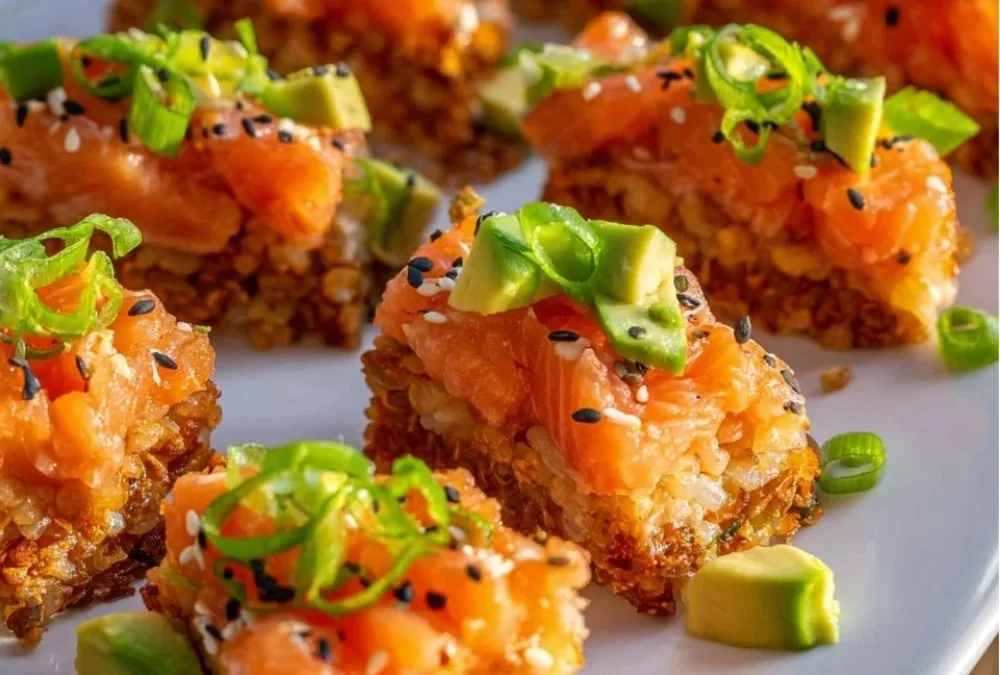
Finally, top each crispy rice cake with a dollop of smashed avocado and a piece of spicy salmon, garnish and serve immediately. The contrast of warm crispy rice and cool, creamy avocado with bright, spicy salmon is what makes the dish sing.
Beginners should slow down when forming the rice cakes and when frying. Both steps reward gentle hands and a bit of patience. Don’t rush a flip — a premature flip can break the cake. Use visual cues (golden color, set edges) rather than a strict timer.
Ingredients
sushi rice, water, avocado, salmon, jalapeño, sriracha, sesame seeds, salt, oil for frying
Let’s look at what each ingredient does and why none are intimidating.
- Sushi rice: This is the glue of the dish. It’s sticky, tender, and holds together so you can shape cakes. It’s not fancy — just follow the package directions for a fluffy, slightly sticky result. If the rice seems too soft right after cooking, cooling it will help firm the grains so they bind better.
- Water: Used to cook the rice. The correct rice-to-water ratio is typically on the rice package — that little instruction is your friend. The cooked rice should feel moist but not soupy.
- Avocado: Adds creaminess and a cooling contrast to the spicy salmon. Mashed avocado is forgiving — a fork and a sprinkle of salt are often all you need to bring out its flavor.
- Salmon: Provides rich, savory protein and pairs beautifully with the rice and avocado. The marinade gives it a spicy lift and brightens the overall flavor. A fresh piece of salmon or even sashimi-grade for a delicate finish will work, but any good-quality salmon is fine.
- Jalapeño: A slice or two adds a crisp, bright heat on top — a little goes a long way. If you prefer less heat, remove the seeds and ribs; if you like more, leave them in.
- Sriracha: This is the spicy marinade base and a finishing drizzle. It’s familiar, bold, and straightforward. It adds heat and a touch of sweetness without complicated mixing.
- Sesame seeds: Add a small nutty crunch and a visual finish. They’re optional for texture and look, but I like them as a final touch.
- Salt: The simple, essential flavor enhancer. Salt seasons the avocado and can be used lightly on the salmon if the marinade needs it.
- Oil for frying: Neutral oils with a high smoke point (like vegetable, canola, or light olive oil) work well. Enough oil is needed to get good contact with the pan so the rice cakes turn golden and crisp.
Together, these ingredients create a balance of textures and flavors: crisp and warm, cool and creamy, and bright and spicy. None require advanced prep, and they’re all pantry-friendly.
Directions
- Cook sushi rice according to package instructions and let it cool., 2. Form cooled sushi rice into cake shapes., 3. Heat oil in a pan and fry the rice cakes until golden and crispy on both sides., 4. In a bowl, smash the avocado and season it with salt., 5. Prepare the salmon in a spicy marinade (like sriracha) and set aside., 6. Top each crispy rice cake with a dollop of smashed avocado and a piece of spicy salmon., 7. Garnish with a slice of jalapeño, a dash of sriracha, and sprinkle sesame seeds on top., 8. Serve immediately and enjoy!
Supportive guidance around the steps
Step 1 — Cook and cool the rice: Follow the package directions for water and cooking time. Once cooked, spread the rice slightly on a tray or leave it in the rice cooker with the lid off briefly to let steam escape. You want the grains to be separate but sticky — cooling is important because warm rice is softer and harder to shape. Cooling gives the grains a chance to firm and cling together.
Step 2 — Form the rice cakes: Wet your hands or use a lightly damp spoon to prevent sticking. Scoop a portion of cooled rice and gently press it into a compact cake — the size is up to you, but aim for something that will fry through in a few minutes per side. Press just enough to hold shape; over-compressing can make the interior dense. Don’t worry if the edges aren’t perfect; rustic shapes crisp up nicely.
Step 3 — Fry to golden and crispy: Use a skillet that holds heat evenly and add enough oil so the bottom of the cake makes good contact. Heat the oil until it’s hot but not smoking — a steady ripple on the surface and a gentle sizzle when you lower a bit of rice in are the cues. Cook without moving until the bottom is a deep golden brown, then flip carefully with a wide spatula. If it resists when you lift, give it a few more seconds; it should release cleanly when ready. Cook both sides until golden and crisp.
Step 4 — Smash the avocado: Use a bowl and fork to mash the avocado to a spreadable consistency. Season lightly with salt. Taste and adjust — a little extra salt can amplify the avocado’s flavor. Keep the avocado cool; it pairs best with warm rice and fish.
Step 5 — Marinate the salmon: Toss the salmon gently with sriracha or your chosen spicy marinade and let it sit briefly. The goal is flavor, not to cook the fish in the marinade. If you prefer the salmon seared lightly, do that in a hot pan for 30–60 seconds per side; if you prefer it more raw, choose sashimi-grade salmon and keep it chilled until assembly.
Step 6 & 7 — Build and garnish: Place a spoonful of smashed avocado on each rice cake and top with the marinated salmon. Add a jalapeño slice for brightness, a light dash of sriracha if you want more heat, and sprinkle with sesame seeds for texture and look. Serve immediately so the rice stays crisp.
Step 8 — Serve immediately: Crispy rice is at its best right after frying. If it sits too long it will soften as the steam from toppings transfers back into the rice.
If something doesn’t look perfect — a cake breaks when flipping or the crust isn’t uniformly golden — it’s okay. You can press the rice back together gently, crisp the broken pieces, or simply pile the toppings over the imperfect area. The flavors make up for small visual flaws, and the dish will still taste delightful.
Key techniques you’ll practice in this recipe
This recipe teaches several foundational skills:
- Cooking rice to the right texture: learning how to judge moisture and stickiness, and why cooling changes rice structure.
- Forming and handling shaped rice: gentle compaction, avoiding over-compressing, and using damp hands to prevent sticking.
- Pan-frying for crispness: judging pan temperature, watching for color change, and timing flips for an even crust.
- Quick marinades: balancing a bold sauce like sriracha with a short marination time to flavor fish without overworking it.
- Simple assembly and seasoning: combining textures and flavors so each bite has contrast.
These techniques are useful in many other recipes: crispy rice skills help with fritters and patties; pan-frying skills transfer to vegetables and proteins; and making quick marinades and smashed avocados helps with salads, sandwiches, and bowls.
Common mistakes and how to avoid them
Mistake: Rice too warm and falling apart when shaped.
- Fix: Let the rice cool until it’s just room temperature or slightly cooler. Patience here solves most issues.
Mistake: Rice cakes stick to the pan or fall apart on flip.
- Fix: Ensure the pan and oil are hot before adding rice. Use a wide spatula and let the cake form a deep golden crust before flipping.
Mistake: Salmon or avocado overpowering or under-seasoned.
- Fix: Taste the smashed avocado and add a pinch more salt if needed. For salmon, allow the sriracha to flavor it but taste a small piece first and adjust salt balance accordingly.
Mistake: Rice cakes become greasy.
- Fix: Use just enough oil for a thin layer and drain briefly on paper towels if needed. The goal is crispness, not a pool of oil.
Mistake: Dish becomes soggy when waiting to serve.
- Fix: Assemble just before serving. If you must hold the rice cakes, leave them on a warm oven tray (low temperature) to keep crispness.
If a step goes off track — for example, an over-browned cake — you can remove the worst bits and serve the rest. Recovering is usually a matter of small adjustments, not starting over.
How to adjust confidently without changing the recipe
You may want to scale or tweak the dish while keeping the exact steps and ingredients:
Portion scaling: Think in multiples. If you double the rice, form more cakes and use a larger pan or fry in batches. Keep oil temperature consistent for each batch. Scaling up doesn’t change the method; it just requires more time and space.
Flavor preferences: If you like less heat, use fewer jalapeño slices or a lighter sriracha drizzle. If you prefer more, add a touch more sriracha to the salmon or an extra jalapeño slice as garnish. These are conceptual tweaks that don’t alter steps, just the intensity of flavors.
Texture tweaks: For a softer interior, press the rice a little more firmly when forming cakes. For a lighter interior, press less and accept a slightly more fragile cake that will still crisp at the edges. These are choices you make while forming, not additional steps.
You can make these adjustments confidently because the recipe’s structure — cook rice, form cakes, fry, assemble — stays the same. Small changes in seasoning, shape, and portion are easy to manage without risk.
Serving, storage, and reheating made simple
Serving:
- Present the rice cakes warm with the salmon and avocado on top. A small platter works well for sharing. Offer extra sriracha or lime wedges at the table for those who want more zip.
- Serve immediately for the best contrast between warm, crispy rice and cool avocado.
Storage:
- Leftovers are best kept separately. Store unfried shaped rice in an airtight container and refrigerate for up to 24 hours. Cooked salmon and mashed avocado don’t store well together with the rice because the avocado will darken and the rice will soften.
- If you’ve assembled the dish, store components separately: rice cakes in one container, salmon in another, and avocado in a third (cover the avocado surface with plastic wrap to minimize browning).
Reheating:
- To restore crispness, reheat rice cakes in a hot, lightly oiled skillet for a few minutes per side or pop them in a 375°F (190°C) oven for 6–8 minutes until crisp. Avoid microwaving if you want crunch; it makes the rice soft.
- If the salmon is chilled, bring it to room temperature before assembling for better texture. Reheat gently only if you prefer warm salmon — a quick sear in a hot pan for 20–30 seconds per side can do the trick without overcooking.
- For mashed avocado, it’s best freshly made. If you must store it, use it within a day and press plastic wrap onto the surface to slow browning.
Questions new cooks often ask about this recipe
How long should I cool the rice?
- Cool until it’s no longer steaming and feels slightly firm to the touch — usually 15–30 minutes depending on quantity and room temperature.
What kind of pan is best?
- A heavy-bottomed skillet helps distribute heat evenly. Nonstick or well-seasoned cast iron both work well.
Can I use leftover rice?
- Yes, cold leftover sushi-style rice is excellent for shaping and frying. It’s actually easier since it’s already cool and firmer.
What if my rice sticks to the pan?
- That usually means the oil wasn’t hot enough or the rice was too wet. Let the pan reheat and try again; keep the cakes intact by using a wide spatula to support them while flipping.
Is it normal for avocado to brown?
- Slight browning is normal over time. Serve avocado fresh for best color and brightness. A squeeze of lime can slow browning if you have it on hand.
Can I use other fish?
- The method works with other firm fish, but salmon’s texture and richness are part of this specific flavor profile. If trying a different fish, keep the steps identical and trust your senses when cooking.
Final encouragement from Carla
You don’t need to be perfect to make something delicious. Crispy Rice Salmon is a forgiving, joyful recipe that teaches simple, lasting skills while giving you a satisfying result on the first try. Expect a little learning curve — maybe a rice cake will break or a crust won’t form exactly as planned — and that’s completely fine. Every attempt teaches you something practical you’ll use next time. Keep things calm, follow the visual cues I’ve described, and trust that the flavors will carry you through. Cooking is progress over perfection.
Conclusion
If you’d like to see another take or visual inspiration, this version from Little Spice Jar shows a lovely approach to the spicy salmon topping: Crispy Rice Spicy Salmon – Little Spice Jar. The New York Times also has a helpful recipe that explores the crispy rice and salmon combination in a slightly different style: Crispy Rice With Salmon and Avocado Recipe.
Happy cooking — I hope this becomes one of your go-to recipes for confident, comforting meals.
Crispy Rice Salmon
Ingredients
Method
- Cook sushi rice according to package instructions and let it cool completely.
- Once the rice has cooled, form it into compact cake shapes.
- Heat oil in a pan and fry the rice cakes until golden and crispy on both sides.
- Smash the avocado and season with salt.
- Prepare the salmon by marinating briefly in sriracha.
- Top each crispy rice cake with a dollop of smashed avocado and a piece of spicy salmon.
- Garnish with a jalapeño slice, a dash of sriracha, and sprinkle sesame seeds on top.
- Serve immediately and enjoy!