Thai Peanut Sweet Potato Buddha Bowl That Will Brighten Your Day
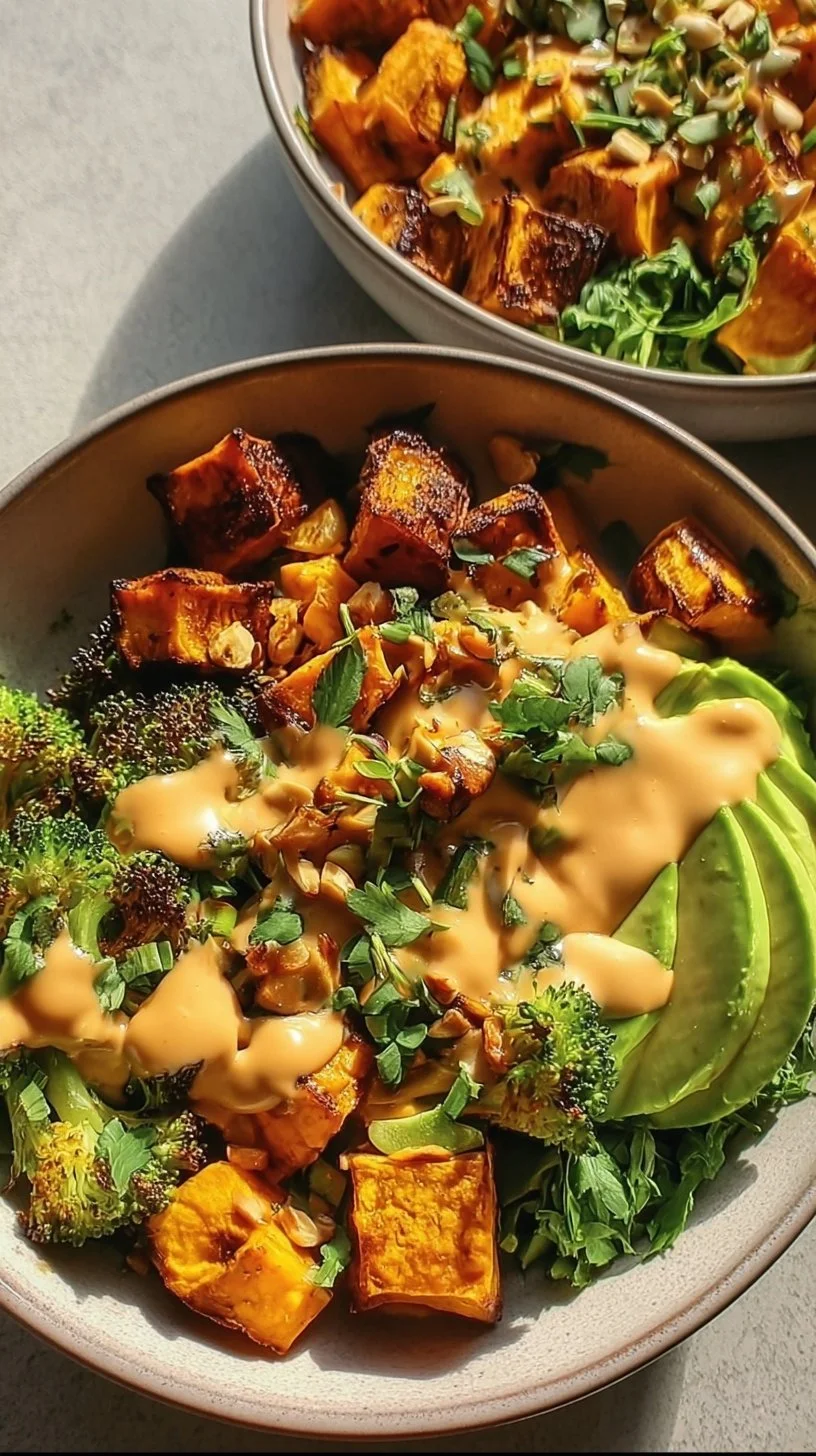
Hi — I’m Sarah Collins. If your evenings look anything like mine used to — a juggling act of kids’ activities, homework, and the small miracle of getting dinner on the table — this Thai Peanut Sweet Potato Buddha Bowl That Will Brighten Your Day is the kind of meal that quietly makes life easier. It brings familiar, comforting flavors (sweet roasted potatoes, creamy peanut sauce, crisp veggies) in a way that’s straightforward to prepare, and it feels special without asking for extra time or fuss.
This bowl is particularly useful for weeknights when you want something wholesome without a big time commitment, for casual gatherings where people can build their own bowls, and for make-ahead meals when a little prep early in the day pays off in a calm evening. If you’re looking for an approachable one-dish dinner that kids will eat and adults will appreciate, this fits the bill. It’s steady, dependable, and full of the kinds of textures and tastes that feel like a cozy, flavorful hug.
If you enjoy sweet potato-forward dinners, you might also like a heartier take like the Sweet Potato Burger Bowl, which uses similar oven-roasted sweet potato logic but goes in a different direction. That kind of cross-over is why this recipe belongs in a weeknight rotation — the techniques translate to other family favorites.
How to make Thai Peanut Sweet Potato Buddha Bowl That Will Brighten Your Day
This is a “cook a few things, assemble and eat” kind of recipe. Expect three broad stages: roast the sweet potatoes so they’re tender and slightly caramelized; prep quick vegetables (steam or roast broccoli, shred cabbage, grate carrots); and make the peanut sauce, which brings everything together. Assembly is forgiving — you can arrange everything in a bowl, drizzle, and let people top to taste.
Where beginners should slow down: roasting and timing. Give the sweet potatoes real time in the oven so they soften and develop a little brown edge; that’s where the flavor is. Also, make the peanut sauce to taste — start with less lime and maple syrup, then adjust. Where shortcuts naturally exist: use pre-shredded cabbage or pre-grated carrots from the store, and buy roasted sweet potatoes if your grocery has them. If you need to save even more time, microwave the sweet potatoes until just tender and then pop them under the broiler for color — not as caramelized as oven-roasting, but wonderfully quick.
If you enjoy bowls with similar flavor profiles, give this method a try next to a saucier dish like the BBQ Chicken Sweet Potato Bowl, where the assembly approach is nearly identical and swaps keep dinners fresh and interesting without reinventing the wheel.
Ingredients
4 medium Sweet Potatoes (roasted), 2 tablespoons Olive Oil, to taste Salt, to taste Pepper, 2 cups Broccoli Florets (or cauliflower), 2 cups Shredded Cabbage, 1 cup Grated Carrots (or radishes), 1 medium Avocado (or tahini/sunflower seeds), 1/2 cup Peanut Butter (or almond butter), 2 tablespoons Soy Sauce (or tamari), 2 tablespoons Maple Syrup (or agave syrup), 2 tablespoons Lime Juice (or lemon juice), 1 tablespoon Sesame Oil (omit for nut-free), 1/4 cup Cilantro (or parsley), 1/4 cup Chopped Peanuts (or sunflower seeds)
Each item has a simple role: the sweet potatoes carry the bulk of comfort and sweetness, olive oil helps them caramelize, and salt and pepper are the everyday seasonings that make everything sing. Broccoli adds a firm, kid-friendly bite; shredded cabbage gives crunch; grated carrots add sweetness and color. Avocado lends creaminess (or swap in tahini or seeds if you want different fats/textures). Peanut butter creates the rich, slightly savory sauce base, while soy sauce, maple syrup, and lime juice balance salt, sweet, and bright acid. Sesame oil brings that toasty aroma (skip it for a nut-free family), cilantro or parsley finishes with fresh herb flavor, and chopped peanuts add the final crunch. Those “or” options are your safety net — they keep the recipe flexible and friendly to pantry realities.
If you often make batch-friendly breakfasts or bowls, you’ll find these ingredients overlap with other meals. For instance, some of the same prep ideas work well if you’re prepping sweet potatoes for morning recipes like Breakfast Sweet Potato. Little overlaps like that keep grocery lists short and dinner decisions easier.
Directions
Directions
Below the original directions are left exactly as provided, and here I’ll walk you through what to expect at each stage without changing those steps. When you roast the sweet potatoes, you want them tender all the way through with a few browned edges — you’ll smell that caramelized sweetness as they finish. For the broccoli, either steaming until bright green and just tender or roasting alongside the potatoes until edges turn nutty both work; choose based on how much oven space you have. The shredded cabbage and grated carrots are raw and provide crunch, so keep them crisp; if you’re prepping ahead, store them separately so they don’t wilt.
When you make the peanut sauce, aim for a silky consistency that’s pourable but thick enough to coat veggies. If your peanut butter is very stiff, warm it slightly or thin with a tablespoon or two of warm water. Taste for balance: more lime if it needs brightness, more maple if it needs sweetness, and a touch more soy for salt. Assemble bowls by layering sweet potatoes, vegetables, avocado, and a generous drizzle of sauce. Finish with cilantro and chopped peanuts for freshness and crunch.
Common small mistakes to avoid: overcooking the vegetables until they’re floppy (kids usually prefer a little bite), adding too much sauce at once (you can always add more), and forgetting salt on the roasted sweet potatoes — that simple step brings out a surprising amount of flavor.
Why families love this dish
This bowl hits a lot of the boxes that matter at the end of a long day. The flavors are familiar — sweet from the potatoes, nutty and slightly savory from the peanut sauce, a bright citrus note from lime. Kids often respond first to the sweet potato and the colorful bowls; adults appreciate how balanced the whole thing feels without a lot of fuss.
Comfort factor: there’s warmth from the roasted potatoes and creaminess from avocado and the peanut sauce. Kid-friendliness comes from the textures kids generally like — soft potato, crunchy carrots, and an easy-to-handle dipping sauce. Versatility matters for picky eaters: separate components let everyone assemble their own bowl, so a child who doesn’t love cilantro can leave it off while someone else sprinkles on extra peanuts.
Smart substitutions keep the recipe reliable. If someone in your family can’t eat peanuts, almond butter or sunflower seed butter works in a pinch; omit sesame oil if that’s a concern. If you want to add a protein without changing the recipe, grilled chicken or tofu tuck in nicely and make the bowl more filling for bigger appetites. For more spicy or tangy versions, a little sriracha or extra lime will do the trick without complicating the process.
If you like meals where the same prep idea can be used again and again with small swaps, you might also enjoy trying a different protein-forward bowl like the Honey Sriracha Salmon Bowls, which use similar assembly logic but lean on a different sauce.
Make-ahead tips, leftovers, and storage
This bowl is very forgiving for make-ahead. Roast the sweet potatoes a day or two in advance and keep them in an airtight container in the fridge. Prep raw components — shred the cabbage, grate carrots, chop cilantro, and portion out peanuts — and store them separately. The peanut sauce keeps well in the fridge for several days; a quick stir or gentle warming brings it back to a pourable state.
Best storage method: store components separately when possible to preserve texture. Keep roasted sweet potatoes in one container, sauce in a small jar, and crisp veggies in another. When you reheat roasted sweet potatoes, a quick 5–10 minute oven reheat at 350°F (or a brief skillet warm-up) keeps them pleasantly moist. Avoid microwaving for too long, which can dry edges; if using a microwave, cover and add a teaspoon or two of water to keep steam.
Lunchbox or next-day uses: this bowl makes excellent leftovers. Pack the roasted sweet potatoes, veggies, and sauce separately and assemble at school or work. The flavors meld nicely over a day, and the peanut sauce holds up well. You can also turn leftovers into a warm stir-fry: chop the roasted sweet potatoes and pan-sauté briefly with broccoli and a spoonful of the sauce for a different texture and quick dinner.
Common questions home cooks ask about this recipe
Q: How long should I roast the sweet potatoes?
A: Roast until they’re tender and have some browned edges — this usually takes about 30–45 minutes depending on oven temperature and size. A fork should slide in easily. Patience here pays off.
Q: My peanut sauce is too thick. What do I do?
A: Thin it with a small amount of warm water, a teaspoon at a time, until you reach a pourable consistency. Warmth helps loosen dense nut butters.
Q: My family is picky about cilantro. Any tips?
A: Offer cilantro on the side and consider parsley as a milder substitute. Also let everyone build their own bowl so picky eaters can opt out of extras.
Q: Can I scale this up for a crowd?
A: Yes — the components scale nicely. Roast more sweet potatoes and double or triple the sauce ingredients. Keep sauce quantity moderate so people can add more if they want.
Q: My sweet potatoes aren’t caramelizing — what went wrong?
A: Make sure they’re cut into even pieces, roast at a hot enough temperature (around 400°F is common), and don’t crowd the pan. A light coating of oil helps browning.
Q: Nut-free with similar flavor?
A: Use sunflower seed butter instead of peanut butter and omit sesame oil if there’s concern about seeds — the flavor alters slightly but keeps the same comforting profile.
These are the small questions that often stop cooks mid-recipe; once you see how simple the answers are, this recipe becomes reliable and repeatable.
Final thoughts from Sarah
I come back to this bowl on busy weeks because it’s dependable and adaptable. The flavors are familiar and comforting, the prep fits into family life, and the assembly makes dinner feel casual and satisfying even when time is short. It’s one of those recipes that lets you keep dinner interesting without reinventing everything every night.
If you’ve got a busy household, a couple of drawers full of prepped components can turn an evening around — and you’ll be surprised how a straightforward peanut sauce elevates plain vegetables into something your family looks forward to. Keep a jar of peanut butter and a couple of sweet potatoes in rotation, and this bowl will be there for you on short notice.
Happy cooking, and I hope this becomes one of your steady weeknight solutions.
— Sarah Collins
Conclusion
If you want a little inspiration beyond this recipe, Robin Asbell’s approach to bowls is a great read for ideas on layering flavors and textures — see Lighten Up with a Big Fat Buddha Bowl for a thoughtful take. For lots of variations and ideas to keep your bowls interesting over time, check out this curated collection of bowl recipes at 31+ Best Buddha Bowl Recipes | Feasting At Home.
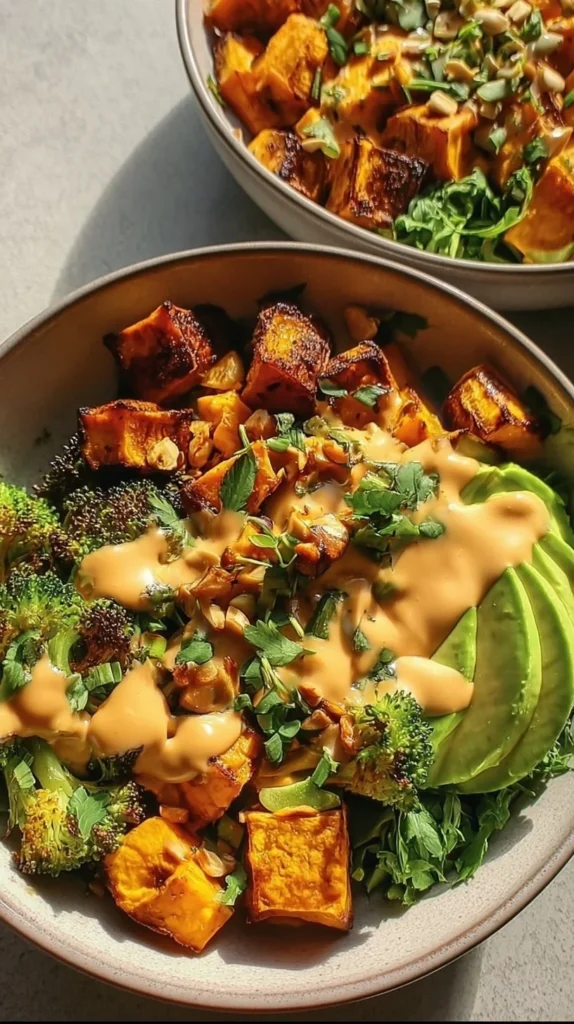
Thai Peanut Sweet Potato Buddha Bowl
Ingredients
Method
- Preheat the oven to 400°F (200°C). Cut the sweet potatoes into equal pieces.
- Toss sweet potatoes with olive oil, salt, and pepper on a baking sheet.
- Roast for 30–45 minutes until they are tender and have some browned edges.
- While sweet potatoes are roasting, prepare the broccoli by either steaming until bright green and just tender or roasting alongside the potatoes.
- Shred the cabbage and grate the carrots. Keep them raw for crunch.
- In a bowl, combine peanut butter, soy sauce, maple syrup, lime juice, and sesame oil if using.
- Adjust thickness with water if necessary, and taste for balance, adding more lime or maple syrup if desired.
- In a bowl, layer roasted sweet potatoes, prepared vegetables, and sliced avocado.
- Drizzle with the peanut sauce and top with cilantro and chopped peanuts.