Asian Cabbage Stir Fry
Introduction
This Asian Cabbage Stir Fry is one of those recipes I reach for when evenings are full, appetites are hungry, and everyone wants something warm and familiar on the table. The flavors are straightforward — soy and garlic, a touch of ginger and sesame — which gives you that comforting, approachable taste kids like and adults appreciate. It’s the kind of dish that fits easily into weeknights, potlucks, or a make-ahead plan for lunches.
This recipe works for busy families because it’s fast, forgiving, and flexible. You can be chopping while dinner finishes warming up, and the whole thing comes together in under half an hour from start to finish. If you’re juggling homework, sports, or work calls, this is the sort of dish that won’t demand your full attention but will still deliver a bright, homey plate. If you want a slightly heartier meal, pair it with a protein or a simple carb and you’ve got dinner covered. For similar, quick weekday stir-fry inspiration featuring cabbage or a heartier protein swap, I sometimes glance at a sausage and cabbage stir-fry when I’m looking to stretch flavors into something a bit more filling.
Throughout this post I’ll walk you through what each stage of the recipe will look and smell like, the small mistakes to avoid, and the smart, family-friendly tweaks that keep this dish both reliable and loved by kids.
How to make Asian Cabbage Stir Fry
This stir fry is built around a few clear stages: prep, quick aromatics, softening the crunchy vegetables, a brief saucing step, and finishing touches. Expect about 20–30 minutes total on a busy night.
- Prep: Have everything chopped and measured. Stir fries move fast, so mise en place is the real time-saver here. If you’re new to the pan technique, this is where you should slow down — get the garlic and ginger minced small, and cut the cabbage thin. It makes the texture consistent and the cooking time predictable.
- Aromatics: Heating the oil and quickly cooking garlic and ginger gives you that fragrant base. You’ll smell the scent almost immediately; that’s the cue to add vegetables. Don’t let the garlic burn — it should sizzle and turn just golden in about 30 seconds.
- Vegetables: Bell pepper and carrot go in next to soften a bit without losing their bite. Then the cabbage joins the party and needs a few more minutes to become tender but still slightly crunchy. Cabbage holds up well to high heat, so you’ll get good texture without mush if you keep things moving in the pan.
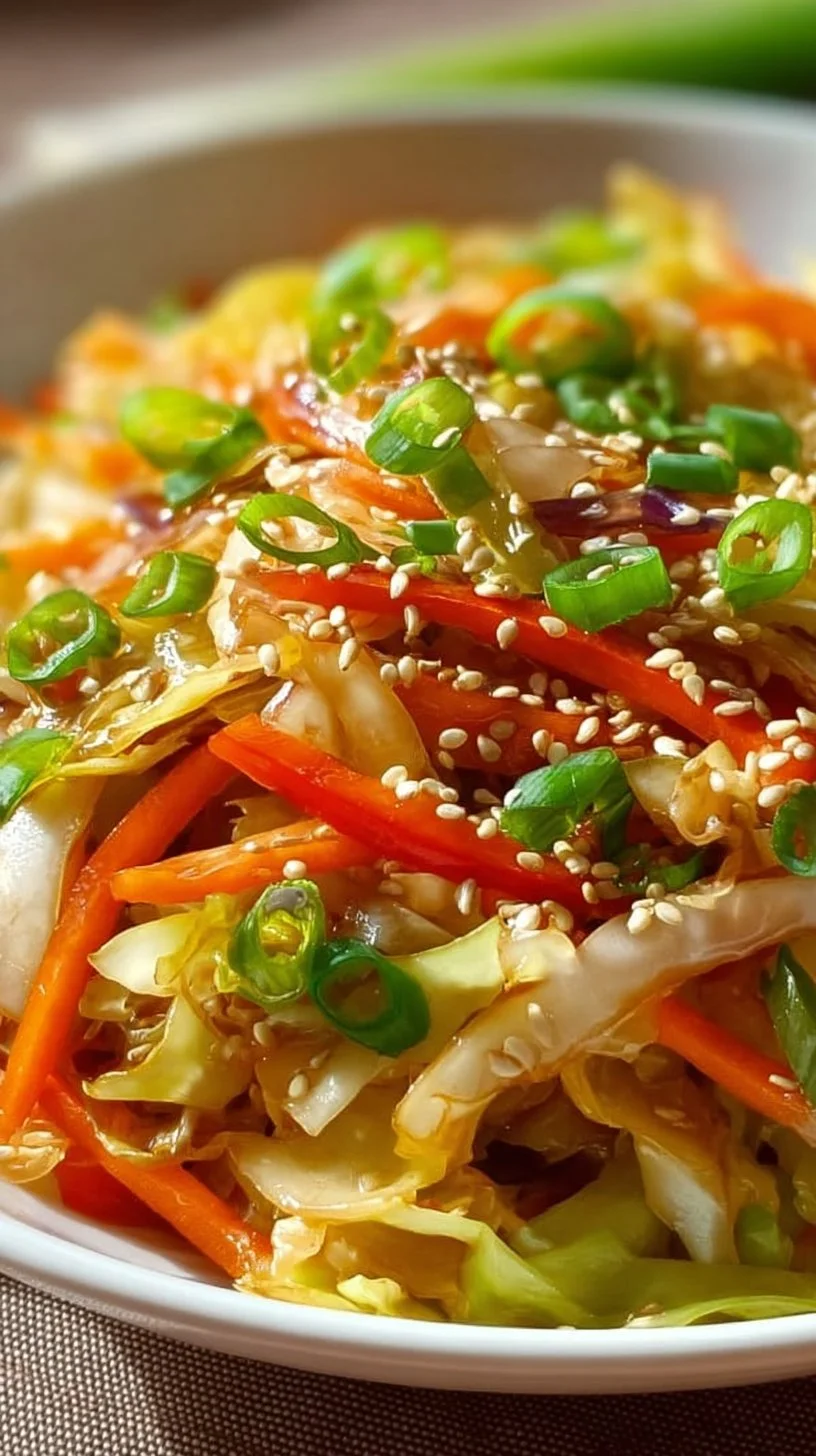
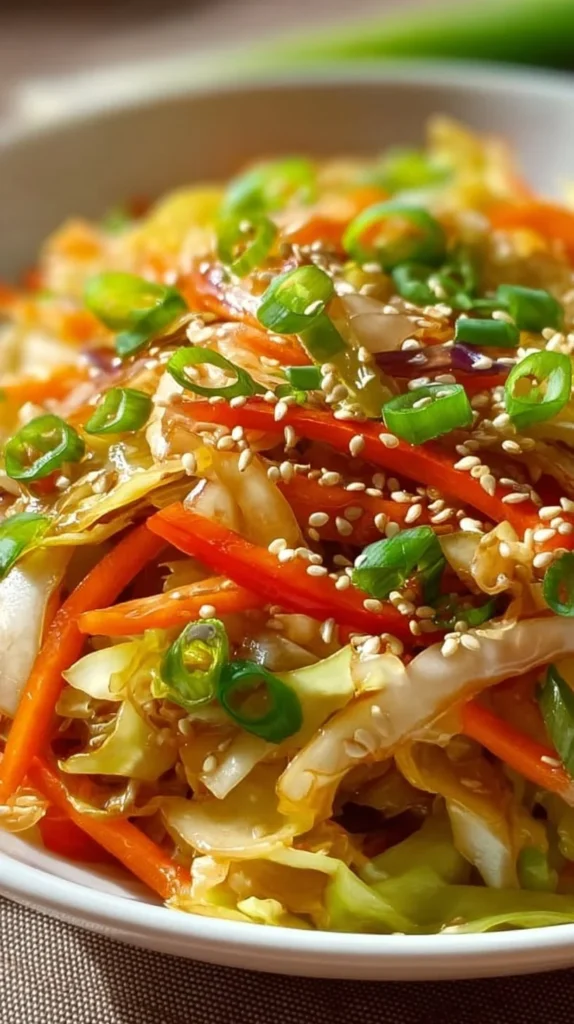
- Saucing and finishing: Pour the sauce over and toss so everything gets a glossy, even coating. Give it a minute or two to warm through so the flavors meld. Finish with green onions and sesame seeds for freshness and a little toasty crunch.
If you want to compare different stir-fry approaches or see how another cook handles cabbage texture, take a look at this beef stir-fry with vegetables for technique ideas that translate well to this recipe.
Where beginners should slow down: the first time you make this, don’t rush the garlic/ginger step or the cabbage sauté. Watch for the signs — fragrant garlic (not brown), slightly softened peppers and carrot, and cabbage that’s warmed through but still has a pleasant bite. Shortcuts: you can buy pre-shredded cabbage or pre-minced ginger if evenings are tight — the recipe still stands.
Ingredients
1 medium-sized green cabbage, thinly sliced, 2 tablespoons vegetable oil, 3 cloves garlic, minced, 1 inch ginger, minced, 1 red bell pepper, thinly sliced, 1 carrot, julienned, 3 tablespoons soy sauce, 1 tablespoon oyster sauce, 1 teaspoon sesame oil, 1 tablespoon rice vinegar, 1 teaspoon sugar, 1/4 teaspoon black pepper, 2 green onions, sliced, 1 tablespoon toasted sesame seeds
Here’s why each ingredient matters in simple, home-cook terms:
- Cabbage: The heart of the dish. It brings mild sweetness, bulk, and a lovely crunch when cooked right. Because it softens but doesn’t collapse, it’s family-friendly — texturally interesting but not fussy.
- Vegetable oil: Neutral for frying and safe for the higher heat used to stir-fry without smoking quickly.
- Garlic and ginger: The aromatic backbone. They give the stir fry warmth and familiar Asian-inspired flavor without being strong or off-putting to kids when used in modest amounts.
- Red bell pepper and carrot: Color, sweetness, and a little crunch. They make the dish look more appetizing to kids and provide slight sweetness that balances the savory sauce.
- Soy sauce and oyster sauce: The savory, umami base. Oyster sauce adds a bit of depth and gloss; soy brings salt and familiar flavor. They’re pantry staples for quick flavor building.
- Sesame oil: A finishing flavor — just a teaspoon goes a long way to give that toasty, nutty note you expect in an Asian-style stir fry.
- Rice vinegar and sugar: A tiny acid-sweet combo to brighten the sauce so it doesn’t taste flat. It lifts the flavors and makes the dish feel balanced.
- Black pepper: Subtle warmth for background seasoning.
- Green onions and toasted sesame seeds: Freshness and a little crunch to finish. They make the dish look cared for and add a mild oniony bite that kids often enjoy.
If you’re short on time, buying pre-julienned carrots or bagged shredded cabbage keeps this recipe fast. A quick note on pantry importance: keeping soy and a bottle of sesame oil or oyster sauce on hand makes weeknight flavor work almost effortless.
Directions
Prepare the vegetables by slicing the cabbage, bell pepper, and green onions, and julienning the carrot., In a small bowl, mix together soy sauce, oyster sauce, sesame oil, rice vinegar, sugar, and black pepper. Set aside., Heat a large wok or skillet over medium-high heat and add the vegetable oil., Once the oil is hot, add the minced garlic and ginger. Stir-fry for about 30 seconds until fragrant., Add the sliced bell pepper and carrot to the wok and stir-fry for 2-3 minutes until they begin to soften., Add the sliced cabbage to the wok. Stir everything together and continue to stir-fry for about 5-7 minutes, or until the cabbage is tender yet still crunchy., Pour the sauce mixture over the vegetables. Toss well to ensure the sauce is evenly distributed and coats the vegetables., Stir-fry for another 2 minutes, allowing the flavors to meld together., Remove from heat, sprinkle with sliced green onions and toasted sesame seeds., Serve hot as a side dish or a light main course.
Friendly guidance around the steps without changing them:
- Step 1 (prep): When you slice and julienne, aim for consistent sizes so everything cooks evenly. If kids want to help, they can wash the vegetables or snap the green onions — small hands can help without danger.
- Step 2 (sauce): Whisking the sauce in a small bowl ahead of time saves a frantic moment at the stove. Taste a small spoonful before you add it to the pan if you’re sensitive to salt — a little extra rice vinegar or a pinch of sugar is an easy balance.
- Step 3 (heat): Heat your pan until the oil shimmers. If you’re unsure, sprinkle a drop of water — it should sizzle. This ensures a quick, even stir-fry instead of a soggy sauté.
- Step 4 (aromatics): Garlic should smell fragrant but not browned. If it browns too much, the flavor turns bitter. Keep stirring so it heats quickly and evenly.
- Steps 5–7 (vegetables and cabbage): Tossing frequently keeps the vegetables crisp-tender. If you have a lid handy and the cabbage needs to soften a bit more, a short 30–60 second covered rest off the heat helps steam it gently without overcooking.
- Step 8 (finishing): When you toss in the sauce, watch for even gloss — that’s the cue the dish is ready to come off the heat. Overcooking after the sauce goes in can make the cabbage too soft.
Common small mistakes to avoid: overcrowding the pan (work in batches if needed), letting garlic burn, and adding too much sauce at once (you can always add a splash more later).
Why families love this dish
This stir fry hits a sweet spot for families: it’s quick, flavorful, and reliable. The flavors are familiar rather than bold, which makes it easy for picky eaters to accept; the soy and slight sweetness from the carrot and bell pepper are crowd-pleasers. It’s also visually appealing — the bright red pepper and green onions make the plate pop, and kids often eat with their eyes first.
Parents appreciate the ease of prep and the fact that cabbage stretches a meal without costing much. It pairs well with simple proteins and rice, which means you can customize portions for different appetites. It’s comforting and homey without being heavy, so it’s a good make-ahead lunch or a lighter weeknight option when you don’t want to spend a lot of time over the stove.
Smart substitutions and simple variations
If you need to tailor the dish to picky eaters or what’s in your fridge, there are safe, simple swaps that won’t derail the recipe:
- Protein add-ins: Tofu cubes, shredded rotisserie chicken, or thin slices of leftover pork can be stirred in during the saucing step to warm through. These add-ins keep things family-friendly and filling.
- Vegetable swaps: If bell pepper is a no-go, try thin-sliced zucchini or snap peas for a similar crunch. Mushrooms add umami if your family likes them.
- Sauce tweaks: For a milder sauce, reduce the oyster sauce slightly or add a touch more rice vinegar for brightness. If kids like sweeter flavors, a little extra sugar (half teaspoon) will do the trick without overpowering.
- Texture preferences: If someone prefers softer cabbage, simply cook it a minute or two longer before adding the sauce. If everyone likes it crisp, keep a shorter cabbage cook time.
None of these substitutions change the listed ingredients or directions; they’re ideas to make the recipe fit your family’s tastes without making it complicated.
Pairing ideas for a complete, satisfying meal
Here are easy, family-friendly ways to turn this stir fry into a full meal with minimal extra work:
- Rice or noodles: Steamed jasmine rice or quick-cook brown rice are classic and filling. Leftover rice reheats well for busy nights. For a noodle option, toss the stir fry with cooked rice noodles for an instant one-pan meal.
- Quick protein sides: A tray of baked or pan-seared chicken thighs (season simply with salt and pepper) pairs well if you want a meat side. For meatless nights, pan-fried tofu or an omelet sliced thin works beautifully.
- Simple salads: A cucumber salad with rice vinegar, a pinch of sugar, and sesame seeds keeps the meal bright without a lot of fuss.
- Kid-friendly sides: Steamed dumplings or a simple fruit plate can round out the meal and make it feel more special for kids.
These additions keep weekday dinners low-effort but complete. If you’re short on time, batch-cook rice earlier in the week so it’s ready to go.
Make-ahead tips, leftovers, and storage
This stir fry reheats well, which is one reason I love it for meal planning. Store leftovers in an airtight container in the fridge for up to 3–4 days. When reheating, do it gently: a quick toss in a hot skillet with a splash of water or a sprinkle of soy sauce helps revive texture and moisture. Microwaving works too — cover the dish loosely so steam helps keep the cabbage from drying out.
For lunches, use refrigerated leftovers as a filling for wraps, on top of warmed rice, or as a quick side next to a boiled egg. If you plan to make this ahead for a gathering, hold off on adding green onions and sesame seeds until just before serving so they stay fresh and crisp.
For inspiration on reheating and keeping stir-fries lively the next day, I sometimes apply the same gentle techniques I use when warming a beef stir-fry with vegetables — a hot pan and a splash of liquid go a long way to refresh leftovers.
Common questions home cooks ask about this recipe
Q: How long should the cabbage be cooked to stay crunchy but not raw?
A: Aim for 5–7 minutes in the pan after adding the cabbage. You want it tender yet still crunchy. Test a piece — it should be easy to bite but not floppy.
Q: Can I scale this recipe up for a crowd?
A: Yes. Use a very large wok or a heavy-bottomed skillet, or cook in batches to avoid overcrowding. Scaling the sauce proportionally and combining at the end works well.
Q: My garlic browned too quickly. What happened?
A: Your pan was probably too hot or the garlic was added before the oil had evenly warmed. Next time, reduce heat slightly and watch the garlic — it should be fragrant and pale golden, not dark brown.
Q: Is oyster sauce necessary?
A: Oyster sauce adds depth, but if you don’t have it, a bit more soy sauce and a teaspoon of hoisin or a tiny dab of miso (if you have it) can stand in and still produce a tasty sauce. (This is an adjustment note only — keep the original ingredients for the recipe as written.)
Q: Will this work with bagged pre-shredded cabbage?
A: Absolutely. It’s a time-saver and keeps the recipe weeknight-friendly. Just watch the cook time — pre-shredded versions may soften faster.
Final thoughts from Sarah
This Asian Cabbage Stir Fry is one of those dependable dishes that makes weeknights feel a little less hectic. It’s quick to pull together, easy to adapt, and offers flavors that feel familiar and comforting for kids and adults alike. Keep your prep simple, don’t rush the aromatics, and use the finishing touches (green onion and sesame seeds) to make the dish feel thoughtful even on a rushed night. Trust the process — once you’ve made it a couple of times, you’ll know the little cues that tell you it’s perfectly cooked.
Thanks for letting me share a family favorite. I hope this becomes one of those reliable rotation recipes you reach for when life is busy and everyone still needs a warm, satisfying meal. — Sarah
Conclusion
If you’d like to see another simple take on cabbage cooked quickly and deliciously, Allrecipes has a helpful version in their Allrecipes’ Super Easy Cabbage Stir Fry Recipe that offers straightforward tips. For a more traditional approach and extra technique notes on Chinese-style cabbage stir-fry, The Woks of Life’s Chinese Cabbage Stir-Fry is a great reference.
Asian Cabbage Stir Fry
Ingredients
Method
- Prepare the vegetables by slicing the cabbage, bell pepper, and green onions, and julienning the carrot.
- In a small bowl, mix together soy sauce, oyster sauce, sesame oil, rice vinegar, sugar, and black pepper. Set aside.
- Heat a large wok or skillet over medium-high heat and add the vegetable oil.
- Once the oil is hot, add the minced garlic and ginger. Stir-fry for about 30 seconds until fragrant.
- Add the sliced bell pepper and carrot to the wok and stir-fry for 2-3 minutes until they begin to soften.
- Add the sliced cabbage to the wok. Stir everything together and continue to stir-fry for about 5-7 minutes, or until the cabbage is tender yet still crunchy.
- Pour the sauce mixture over the vegetables. Toss well to ensure the sauce is evenly distributed and coats the vegetables.
- Stir-fry for another 2 minutes, allowing the flavors to meld together.
- Remove from heat, sprinkle with sliced green onions and toasted sesame seeds.
- Serve hot as a side dish or a light main course.