High Protein Vegetarian Taco Skillet
Introduction
This High Protein Vegetarian Taco Skillet is the kind of weeknight meal I reach for when I want something straightforward, flavorful, and reliably satisfying without feeling heavy. It brings together quinoa, black beans, and bright vegetables in a single pan so the work happens in one place and clean-up is minimal. For me, meals like this fit into a calm routine: they’re simple enough for busy evenings, forgiving enough to make again for lunches, and flexible enough to repeat during a weekly rotation without getting boring.
If you enjoy meals that are tuned for everyday balance, you’ll find the approach here familiar. The recipe’s focus on texture—slightly fluffy quinoa, creamy beans, crisp-tender veggies, and melty cheese—gives the feeling of indulgence while keeping the composition balanced. I sometimes pair this style of skillet with other quick, high-protein ideas like High Protein Bagel Bites when planning a few days of convenient meals.
How this recipe fits into a balanced lifestyle
This skillet supports a balanced approach by combining plant protein, whole grains, vegetables, and a modest amount of fat. It’s not about restriction; it’s about making mindful choices that help meals feel lighter without sacrificing satisfaction. The quinoa and black beans provide the bulk of the protein and fiber, which helps keep portions reasonable while providing lasting energy. Vegetables like bell pepper and zucchini bring freshness and moisture, which lighten the overall mouthfeel.
Because the dish is served in sensible portions and emphasizes ingredient quality over heavy sauces or frying, it’s an easy fit into a varied weekly routine. On nights when you want something cozier, a scoop of sour cream or a sprinkle of cheese adds comfort. On busier days, this skillet reheats well and stays flavorful, so you can cook once and eat twice—or thrice. If you’re mapping out a week of balanced meals, consider pairing this kind of one-pan dish with a lighter breakfast like the Easy High Protein Cottage Cheese Pizza Bowl to keep variety and satisfaction high.
How to make High Protein Vegetarian Taco Skillet
At its core, this recipe is about sequential, efficient cooking: soften the aromatics, add the grains and beans so they can cook together, and finish with cheese and toppings. The overall flow is forgiving—there’s room to pause between steps if you need to chop more or tend to dinner elsewhere—and the flavors deepen as the quinoa absorbs the seasoned liquid.
Simplicity matters most at two points: the initial sauté and the simmer. Give the onion, bell pepper, and zucchini enough time to soften and develop a little color; that’s where a lot of the savory base comes from. When you add the quinoa and beans, stir to coat them with the spices so every bite tastes integrated. Finally, melt the cheese in gently—this keeps the texture creamy rather than oily.
If you want to keep things easy, use a wide skillet with a lid so the quinoa cooks evenly. A tight-fitting lid helps traps steam and finishes the quinoa without fuss. Small, mindful habits—like seasoning gradually and tasting at the end—make a simple recipe feel composed rather than rushed. For more tips on other high-protein, simple crowd-pleasers I like, I often reference ideas like High Protein Breakfast Burritos for inspiration on rolling similar flavors into other meals.
Ingredients
1 cup quinoa, 1 can black beans, drained and rinsed, 1 bell pepper, diced, 1 zucchini, diced, 1 onion, diced, 1 cup corn (fresh or frozen), 1 cup shredded cheese (cheddar or Mexican blend), 2 tablespoons olive oil, 1 teaspoon cumin, 1 teaspoon chili powder, Salt and pepper to taste, 1 avocado, sliced, Sour cream or Greek yogurt for topping
Each ingredient here plays a clear role. Quinoa supplies a nutty base and plant-based protein; it’s light but substantial. Black beans add creaminess and fiber; they’re a satisfying counterpoint to the grain. Bell pepper and zucchini bring brightness, color, and a slightly crisp texture when sautéed correctly, while the onion builds savory depth. Corn adds a touch of sweetness and pop—which helps the skillet feel more composed and less monotonous.
Olive oil is the cooking medium and brings a gentle richness without weighing the dish down. Cumin and chili powder provide the warm, familiar taco spices; they’re subtle but essential for unifying the flavors. The cheese adds creaminess and a savory finish, and the sliced avocado plus sour cream or Greek yogurt add cooling, silky contrast on top. Together these choices make a balanced plate that’s more about combination than restriction—small amounts of cheese and fat create satisfaction without dominating the dish.
Directions
- In a large skillet, heat olive oil over medium heat.,
- Add onion, bell pepper, and zucchini. Sauté until softened, about 5-7 minutes.,
- Stir in the quinoa, black beans, corn, cumin, chili powder, salt, and pepper.,
- Add 2 cups of water and bring to a boil.,
- Reduce heat, cover, and simmer for about 15 minutes, or until quinoa is cooked.,
- Stir in shredded cheese until melted.,
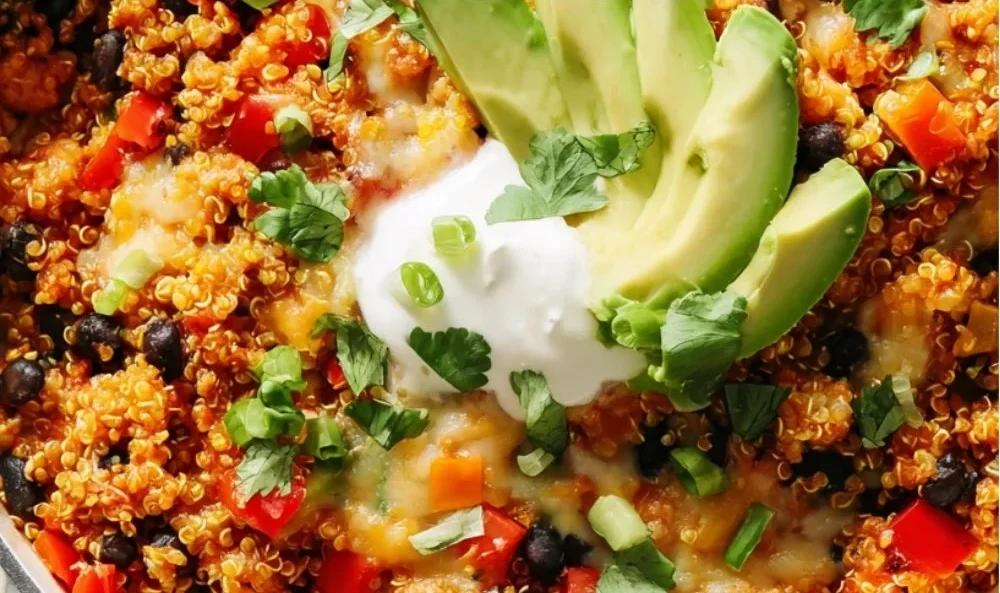
- Serve topped with sliced avocado and a dollop of sour cream or Greek yogurt.
As you move through these steps, there are a few simple cues to watch for. When sautéeing the onion, bell pepper, and zucchini, look for the onion to become translucent and the vegetables to soften with a few browned spots—this adds an extra layer of flavor. After you stir in the quinoa and beans, make sure everything is well combined and evenly coated with spices so flavors distribute evenly during the simmer.
When you add the water and bring the skillet to a boil, give it a quick taste: the seasoning should be on the lighter side since flavors will concentrate as the quinoa absorbs liquid. While simmering, resist lifting the lid too often; a brief peek is fine, but letting steam escape can lengthen cooking time. The quinoa is done when the little spirals unfurl and the texture is tender but not mushy. Finally, fold in the cheese off the heat or on the lowest burner—this yields a creamier melt and keeps the dish from becoming oily. Top with avocado and a spoonful of sour cream or Greek yogurt to add cooling contrast and a silky finish.
The role of preparation in keeping this dish light
How you cook matters as much as what you cook. Sautéeing vegetables until they’re tender with gentle browning contributes deep flavor without relying on heavy sauces. Staying mindful with oil—two tablespoons for the whole skillet—gives enough coating to prevent sticking and carry taste, but it won’t make the final dish feel coated or greasy.
The simmer step is also important: cooking the quinoa in the same pan lets it absorb flavor from the vegetables and spices, meaning you don’t need extra fats or thickening agents to make the dish interesting. Choosing fresh or frozen corn instead of creamed or canned varieties keeps the texture snappy. And finishing with a controlled amount of cheese rather than melting in a lot early on preserves that lighter mouthfeel while still feeling comforting.
Technique plays into portion perception too. Serving the skillet with a bright garnish—sliced avocado, a dollop of Greek yogurt, a squeeze of lime if you like—creates a sense of balance. These small finishing touches add freshness and moisture that make the meal feel complete without adding heaviness.
Simple ways to adjust without losing balance
If you want to customize, think in terms of swaps that preserve the dish’s equilibrium. Increase vegetables (add chopped tomatoes or spinach near the end) to amp up volume without much extra fat. Use a lower-fat cheese or reduce the amount slightly if you want less richness while keeping the same satisfying melt. Add a squeeze of lime or a handful of chopped cilantro to brighten flavors rather than adding more calories.
If you’re feeding more people, add extra quinoa and liquid in proportion rather than piling on toppings; increasing the grain keeps the plant-protein balance intact while stretching the meal. For more heat, work in a diced jalapeño with the onion or sprinkle crushed red pepper when seasoning—these are flavor-forward, low-cost adjustments that don’t change the texture dynamics. Conceptually, keep the core elements the same: grain + beans + veg + light fat + bright topping. Those relationships maintain the recipe’s balanced feel even as you personalize it.
Pairing ideas for a complete, well-rounded meal
To turn this skillet into a full plate without excess, choose sides that complement texture and flavor. A simple green salad with a citrus vinaigrette adds an acidic counterpoint to the creamy avocado and cheese. Roasted sweet potato wedges bring a caramelized sweetness that pairs well with the taco spices while sticking to a moderate portion.
If you want to add a small crunchy element, a side of lightly dressed cabbage slaw provides bite and freshness without heavy mayonnaise. For beverages, a sparkling water with lime or a light iced tea keeps the meal feeling clean and refreshed. The aim is to pair components that add contrast—crispness, acidity, or sweetness—so the plate feels composed rather than overloaded.
Storage, leftovers, and next-day enjoyment
This skillet stores well and makes a convenient lunch or second dinner. Cool it to room temperature, then transfer to an airtight container and refrigerate for up to 3–4 days. If you plan to reheat, separate any avocado or dollops of sour cream so they stay fresh; add those only when serving.
Reheating on the stove over low heat with a splash of water helps revive the quinoa’s texture and prevents it from drying out—stir gently until warmed through. A microwave works fine for single portions; cover loosely and heat in short intervals, stirring between bursts. If the cheese tightens when chilled, a brief stir during reheating brings the creaminess back. For a make-ahead strategy, cook once and portion into containers with small sealed toppings so you have balanced, ready-to-eat meals through the week. If you want a playful rework, use leftovers as a filling for soft tacos or an easy burrito bowl—no extra heavy additions needed.
Common questions about lighter everyday cooking
How much should I serve per person? A good rule is about 1 to 1.25 cups per person for a main-dish portion, which balances the quinoa and beans without oversized servings. Pair it with a simple salad if you want a lighter main or a small side if appetites are larger.
Can I swap ingredients if I don’t have something? You can conceptually swap similar texture or flavor components—another mild squash for zucchini, or a different pepper—but keep the balance of grain, bean, vegetable, and a small amount of fat. For ideas on keeping meals varied across the week, I often borrow structural concepts from other recipes like High Protein Chicken Zucchini Poppers to maintain interest while staying efficient.
How do I prevent the dish from feeling heavy the next day? Store toppings separately, reheat gently with a splash of liquid to refresh the quinoa, and finish with fresh elements (avocado, herbs, a squeeze of citrus) at the time of serving to restore brightness. Planning for portion-controlled containers also helps avoid overdoing it.
How do I repeat meals without boredom? Small finishing variations—different herbs, a swap from sour cream to Greek yogurt, or a change in side salad—go a long way. The core recipe is intentionally straightforward so you can lean on small touches to keep the experience lively.
Final thoughts from Daniel
This High Protein Vegetarian Taco Skillet is exactly the kind of recipe I like to keep in rotation: simple to prepare, satisfying to eat, and easy to adapt without losing its light, balanced character. It rewards basic technique—good sautéing, careful simmering, and thoughtful seasoning—so you don’t need a long ingredient list to feel like you cooked something complete. Cook it with the same relaxed attention you bring to other everyday meals, and you’ll find it fits neatly into a routine that values moderation, flavor, and ease.
Conclusion
If you want a few similar one-pan inspirations to compare techniques and flavor ideas, the Vegetarian Taco Skillet {One-Pan} – Two Peas & Their Pod shares a comparable approach to building taco-flavored skillet meals, and the Cheesy Quinoa & Black Bean Taco Skillet (Vegetarian) – Hannah Mageerd offers another take on the same comforting combination that can spark new finishing ideas.
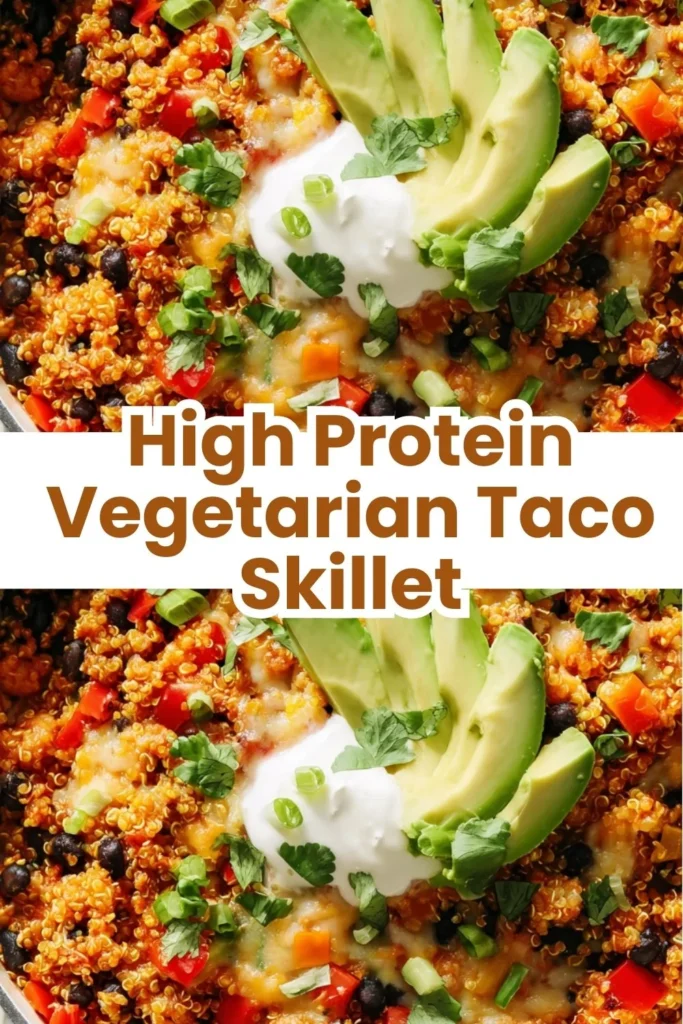
High Protein Vegetarian Taco Skillet
Ingredients
Method
- In a large skillet, heat olive oil over medium heat.
- Add onion, bell pepper, and zucchini. Sauté until softened, about 5-7 minutes.
- Stir in the quinoa, black beans, corn, cumin, chili powder, salt, and pepper.
- Add 2 cups of water and bring to a boil.
- Reduce heat, cover, and simmer for about 15 minutes, or until quinoa is cooked.
- Stir in shredded cheese until melted.
- Serve topped with sliced avocado and a dollop of sour cream or Greek yogurt.