10-Minute Mediterranean Chickpea Salad
If you’re looking for a quick, wholesome lunch or an easy side that won’t intimidate you, this 10-Minute Mediterranean Chickpea Salad is for you. I’m Carla Carter, founder and recipe developer at RecipesCabin, and I love recipes that build your confidence by being simple and forgiving. This salad is one of those—bright flavors, satisfying textures, and very little hands-on time. It’s a great recipe to learn from because it reinforces basic skills like draining and rinsing canned beans, chopping simple vegetables, and whisking a quick dressing. If you’ve tried salads that turned out watery, bland, or overwhelmed by too many competing flavors, this one will show you how balance and timing make a big difference. If you’d like a similar chickpea-based idea to try next, I often refer readers to my chickpea feta avocado salad for another approachable, creamy variation.
Why this recipe is easy to get right
This salad is forgiving in three important ways. First, the main ingredient—canned chickpeas—is already cooked, so you’re not balancing cooking times or temperatures. Second, the dressing is a simple oil-and-vinegar mix that can be adjusted by taste without breaking the dish. Third, textures in this salad are flexible: if your cucumber is a bit watery or your tomatoes are small, the overall bite still works because the chickpeas hold their shape and substance.
Where it allows flexibility: you can chop vegetables coarsely or finely depending on how you like each bite, and the dressing can be made a little more or less tart by adding or subtracting red wine vinegar. That makes it suitable whether you’re new to the kitchen or coming back after a long break—you can control how bold the flavors are.
A good checkpoint to watch for is balance: after tossing the salad with dressing, taste for salt and acidity. If it feels flat, a tiny pinch of salt or another splash of vinegar will usually coax the flavors into harmony. If you want an example of another forgiving salad that teaches the same balance of ingredients and textures, check out my creamy cucumber salad with bacon and cheese for more practice with dressing and texture contrasts.
How to make 10-Minute Mediterranean Chickpea Salad
This recipe is a simple three-part process: prepare the salad ingredients, make the dressing, and combine.
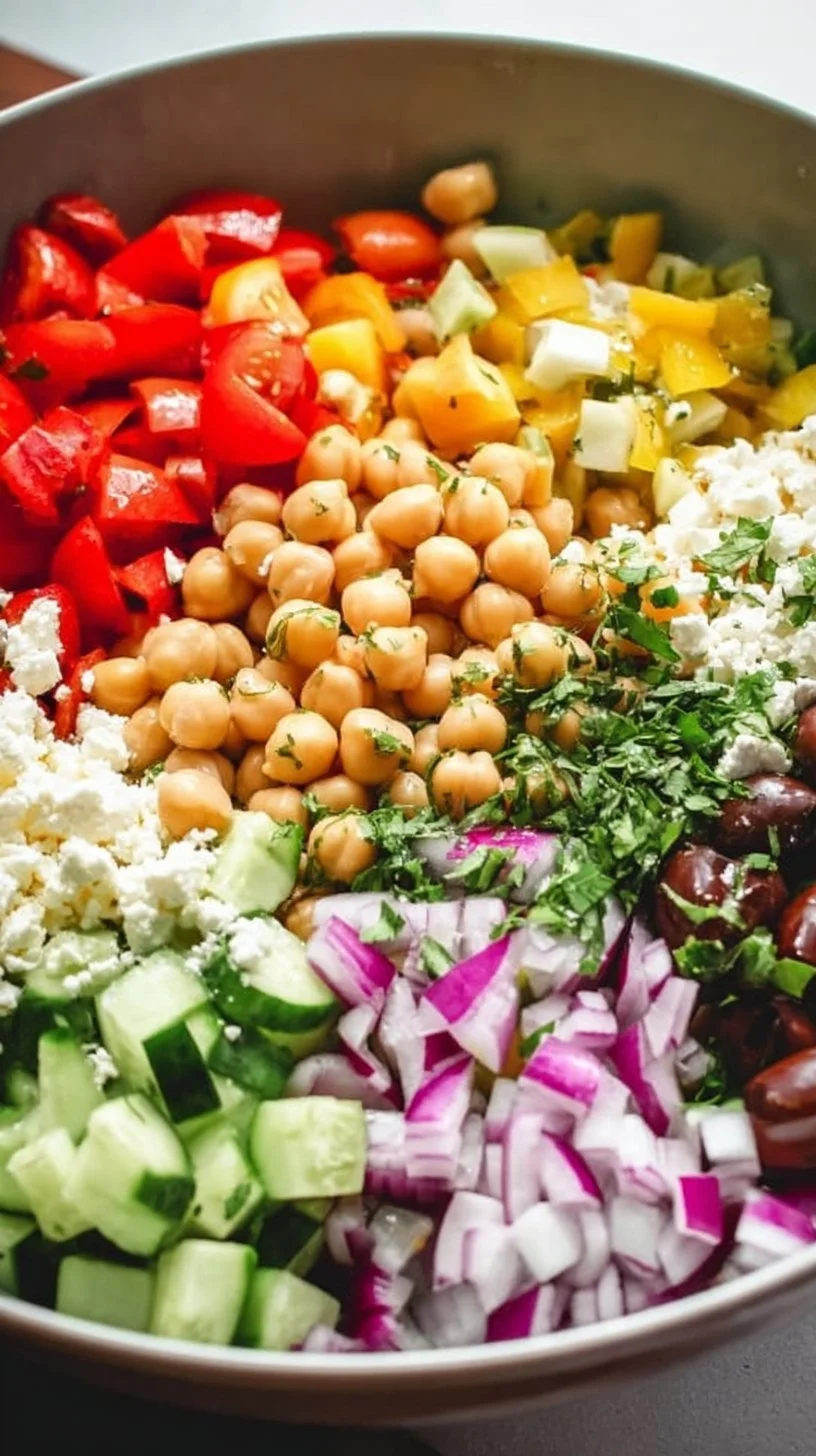
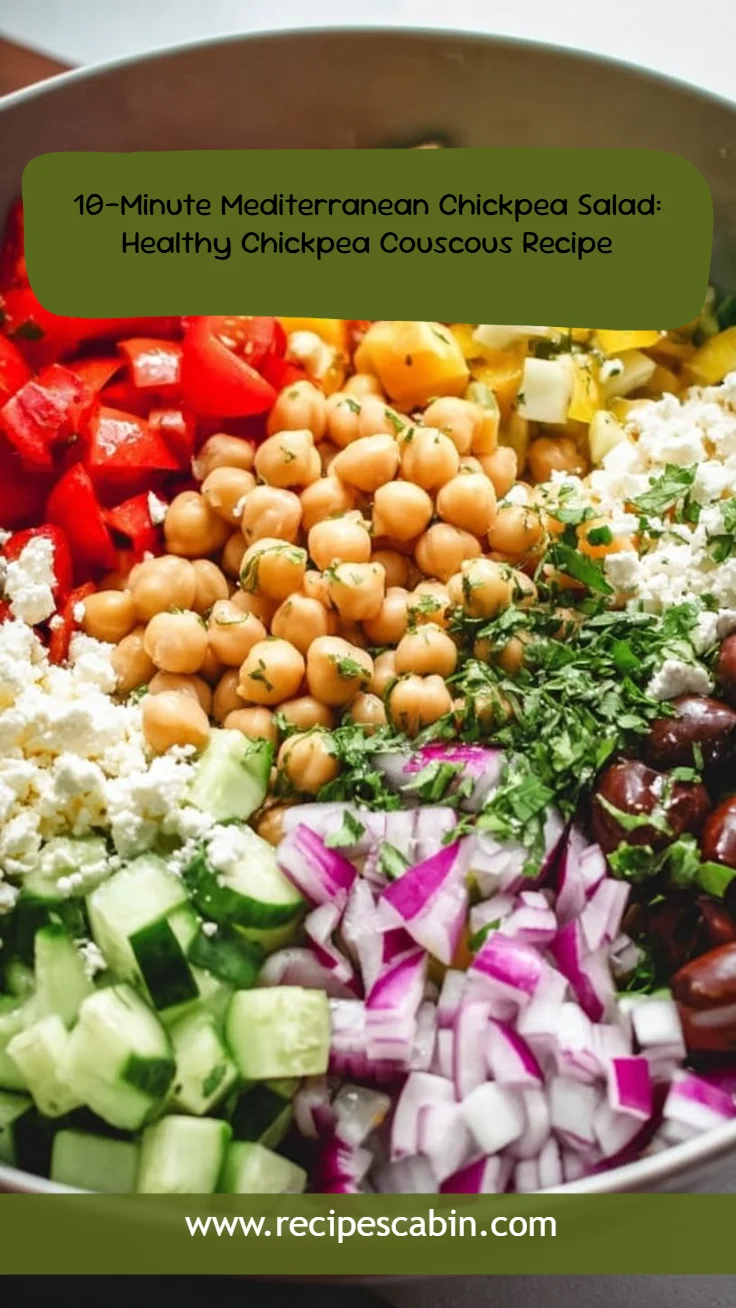
Start by putting the salad ingredients—chickpeas, cucumber, cherry tomatoes, red bell pepper, olives, red onion, feta, and parsley—into a large bowl. This is your flavor base. As you add each ingredient, notice colors and textures: the pale chickpeas are a soft, round contrast to the crisp green cucumber and the shiny, meaty cherry tomatoes. This visual check helps you see when you’ve got a good mix.
Next, make the dressing. Add the olive oil, red wine vinegar, Dijon mustard, oregano, garlic powder, salt, and pepper to a mason jar and shake. The shaking step emulsifies the oil and vinegar—meaning they suspend together briefly so the dressing coats the salad more evenly. You’ll see the oil and vinegar swirl into a slightly thicker, glossy liquid. If you don’t have a jar, whisk them in a small bowl until blended.
Finally, pour the dressing over the salad and toss gently. Tossing moves dressing into every pocket and helps the feta and parsley distribute evenly. At this stage, slow down: fold the pieces together rather than smashing them. This keeps the chickpeas whole and the cucumbers crisp.
Beginners should slow down while chopping so pieces are roughly similar in size. Even chunks make the salad easier to eat and help the dressing distribute evenly. When you’re tossing, watch the texture: cucumbers should stay firm, tomatoes should stay plump, and chickpeas should remain intact. Small imperfections—one tomato that breaks open or a slightly uneven chop—are completely fine and won’t ruin the salad.
Ingredients
2 (15-ounce) cans of chickpeas – drained and rinsed well, 3/4 cup chopped cucumber , 2/3 cup sliced cherry tomatoes, 1/2 cup chopped red bell pepper, 1/3 cup sliced kalamata olives, 1/4 cup chopped red onion, 1/4 cup crumbled feta cheese, 1/4 cup chopped fresh parsley, 1/4 cup extra virgin olive oil, 1/4 cup red wine vinegar, 1 tablespoon Dijon mustard, 1 teaspoon oregano, 1/2 teaspoon garlic powder, 1/4 teaspoon kosher salt, 1/4 teaspoon ground black pepper
Each ingredient plays a clear, simple role:
- Chickpeas: The heart of the salad. They’re starchy, slightly nutty, and give the salad substance so it feels like a meal rather than a side.
- Cucumber: Adds a cool, crisp bite and fresh moisture. It lightens the texture and balances the beans’ density.
- Cherry tomatoes: Bring juicy sweetness and a pop of acidity when you bite into them.
- Red bell pepper: Offers a crunchy, sweet counterpoint and bright color.
- Kalamata olives: Introduce a briny note that anchors the Mediterranean flavor profile.
- Red onion: Adds a mild sharpness and crunch; chopping it small keeps the bite gentle.
- Feta cheese: Supplies creamy, salty richness that ties the flavors together.
- Fresh parsley: Brightens the salad with herbal lift and a pleasant green color.
- Extra virgin olive oil: The fat that smooths flavors and carries the aromas.
- Red wine vinegar: Provides tang that keeps the salad lively.
- Dijon mustard: Helps emulsify the dressing and adds a subtle tang.
- Oregano and garlic powder: Bring herbal and savory depth without being overpowering.
- Kosher salt and black pepper: These finalize the seasoning and make the other ingredients sing.
None of these ingredients are complicated or intimidating. Canned chickpeas save time and avoid the need to soak or compute cooking times. The fresh items are straightforward to chop, and the pantry spices are common staples. Together they create a balanced dish where each ingredient supports the others: the oil mellows the vinegar, feta complements the olives, and parsley lifts the whole bowl.
Directions
Assemble all of the salad ingredients in a large bowl. , Add all of the dressing ingredients to a mason jar fitted with a lid and shake well to emulsify. , Pour the dressing over the salad and toss. , Serve cold or at room temperature.
After reading the directions, here are the visuals and textures to expect and the gentle checks to use as you go:
- When you drain and rinse the chickpeas, they should look clean and slightly matte rather than dusty from the can. A quick rinse reduces sodium and any canning liquid taste.
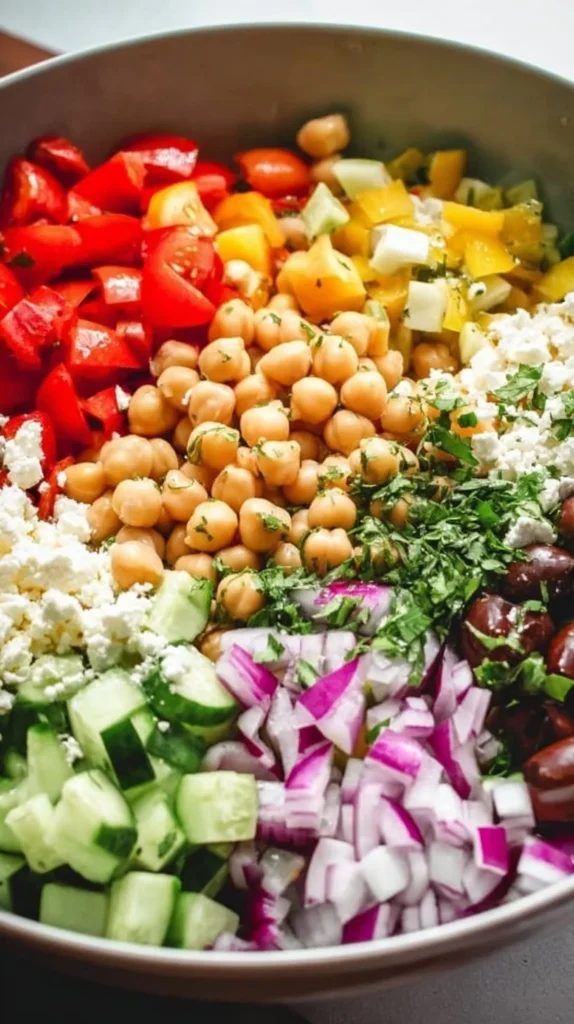
- The bowl with all salad ingredients should look colorful and layered: pale chickpeas, green and red vegetables, dark olives, and white flecks of feta.
- As you shake the dressing in a mason jar, watch the oil and vinegar swirl together into a glossy mixture. It won’t stay perfectly blended forever—that’s normal—but it should look uniformly emulsified right after shaking.
- Pour the dressing evenly over the salad and toss until everything is coated. Aim for a gentle fold so the chickpeas stay whole and the cucumbers don’t get mushy.
- Taste after tossing. If it feels too sharp, a tiny extra splash of olive oil will round it out; if it’s too flat, a quick squeeze of vinegar or a pinch more salt will brighten it.
If something doesn’t look perfect—maybe one tomato split open or the dressing separated a bit—don’t worry. Toss gently, and if needed, give the dressing another shake and add a tablespoon at a time until the coating feels right.
Key techniques you’ll practice in this recipe
There are a few simple techniques in this recipe that are valuable because they show up in many other dishes:
- Draining and rinsing canned beans: Teaches you how to remove excess sodium and improve texture. It’s basic but important for many quick, canned-bean recipes like my buffalo tuna salad.
- Quick chopping and size consistency: Practicing uniform pieces helps the salad look balanced and makes each forkful predictable.
- Emulsifying a dressing: Shaking oil and vinegar showcases how a dressing can temporarily become one smooth liquid—this technique applies to any vinaigrette you’ll make in the future.
- Gentle folding/tossing: Knowing how to combine delicate ingredients without crushing them is a transferable skill for fruit salads, potato salads, and more.
Learning these basic skills helps you feel capable in the kitchen because they’re easy to repeat and you’ll notice clear improvements each time.
Common mistakes and how to avoid them
Even simple recipes have a few common stumbles. Here’s what I see most and how to recover:
- Overdressing the salad: If you add too much dressing, the salad can taste oily or soggy. Fix it by adding a few extra chickpeas or a handful of chopped cucumber to absorb and balance the dressing.
- Under-seasoning: Chickpeas need a little help to shine. After tossing, always taste and adjust with a pinch of salt or a splash of vinegar. Small adjustments go a long way.
- Cutting pieces too unevenly: Big chunks next to tiny bits create an inconsistent eating experience. If that happens, quickly chop a few pieces to even things out rather than redoing the whole salad.
- Letting cucumbers get watery: If the salad sits too long, cucumbers can weep. Serve within a few hours for best crispness, or keep their pieces a bit larger so they stay firmer longer.
If your salad ends up slightly off, remember: you rarely need to start over. Adjust acid, oil, and salt in small increments and taste as you go.
How to adjust confidently without changing the recipe
You’re not allowed to change the ingredient list or steps, but you can think conceptually about adjustments:
- Portion scaling: To make more servings, double or triple all ingredients and mix in a correspondingly larger bowl. The visual cue is the same—balance of beans to vegetables to dressing. For smaller portions, simply halve quantities.
- Flavor preferences: If you prefer it more tangy, mentally plan to add a splash more red wine vinegar when you taste. If you like it milder, picture adding a touch more olive oil. These are adjustments in taste, not changes to the written recipe.
- Texture tweaks: If you like a firmer bite, keep cucumber in larger pieces; if you prefer softer textures, chop everything a little smaller. Think of texture control as a size decision rather than a recipe rewrite.
The key is to taste and make tiny, reversible adjustments—this builds confidence without changing the core recipe.
Serving, storage, and reheating made simple
Serving: This salad is lovely on its own for a light lunch, spooned onto a bed of greens for a heartier main, or served alongside grilled fish or chicken. It’s equally nice chilled or at room temperature; chilling for 15–20 minutes allows flavors to marry, but serving right away keeps everything crisp.
Storage: Place leftovers in an airtight container and store in the refrigerator for up to 3 days. The chickpeas hold up well, but the vegetables, especially cucumber and tomatoes, will soften over time. If storing for later, keep the dressing separate and toss shortly before serving to preserve crunch.
Reheating: This salad is best cold or at room temperature—there’s no need to reheat. If you want warmth in the meal, reheat a small portion of a grain, roasted vegetable, or protein on the side and serve the salad alongside for contrast.
Questions new cooks often ask about this recipe
- How long will it keep? Stored in a sealed container in the fridge, it’s best within 3 days for texture and flavor.
- Do I have to rinse the chickpeas? Yes—rinsing removes the canning liquid flavor and excess sodium, making the chickpeas taste fresher.
- What if I don’t have a mason jar? Use any jar with a lid or whisk the dressing in a bowl. The goal is to lightly emulsify the oil and vinegar.
- Is it normal for the dressing to separate? Yes. Oil and vinegar will naturally separate over time; shake or whisk again before tossing.
- Do I need to peel the cucumber? Not necessary—leaving the skin on adds color and texture. If the skin is waxy or thick, you can peel it for a smoother bite.
- Can I add a protein? Yes—if you want to sneak in a protein without changing the recipe instructions, serve the salad beside grilled chicken or canned tuna. For ideas that combine chickpeas and tuna in different ways, see my tuna chickpea salad bowl.
Each question is simply part of learning. Follow the recipe once, notice what feels unfamiliar, and you’ll find it becomes easier every time.
Final encouragement from Carla
You’ve just read a recipe that’s kind to beginners and rewarding to make. Simple recipes like this teach you how small actions—rinsing beans, balancing acid, and tossing gently—add up to a satisfying result. If one batch isn’t perfect, remember that’s progress, not failure. Every time you cook, you build muscle memory and judgment. Keep going, try this salad, and let it be one more step toward feeling at home in your kitchen.
Conclusion
If you’d like another quick Mediterranean-style take on chickpea salad to compare flavors and techniques, this 10-Minute Mediterranean Chickpea Salad – Pinch Me Good is a helpful reference. For a plant-forward version with slightly different seasoning, see this 10-Minute Chickpea Salad (GF!) – My Darling Vegan, which offers ideas you can learn from while keeping the core steps the same.
Mediterranean Chickpea Salad
Ingredients
Method
- Assemble all of the salad ingredients (chickpeas, cucumber, cherry tomatoes, red bell pepper, olives, red onion, feta, and parsley) in a large bowl.
- Add all of the dressing ingredients to a mason jar fitted with a lid and shake well to emulsify.
- Pour the dressing over the salad and toss gently until everything is coated.
- Serve cold or at room temperature.