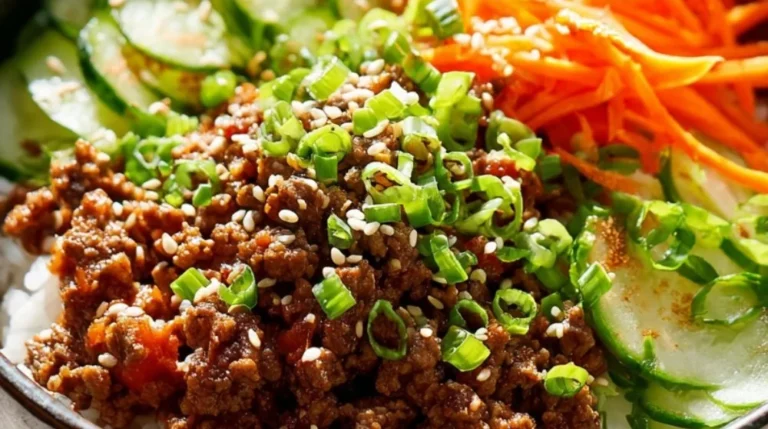
Korean Ground Beef Bowl
Introduction
If you’re looking for a weeknight meal that feels like a warm hug and won’t leave you second-guessing every move, this Korean Ground Beef Bowl is for you. It’s straightforward, flavorful, and forgiving — an ideal recipe to learn or return to after a cooking misstep. I’ll walk beside you as you go through each step so you understand not just what to do, but why it works.
If you enjoy simple, well-seasoned beef dishes that come together quickly, you might also like other comforting beef recipes such as the slow-braised option I’ve used for inspiration in teaching technique at every level: slow-braised beef roast with cranberry-balsamic glaze. That recipe is a great place to practice the same patience and attention to visual cues we’ll use here, just on a longer timeline.
This bowl is approachable for busy cooks, families, and anyone who wants bold flavor without a long ingredient list. Let’s get comfortable in the kitchen together.
Why this recipe is easy to get right
This recipe is forgiving for a few reasons. First, it centers on ground beef, which is very forgiving compared with whole cuts because it cooks quickly and evenly. The short cook time means fewer opportunities to overcook. Second, there are only a handful of ingredients, so each one plays a clear role — that makes troubleshooting straightforward.
The flavors are broad and friendly: garlic and ginger add aroma and brightness, soy sauce brings saltiness and depth, and rice provides a neutral canvas. Small changes — a little more soy sauce or an extra sprinkle of green onion — won’t break the dish. That flexibility helps reduce pressure and lets you taste and adjust as you go.
Finally, the steps are short and sequential, so you can focus on one thing at a time. That’s exactly the kind of recipe that builds confidence quickly.
How to make Korean Ground Beef Bowl
Think of this recipe as three main stages: browning the beef, aromatics and flavor building, and finishing with rice and garnishes.
First: Browning the beef. You’ll warm a skillet and cook the ground beef over medium heat until it’s nicely browned. Look for even browning with small browned bits. That color is where much of the flavor comes from.
Next: Aromatics and seasoning. After browning, you add the garlic and ginger. These release their aroma immediately; you’ll hear a gentle sizzle and smell the fragrant lift that tells you the pan is ready. Then you stir in the soy sauce and let everything simmer briefly so the flavors marry.
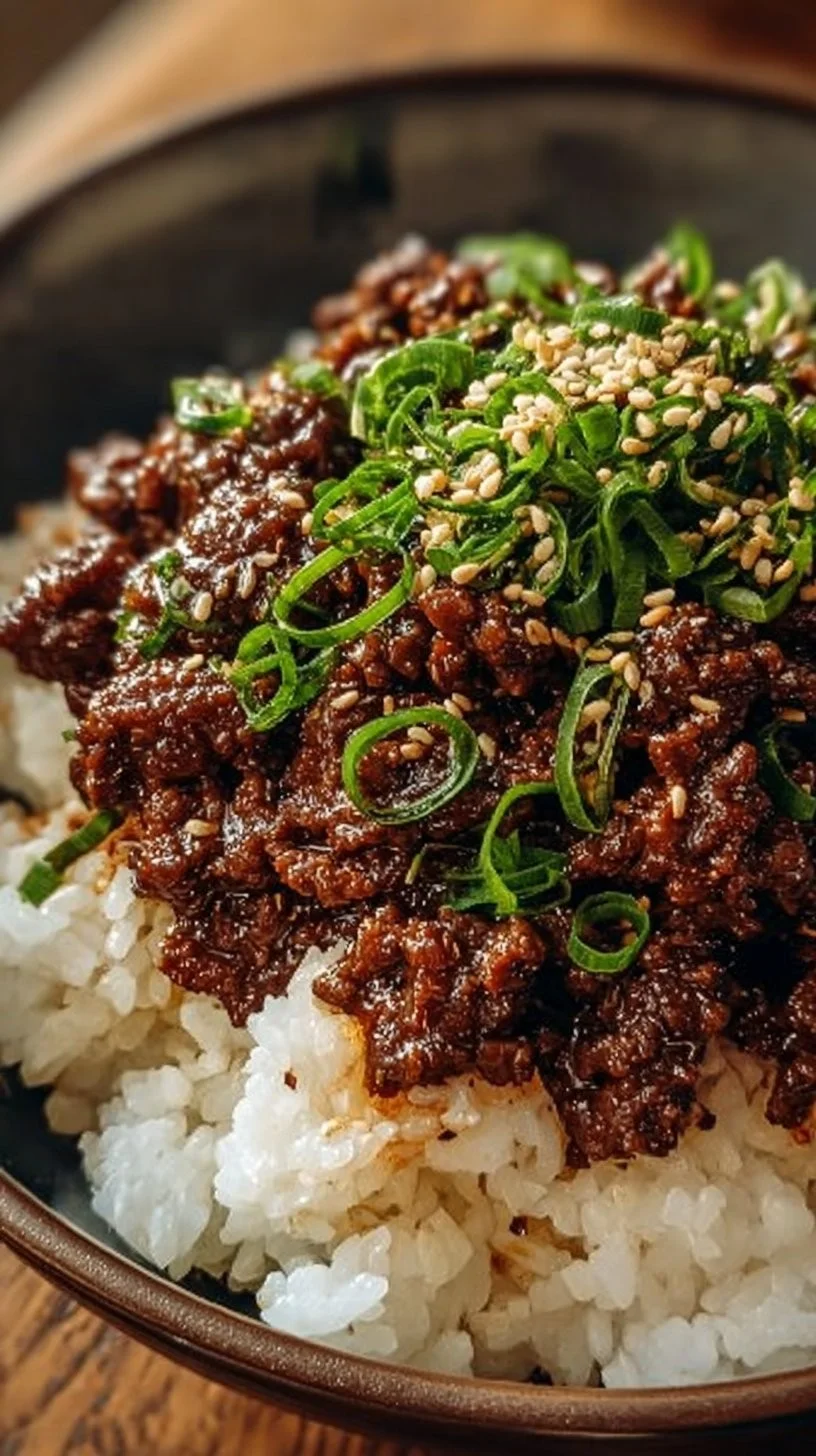
Last: Assembly. Spoon the savory beef over warm rice and top with green onions and sesame seeds for texture and a fresh finish.
For beginners, slow down during the browning step. Give the beef space to make contact with the hot pan; stirring less often at first allows it to develop color. Later, move a bit faster — aromatics cook quickly, so watch for fragrance rather than relying only on a timer.
I’ll guide you through the visual cues and small checks to make sure each stage succeeds.
Ingredients
1 lb ground beef, 2 cloves garlic, minced, 1 inch ginger, grated, 3 tablespoons soy sauce, 2 cups cooked rice, Green onions, for garnish, Sesame seeds, for garnish
- 1 lb ground beef: This is the protein and the main flavor carrier. As it browns, it develops caramelized bits that taste meaty and rich. Ground beef also cooks quickly and evenly, which helps you get dinner on the table fast.
- 2 cloves garlic, minced: Garlic brings warm, savory aroma and a little bite. Minced garlic disperses evenly through the beef and cooks quickly, releasing essential flavor without requiring long simmering.
- 1 inch ginger, grated: Ginger adds brightness and a gentle peppery warmth that balances the richness of the beef. Grating it makes it soft and easy to disperse, so you don’t get long fibrous pieces.
- 3 tablespoons soy sauce: Soy sauce is your seasoning agent here — it adds salt, umami, and a touch of sweetness depending on the variety. It ties the whole bowl together and helps build a savory sauce with the beef juices.
- 2 cups cooked rice: Rice is the neutral base that soaks up the flavorful beef and sauce. Using cooked rice means you can focus on the beef without worrying about timing both components simultaneously.
- Green onions, for garnish: These add color, freshness, and a light oniony crunch. A quick chop and sprinkle brightens the finished bowl.
- Sesame seeds, for garnish: Sesame seeds contribute a subtle nutty note and tiny textural contrast. They’re optional but make the bowl feel a little more finished.
None of these ingredients are complicated or exotic, and together they create a balanced bowl — savory, fragrant, and comforting.
Directions
- In a skillet over medium heat, add the ground beef and cook until browned. Drain excess fat if necessary., 2. Add minced garlic and grated ginger to the skillet and cook for an additional 1-2 minutes until fragrant., 3. Stir in soy sauce and let the mixture simmer for a few minutes to meld the flavors., 4. Serve the savory beef over cooked rice., 5. Garnish with chopped green onions and sesame seeds if desired.
Below I’ll add the supportive guidance to help you through each step.
Step 1 guidance — Browning the beef:
- Visual cue: The beef will start pink and gradually turn uniformly brown. You’ll see small browned bits and sometimes a little fond (browned residue) on the pan bottom — that’s flavor gold.
- Texture cue: Use a spatula or spoon to break the beef into bite-sized pieces; you want smaller pieces so each bite has a mix of meat and sauce.
- Timing hint: Depending on your stovetop and pan, browning typically takes 6–10 minutes. If there’s excess fat, drain it to prevent the final dish from feeling greasy. It’s fine if a few pieces are darker — they add pleasant contrast.
Step 2 guidance — Adding garlic and ginger:
- Visual cue: Once added, you’ll see the tiny bits of garlic and threads of ginger glisten in the hot pan and begin to soften.
- Smell cue: Within 30–60 seconds you’ll notice a fragrant, warming aroma — that’s the sign they’re releasing flavor.
- Reassurance: If the garlic starts to brown too quickly, lower the heat; burned garlic tastes bitter. We’re aiming for soft, aromatic pieces, not crispy shards.
Step 3 guidance — Stirring in soy sauce:
- Visual cue: The beef will loosen as the soy sauce hits the pan and forms a thin glaze. You’ll see the sauce reduce slightly and coat the meat.
- Texture cue: Let it simmer just a couple of minutes so the sauce thickens a little and clings to the beef pieces.
- Reassurance: If it looks a little saucy, that’s good — the rice will absorb it. If it seems dry, a splash of water can help without changing the intended recipe.
Step 4 guidance — Serving:
- Use warm rice so the bowl stays inviting and the sauce is absorbed evenly.
- Don’t stress about perfect plating; rustic bowls with mixed textures are part of the charm.
Step 5 guidance — Garnishing:
- Chop green onions just before serving for maximum freshness.
- Sesame seeds catch the light and add tiny pops of texture; sprinkle them last.
Small imperfections — a piece a bit more browned or a few seconds of extra simmering — will not ruin the dish. They’re part of learning and will often add character.
Key techniques you’ll practice in this recipe
- Browning meat: Learning to let meat develop a brown crust without burning is foundational. This creates flavor through the Maillard reaction, which you’ll use in countless savory dishes.
- Controlling heat: You’ll practice adjusting heat to prevent burning aromatics while still building flavor from the beef. It’s about listening and watching rather than precise temperatures.
- Timing aromatics: Garlic and ginger cook quickly; learning when to add them and how long to cook them is a portable skill for stir-fries, sauces, and sautés.
- Finishing and seasoning: Stirring in soy sauce and allowing flavors to marry teaches you to balance seasoning at the end, tasting as you go rather than adding everything at once.
These techniques are simple but transferable — they make many other recipes easier and more reliable.
Common mistakes and how to avoid them
- Mistake: Overcrowding the pan during browning.
- Avoidance: Use a skillet that gives the beef room. If your pan is small, brown in two batches or stir a little less frequently so the meat can color.
- Mistake: Burning garlic or ginger.
- Avoidance: Add them after the beef is mostly browned and lower the heat if they begin to darken quickly. Garlic and ginger should smell fragrant, not acrid.
- Mistake: Too much residual fat in the final dish.
- Avoidance: If you see a pool of fat after browning, drain it off. A little fat carries flavor, but excess can make the bowl greasy.
- Mistake: Undersalted final dish.
- Avoidance: Soy sauce is your main salt. Taste the meat after you’ve added it and simmered, and adjust if needed with a tiny splash more soy or a pinch of salt.
If something goes off track — for example, the garlic darkens too much — remove the pan from heat and add the soy sauce to cool the pan slightly and mask slight bitterness. Small recoveries like this will save many dinners.
How to adjust confidently without changing the recipe
- Portion scaling: To serve more people, scale ingredients proportionally. If doubling, use a larger skillet or brown in batches so the meat can develop color. The same visual cues (even browning, fragrant aromatics) guide you.
- Flavor preference adjustments: If you like bolder umami, taste before serving and add a touch more soy sauce. If you prefer a brighter finish, extra green onions on top add freshness without altering the recipe.
- Texture tweaks (conceptual only): If you want softer beef, cook a little longer with a splash of water to create a looser sauce. If you like chewier textures, keep the pieces slightly larger and brown a touch more. These are conceptual changes — the written recipe and its measurements remain the same.
Remember: small adjustments are fine and expected. The recipe is a reliable framework; your palate decides the final tweaks.
Serving, storage, and reheating made simple
Serving:
- Serve warm over freshly cooked or reheated rice. A shallow bowl lets you see the glistening beef and garnishes.
- Offer extra green onions and sesame seeds at the table so everyone can adjust.
Storage:
- Cool leftovers to room temperature (no longer than two hours), then store in an airtight container in the refrigerator for up to 3–4 days.
- For longer storage, portion into freezer-safe containers and freeze for up to 2 months.
Reheating:
- Stovetop: Reheat gently in a skillet over medium-low heat with a splash of water to loosen the sauce and prevent drying. Stir frequently until heated through.
- Microwave: Cover loosely and heat in 30–45 second intervals, stirring between each, until hot. Add a little water if it seems dry.
- Rice and beef reheat at slightly different rates; if reheating both together, ensure the rice is steaming hot and the beef is evenly warmed.
These simple storage and reheating steps keep texture and flavor intact so leftovers stay enjoyable.
Questions new cooks often ask about this recipe
Q: How long will it take from start to finish? A: Plan for about 20–25 minutes, including rice reheating if your rice is already cooked. Browning and quick simmering are fast, so this is a great same-day weeknight meal.
Q: Do I need a special pan? A: No. A medium to large skillet works fine. A heavier-bottom pan gives more even heat, but a regular skillet is perfectly acceptable.
Q: Is it normal for the beef to release a lot of liquid? A: Yes. Ground beef often releases juices as it cooks. If there’s too much fat, drain some off. If it’s mainly water, keep cooking to allow the water to evaporate and the beef to brown.
Q: What if my garlic or ginger gets too dark? A: If it darkens quickly, remove the pan from heat, add the soy sauce, and stir to cool the pan slightly. In the future, lower the heat when adding aromatics.
Q: Can I make this ahead? A: Yes — the beef stores well in the fridge and reheats nicely. For best texture, store rice and beef separately if possible.
These are common concerns, and the reassuring answer is: with a few visual checks and small adjustments, you’ll be fine.
Final encouragement from Carla
Cooking is practice, and every bowl you make strengthens your confidence. This Korean Ground Beef Bowl is forgiving by design, so if something isn’t perfect the first time, it’s still likely to be delicious. Keep paying attention to the simple visual and smell cues we talked about, and you’ll see steady improvement. You’re doing more than following steps — you’re building a skill set that will make many future meals easier and more joyful. Keep cooking, and enjoy the warmth of a well-made bowl.
Conclusion
For additional takes on this classic bowl to compare flavors and techniques, you can learn more from these helpful resources: Korean Ground Beef and Rice Bowls | The Recipe Critic, Korean Beef Bowl – Damn Delicious, Korean Ground Beef Bowls – Fox and Briar, and Korean Ground Beef and Rice Bowls.
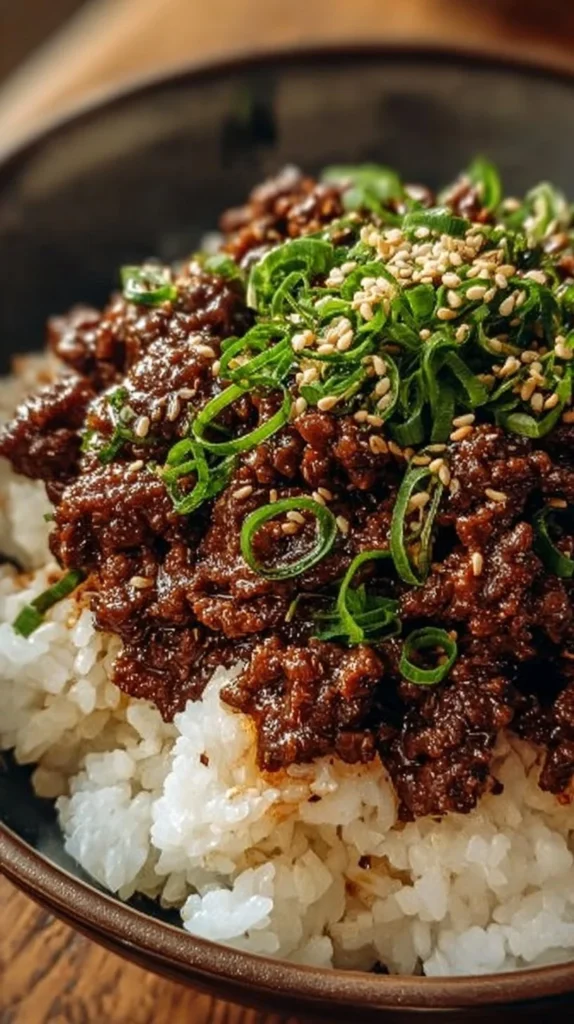
Korean Ground Beef Bowl
Ingredients
Method
- In a skillet over medium heat, add the ground beef and cook until browned.
- Drain excess fat if necessary.
- Add minced garlic and grated ginger to the skillet and cook for an additional 1-2 minutes until fragrant.
- Stir in soy sauce and let the mixture simmer for a few minutes to meld the flavors.
- Serve the savory beef over warm rice.
- Garnish with chopped green onions and sesame seeds if desired.