Blended Cottage Cheese Tuna Salad
Introduction
If you’re looking for a simple, nourishing recipe that collects well in the fridge and doesn’t require fancy skills, this Blended Cottage Cheese Tuna Salad is for you. It suits busy weeknights, quick lunches, or a protein-rich snack. I designed this version to be approachable: it uses ingredients that are easy to find, needs just one mixing bowl, and gives you delicious results even on your first try.
If you enjoy exploring cottage cheese as a base for meals, you might also like my take on the Apple Cinnamon Cottage Cheese Bake, which uses similar thinking — simple swaps, steady technique, and satisfying results. Throughout this article I’ll walk you through what to watch for, why each step matters, and how to feel calm and confident while you make it.
Why this recipe is easy to get right
This recipe is forgiving for several reasons. First, the ingredients blend together in a way that naturally smooths inconsistencies: cottage cheese and Greek yogurt partner to create a creamy base that hides small texture differences. Second, flavors are straightforward — lemon, salt, and pepper — so you can taste as you go and adjust easily. Finally, there’s no heat involved: no burning, no timing with the oven, and no complicated emulsions. That means fewer things that can go wrong.
Where flexibility matters: you can be relaxed about the exact size of your celery and onion pieces; roughly chopped is fine. Where to be mindful: drain the tuna well so the salad doesn’t get watery, and taste before you add salt since canned tuna can already be salty. Overall, the recipe supports learning — you’ll build confidence by focusing on simple checks instead of complicated techniques.
How to make Blended Cottage Cheese Tuna Salad
At a glance, the process is short and straightforward: gather, combine, stir, and serve. Start by draining the tuna so excess liquid doesn’t thin the salad. Next add the creamy components — cottage cheese and Greek yogurt — which act like a gentle binder and mood-setter for texture. Fold in the celery and red onion last so they stay bright and crunchy. Finish with a squeeze of lemon and a final seasoning with salt and pepper.
What to focus on at each stage:
- Draining: feel the can after draining — it should be light, not dripping.
- Combining: aim for an even mix where you no longer see large clumps of cottage cheese or streaks of yogurt.
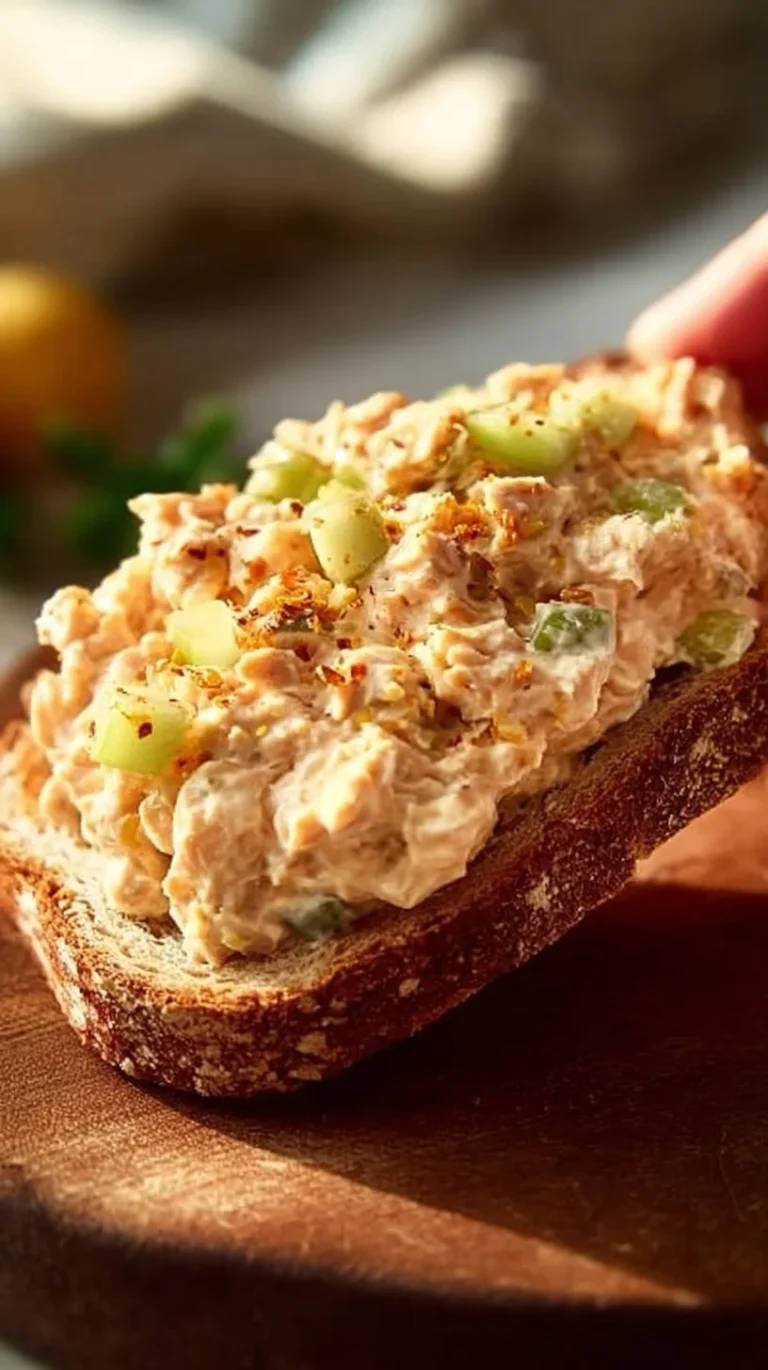
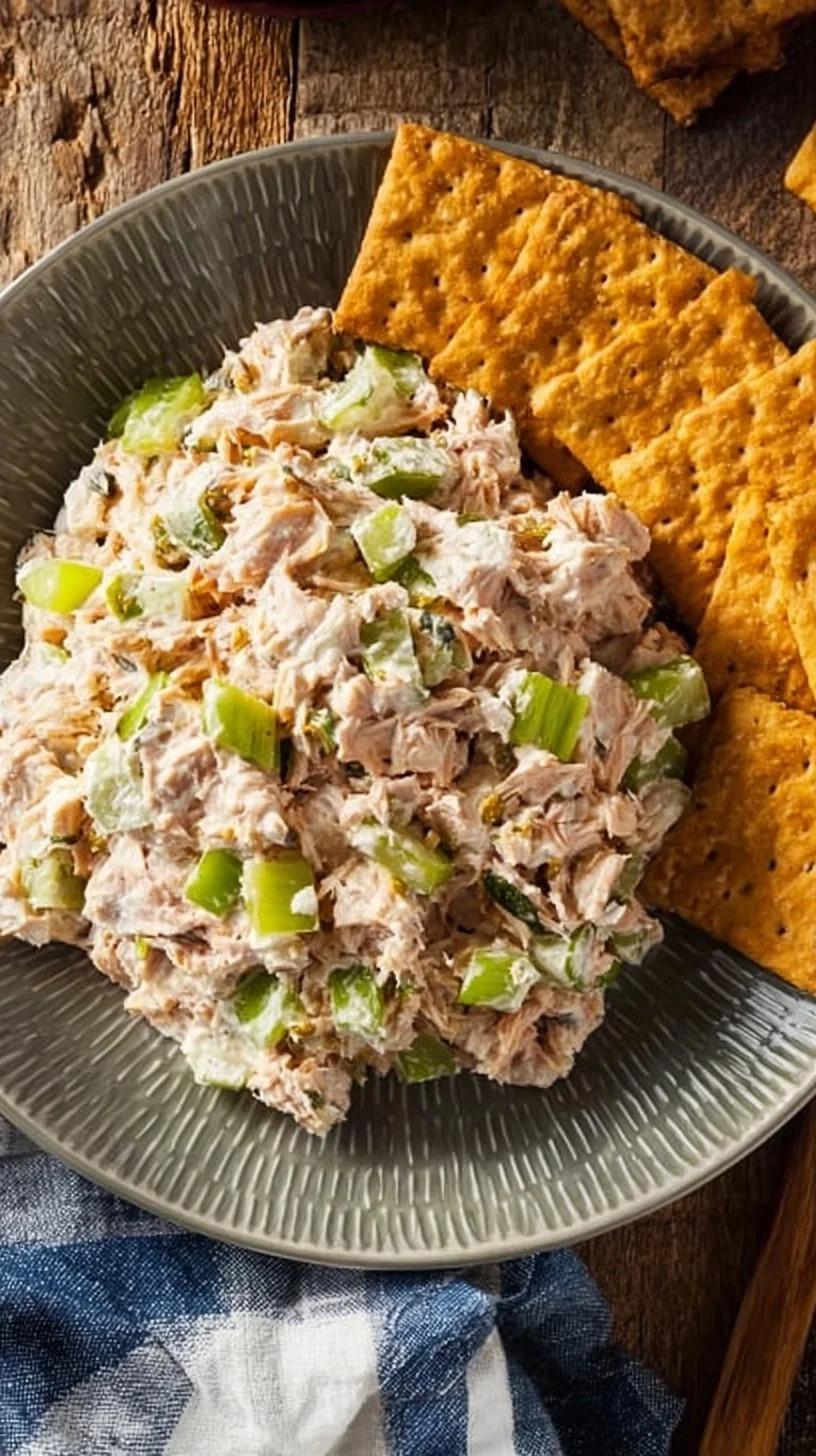
- Final texture: the salad should be cohesive but not soupy; you want spoonable creaminess with discernible flakes of tuna and little bits of celery for crunch.
Beginners should slow down at tasting. Add a little salt, mix, taste, then add more if needed. Little adjustments make a big difference, and tasting as you go is the most reliable way to get a result you like. If you want inspiration for using cottage cheese in other ways while you learn these rhythms, try my recipe for Baked Cottage Cheese Eggs — the technique of balancing creamy dairy with other components carries over well.
Ingredients
1 cup cottage cheese, 1 can tuna, drained, 1/2 cup Greek yogurt, 1/4 cup chopped celery, 1/4 cup chopped red onion, 1 tablespoon lemon juice, Salt and pepper to taste, Crackers, for serving
Each ingredient here has a clear purpose and is simple to work with:
- Cottage cheese: creates a creamy base. Instead of mayonnaise, it gives you protein and tang without heaviness.
- Tuna (drained): the main source of protein and texture. Draining removes excess oil or brine so your salad stays stable.
- Greek yogurt: smooths the cottage cheese and helps the mixture bind together. It also adds a touch of tang.
- Chopped celery: provides crunchy contrast, a visual cue that the salad is fresh.
- Chopped red onion: adds a bright, slightly sharp note; because it’s finely chopped, it spreads flavor through every bite.
- Lemon juice: wakes up the flavors and balances the dairy richness.
- Salt and pepper: essential for seasoning; start with a little and add more after tasting.
- Crackers: a simple vehicle for serving that keeps the salad casual and snack-friendly.
None of the items require special handling — you won’t need to temper, bloom, or grind anything. The ingredients are friendly for a cook who prefers straightforward steps.
Directions
In a mixing bowl, combine the cottage cheese, drained tuna, Greek yogurt, chopped celery, chopped red onion, and lemon juice. Stir well until all ingredients are mixed thoroughly. Season with salt and pepper to taste. Serve the tuna salad on sandwiches, over salads, or with crackers as a snack.
Supportive guidance around the steps:
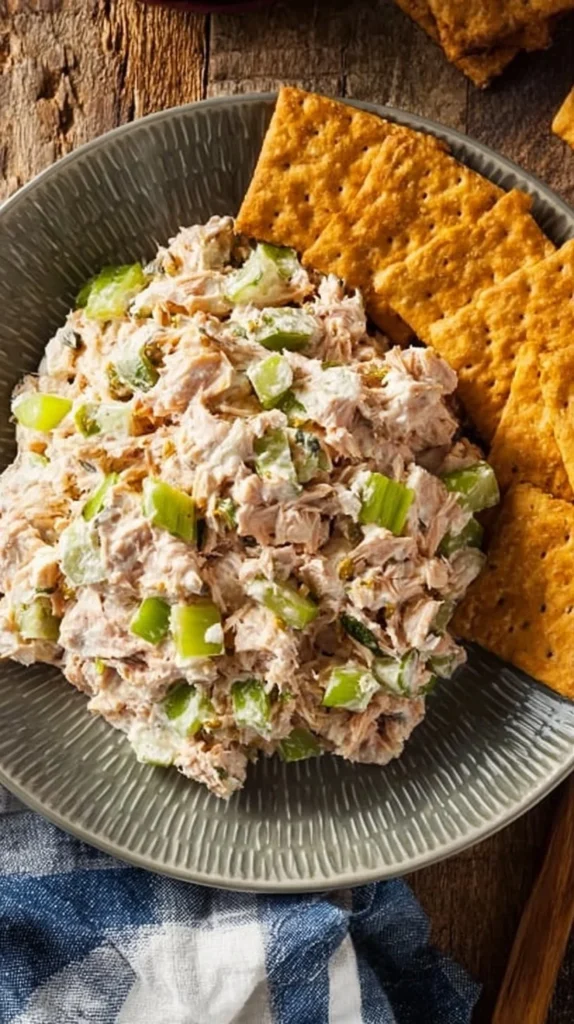
- Visual cues: after you combine everything, you should see small white curds of cottage cheese dispersed through creamy yogurt, with bits of tuna, green celery, and pinkish-red onion. The colors tell you the mix is even.
- Texture hints: aim for a spoonable, not runny, mixture. If it looks too loose, let it sit for a few minutes — the cottage cheese and yogurt will firm up slightly as they mingle. If it’s too dry for your taste, a tiny splash more yogurt or a teaspoon of water can help, but add cautiously.
- Timing: this is a quick assembly — expect 5–10 minutes from start to finish once your tuna is drained and your vegetables are chopped.
- Reassurance: if the first mix looks uneven, don’t worry. Keep stirring gently; the ingredients will come together. Small lumps of cottage cheese are normal and add a pleasant, rustic texture.
Key techniques you’ll practice in this recipe
Although simple, this recipe reinforces useful kitchen skills:
- Draining and checking canned goods: learning to inspect a can after draining helps prevent watery results in many recipes.
- Gentle folding and mixing: this keeps the tuna flakes intact and distributes the creamy base evenly.
- Tasting and seasoning: practicing incremental seasoning builds your confidence in balancing salt, acid (lemon), and pepper.
- Chopping for texture: chopping celery and onion to small, even pieces teaches control that improves bite and consistency.
These techniques are foundational. Once comfortable, you’ll find them useful in salads, spreads, and cold dishes across weeknight cooking.
Common mistakes and how to avoid them
Here are typical things that trip people up and how to recover:
- Mistake: Not draining the tuna well, leaving the salad watery. Fix: spoon the tuna onto paper towels and press lightly, or let it sit in a fine sieve for a minute. Drain, then proceed.
- Mistake: Over-salting. Fix: If the salad ends up too salty, add an extra tablespoon of yogurt or cottage cheese and a squeeze more lemon to rebalance.
- Mistake: Too-large onion pieces making bites harsh. Fix: finely chop remaining onion small, then stir through — the smaller pieces will distribute the bite more evenly.
- Mistake: Mixing aggressively and turning tuna into mush. Fix: stir with a gentle folding motion until distributed; you want flakes, not paste.
Remember: you don’t have to start over if something goes off track. Small fixes — adding dairy to calm salt, draining liquid, or finely chopping an ingredient — often rescue the dish without stress.
How to adjust confidently without changing the recipe
You may want to make changes based on servings, flavor, or texture — here are concepts rather than specific substitutions so you won’t alter the original recipe:
- Scaling portions: think in ratios. If you double the recipe, double the cottage cheese and tuna, then check texture and seasoning as you mix because larger mixes sometimes feel less seasoned; adjust salt and lemon by taste.
- Flavor preferences: if you prefer brighter notes, increase lemon juice a little at a time. For more mellow flavor, use less onion or rinse the chopped onion briefly to reduce sharpness.
- Texture tweaks: if you like creamier spreads, imagine increasing yogurt slightly; if you want more bite, add extra celery. These are conceptual changes — make them by small increments and taste.
These adjustments keep the recipe intact while making it suit your preferences. The key is incremental change and tasting along the way.
Serving, storage, and reheating made simple
Serving ideas:
- Spoon onto crackers for a quick snack, pile on sandwich bread with lettuce for a simple lunch, or serve atop a bed of greens for a lighter meal.
- Use it as a protein addition to a grain bowl — the creamy salad pairs nicely with warm rice or quinoa.
Storage:
- Store in an airtight container in the refrigerator. Because this is a dairy-and-seafood combination, it keeps best for up to 3 days.
- Keep the crackers or any crunchy accompaniments separate until ready to eat so they stay crisp.
Reheating:
- This salad is best eaten cold or at room temperature. If you prefer a warm variation, briefly warm a scoop in a microwave-safe bowl for 10–15 seconds and stir; avoid long heating, which can dry out the tuna and alter texture.
- If leftovers thicken, stir in a small splash of yogurt or lemon juice to refresh the texture before serving.
If you want to pair it with other cottage cheese-based dishes for meal prep inspiration, the Blueberry Cottage Cheese Breakfast Bake offers ideas for storage and using cottage cheese across meals.
Questions new cooks often ask about this recipe
Q: How long will this keep? A: Up to 3 days in the fridge in a sealed container; beyond that the texture and flavor start to decline. Q: Do I have to use Greek yogurt? A: Greek yogurt contributes thickness and tang; you can use plain yogurt if that’s what you have, but expect a slightly looser mix. Q: Is it normal for cottage cheese curds to remain visible? A: Yes — they create pleasant texture and don’t need to be smoothed out completely. Q: What equipment do I need? A: A mixing bowl, spoon, knife, and cutting board — nothing fancy. Q: What if my salad seems bland? A: Taste and add a pinch more salt, a squeeze more lemon, or more pepper; these small tweaks are part of cooking confidence.
These are all normal, and each question has a quick, practical solution — you won’t break anything by experimenting and adjusting gently.
Final encouragement from Carla
Cooking is a practice, not a test. This Blended Cottage Cheese Tuna Salad is a forgiving, useful recipe that rewards attention to small details (like draining tuna and tasting) without requiring perfection. If your first batch is a little saltier or chunkier than you hoped, that’s fine — you learned something for next time. Keep cooking, keep tasting, and trust that each simple dish you make builds skill and calm in the kitchen.
Conclusion
If you want variations or inspiration from other cooks, this High Protein Cottage Cheese Tuna Salad – The Balanced Nutritionist shows another angle on protein-forward versions, while Cottage Cheese Tuna Salad – Kim’s Cravings highlights simple pantry-friendly twists you might like to try later. For ideas on meal-prep-friendly versions and different textures, see Cottage Cheese Tuna Salad – Family Fresh Meals for practical serving suggestions.
Blended Cottage Cheese Tuna Salad
Ingredients
Method
- In a mixing bowl, combine the cottage cheese, drained tuna, Greek yogurt, chopped celery, chopped red onion, and lemon juice.
- Stir well until all ingredients are mixed thoroughly.
- Season with salt and pepper to taste.
- Serve the tuna salad on sandwiches, over salads, or with crackers as a snack.