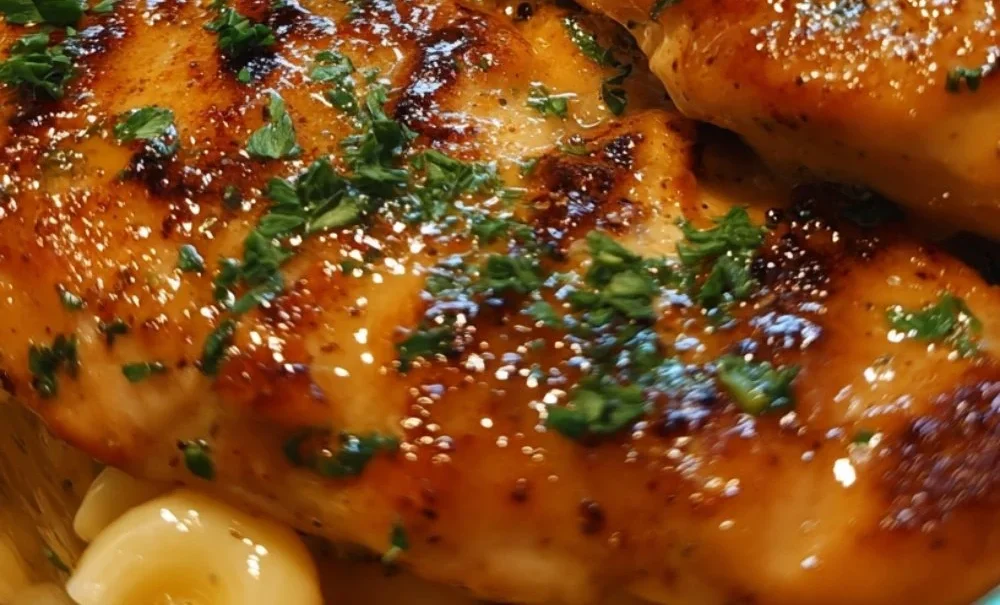
High-Protein Honey Garlic Butter Chicken with Mac & Cheese
Introduction
Hello — I’m Carla Carter, Founder & Recipe Developer of RecipesCabin. This High-Protein Honey Garlic Butter Chicken with Mac & Cheese is for home cooks who want comfort food that builds confidence in the kitchen. If you’re new to cooking, coming back after a kitchen mishap, or simply want a satisfying weeknight meal that’s forgiving, this recipe is a gentle place to practice essential skills and get a delicious result.
If you enjoy cozy, saucy comfort food like this, you might also like my take on a hearty pizza that uses similar chicken flavors and straightforward techniques: our BBQ chicken pizza guide. That link is a simple companion if you want to see how one ingredient set can become two different family meals.
In the paragraphs that follow I’ll walk beside you — explaining what’s happening at each step, what to watch for, and how to keep things calm and simple while you cook.
Why this recipe is easy to get right
This recipe is forgiving in a few key ways. First, it’s built from straightforward steps: marinate, cook the chicken, make a cream-based cheese sauce, and combine with cooked pasta. None of those stages requires precise timing to the minute — they reward your attention but allow flexibility. Second, the flavors (garlic, honey, butter, cheese) are broad and familiar; a small change in seasoning won’t ruin the dish, it will simply shift the balance.
Where this recipe allows flexibility:
- Temperature and time: If your chicken pieces are a touch larger or smaller, cooking time shifts, but visual and textural cues tell you when they’re done.
- Salt and honey: Taste as you go. If you prefer it sweeter or saltier, small adjustments are safe and reversible.
- Cheese melting: If the sauce takes a minute longer to smooth out, it’s fine — patience rather than precise timing is key.
Because most steps are simple techniques you’ll practice again and again, this meal is ideal for cooks of any level. It helps you build reliable habits without pressure.
How to make High-Protein Honey Garlic Butter Chicken with Mac & Cheese
At a glance, the process moves from preparation to assembly: marinate, cook, make sauce, cook pasta, combine. Here’s what happens first, next, and last — and what to focus on at each stage.
First: Marinate the cubed chicken. This is a short, 10-minute softening step that lets flavors begin to cling to the chicken. While it’s not a long soak, those few minutes make a noticeable difference in depth of flavor. Focus: make sure every piece has a light coating so each bite is seasoned.
Next: Cook the marinated chicken in a skillet over medium heat. You’re looking for the outside to show a gentle fond — small brown bits that add flavor — and the inside to be cooked all the way through. Focus: watch color and feel for firmness when gently pressing a piece with a spatula or fork.
Then: Make the sauce in the same skillet. Sauté a little extra garlic in butter, add heavy cream and let it bubble gently, and finish by melting in cheeses. Focus: low heat and gentle bubbling so the cream thickens without breaking and the cheese melts into a smooth sauce.
Last: Boil the macaroni until al dente, drain and rinse, then simmer it in the cheese sauce for about five minutes so flavors mingle. Focus: the pasta should still have a slight bite to it so it holds up in the saucy mixture.
If you want help with techniques like bringing cream to a gentle bubble or coaxing cheese to melt smoothly, my detailed tutorials can be handy; for a look at how gentle heating affects texture in other recipes, see this primer on working with delicate sauces: a guide to working with softened dairy and smooth textures. Beginners should slow down at two places: when checking chicken doneness and when warming the cream and melting the cheese — those moments reward care.
Ingredients
3 chicken breasts, cubed, 2 tbsp olive oil, 4 cloves garlic, minced, 2 tsp smoked paprika, 2 tsp garlic powder, 1 tsp dried parsley, 2 tsp salt, 1/2 tsp black pepper, 3 tbsp avocado oil (or oil of choice), 2 tbsp butter, 1 tbsp honey, 2 tbsp freshly chopped parsley, 2 cups heavy cream, 1/2 cup freshly grated mozzarella, 1/2 cup freshly grated cheddar cheese, 12 oz elbow macaroni (cooked al dente)
What each ingredient does in the recipe:
- Chicken breasts, cubed: the main protein and texture anchor. Cubing creates more surface area for the marinade and faster, more even cooking.
- Olive oil (2 tbsp): helps the marinade cling to the chicken and carries the aromatics into the meat.
- Garlic (4 cloves, minced): gives that classic savory base; when cooked it becomes sweet and fragrant.
- Smoked paprika (2 tsp): adds a gentle warmth and a hint of smoky depth without being spicy.
- Garlic powder (2 tsp): reinforces the fresh garlic flavor and seasons uniformly.
- Dried parsley (1 tsp): a mild herb lift — subtle but useful.
- Salt (2 tsp) and black pepper (1/2 tsp): essential for seasoning; salt brings flavors forward, pepper adds a soft bite.
- Avocado oil (3 tbsp) or oil of choice: used for cooking the chicken; it tolerates medium heat and keeps the surface from sticking.
- Butter (2 tbsp): enriches the sauce and helps form a silky mouthfeel with the cream.
- Honey (1 tbsp): balances the savory garlic with a touch of sweetness and helps create a sticky glaze on the chicken.
- Freshly chopped parsley (2 tbsp): a finishing herb that brightens the whole dish.
- Heavy cream (2 cups): the base of the cheese sauce — it thickens as it heats and carries the cheeses smoothly.
- Mozzarella (1/2 cup) and cheddar (1/2 cup), freshly grated: mozzarella adds stretch and smoothness; cheddar gives sharper tang and color. Freshly grated melts more reliably than pre-shredded.
- Elbow macaroni (12 oz, cooked al dente): the pasta base; “al dente” means it still has a little chew so it won’t go mushy when simmered in the sauce.
None of these ingredients are intimidating — they’re common pantry and fridge items. Together they balance protein, creaminess, sweetness, and savory notes so every bite feels complete.
Directions
Marinate the cubed chicken with olive oil, minced garlic, smoked paprika, garlic powder, dried parsley, salt, and black pepper for about 10 minutes., Cook the marinated chicken in a skillet over medium heat for 10-15 minutes until fully cooked. Stir in butter, honey, and chopped parsley., In the same skillet, sauté additional minced garlic in butter before adding heavy cream. Allow it to bubble gently., Stir in mozzarella and cheddar until melted and creamy., Boil elbow macaroni until al dente; drain and rinse under cold water., Combine cooked macaroni with the cheese sauce and simmer on low for about 5 minutes.
Supportive guidance around the steps:
- Marinating (visual cues): The chicken should be evenly coated and slightly glossy from the olive oil. Ten minutes is a short pause — it’s simply enough for the garlic and spices to start adhering. Don’t worry if some pieces look more coated than others; stirring once or twice will help even things out.
- Cooking the chicken (texture & timing): When the chicken moves easily in the pan and small browned bits appear on the surface, that’s a good sign. Cut one larger piece open to check for no pinkness and a firm texture. A properly cooked piece gives a gentle resistance when pressed; if it’s squishy, give it a few more minutes.
- Stirring in butter, honey, and parsley (what to expect): The butter melts into a glossy finish and the honey creates tiny ribbons of sweetness that cling to the chicken. The aroma will become warm and inviting — a sweet-garlic scent with a hint of butter. If the honey pools, stir gently to help it disperse.
- Making the cream sauce (visual cues): After you add the heavy cream, it will look thin at first. As it warms it will form tiny bubbles around the edges — that’s the gentle bubbling you want. Keep heat moderate; if it boils rapidly, lower the heat. Gentle bubbling thickens the cream without separating it.
- Cheese melting (texture hint): Add the cheeses gradually and stir slowly. The sauce should go from stringy bits to smooth, glossy cream. If it looks grainy, reduce heat and stir — small lumps often come from overheating; gentle heat and patience correct them.
- Pasta (timing): Al dente means it has a little chew — taste a piece a minute or two before the package time ends to find the point you prefer. After draining and rinsing under cold water, the pasta won’t carry extra cooking from residual heat, which helps it hold shape when combined with sauce.
- Combining and simmering (reassurance): When you mix the pasta and sauce and simmer on low for five minutes, flavors marry and the sauce clings to the macaroni. If the sauce seems thicker than you like, a splash of reserved pasta water or a tablespoon of cream helps loosen it.
Small imperfections are normal: a slightly thicker sauce can be thinned, and a piece of chicken that’s a bit firm can be sliced thinner next time. The important part is to notice changes and respond gently.
Key techniques you’ll practice in this recipe
- Marinating quickly and evenly: a short marinate is still effective — it teaches how seasoning adheres and how oil transports flavors.
- Pan-searing at medium heat: you’ll learn how color and small browned bits (fond) indicate flavor development without high heat stress.
- Gentle simmering of cream and melting cheese: this trains patience — slow heat gives smooth texture rather than grainy or separated sauce.
- Checking doneness by feel and visual cues: instead of timers alone, you’ll rely on color, firmness, and texture — a transferable skill across proteins.
- Combining hot sauce with starchy pasta: you’ll learn how pasta absorbs sauce and how a short simmer helps flavors merge.
These techniques apply to many everyday recipes — from simple weeknight pastas to saucy skillet dinners.
Common mistakes and how to avoid them
- Mistake: Overcrowding the pan when cooking chicken. Result: steaming instead of browning. Fix: Cook in batches or use a larger pan so each piece has room. If chicken steams, it will still be edible but miss some caramelized flavor.
- Mistake: Heating cream too quickly. Result: boiling over or separation. Fix: Lower the heat and keep an eye for gentle bubbling at the edges — that’s when it thickens properly.
- Mistake: Adding cheese to high heat. Result: grainy or broken sauce. Fix: Turn the heat low and add cheese gradually, stirring to incorporate fully.
- Mistake: Overcooking pasta. Result: mushy texture. Fix: Taste for al dente a minute or two before the package time and drain promptly. If it ends up softer than you like, the dish is still safe and tasty — just learn the timing for next time.
- Mistake: Under-seasoning. Result: flat flavor. Fix: Salt at each stage — a little in the marinade, and taste the sauce before combining; adjust gently.
If something goes off track, small fixes are almost always available: a pinch more salt or a splash of cream, a few extra minutes on low heat, or slicing chicken thinly for more tenderness.
How to adjust confidently without changing the recipe
Portion scaling concepts:
- To double the recipe for more people, increase proteins, cream, and pasta proportionally. Keep in mind cooking time for larger batches may lengthen slightly, especially when browning more chicken — cook in batches to maintain good color.
Flavor preference adjustments (conceptual only):
- If you prefer a sweeter profile, imagine adding a touch more honey at the end; for brighter acidity, a squeeze of lemon off-plate can lift the richness. These ideas keep the framework of the recipe intact while giving you options.
Texture tweaks (conceptual only):
- For a looser sauce, conceptually add a small amount of reserved pasta water or an extra splash of cream. For a thicker clingier sauce, cook the cream a touch longer before adding cheese so it reduces more.
I’m not changing the ingredients or steps here — just giving you safe ideas for small incremental changes you can make when you understand what each component contributes.
Serving, storage, and reheating made simple
Serving:
- Spoon the mac and cheese onto plates and top with the honey garlic chicken, finishing with a sprinkle of the chopped fresh parsley for color and freshness. A simple green side salad or steamed vegetables provide contrast.
Storage:
- Cool leftovers to room temperature within two hours, then transfer to an airtight container and refrigerate. Stored this way, it should keep well for 3–4 days. The cream-based sauce will firm up in the fridge — that’s normal.
Reheating:
- Reheat gently on the stovetop over low heat with a splash of water or cream to loosen the sauce, stirring until warmed through. In the microwave, heat in short bursts (30–45 seconds), stirring between each burst and adding a little liquid if the sauce seems dry. Gentle reheating preserves texture better than high heat.
Questions new cooks often ask about this recipe
Q: How do I know when the chicken is fully cooked?
A: Cut a larger piece in half — the inside should not be pink and the texture should be firm. Small pieces will cook faster; use visual checks and the press test (firm, not squishy).
Q: What if my sauce looks separated or grainy?
A: Turn the heat down. Stir gently. A tablespoon of cream or even a teaspoon of softened butter can help bring it back together. Patience and low heat are your allies.
Q: Can I use a different pasta shape?
A: Yes — conceptually a small to medium pasta works best so the sauce clings. The recipe calls for elbow macaroni, but similar shapes behave the same.
Q: Do I need fresh-grated cheese?
A: Freshly grated melts more smoothly because it lacks anti-caking agents found in pre-shredded mixes. If you only have pre-shredded, it will still work; just melt more slowly.
Q: Is it normal for the sauce to thicken as it cools?
A: Yes. That’s why reheating with a splash of liquid restores the original creaminess.
If you’re ever unsure, slow down, observe, and make small corrections — that will get you a great result.
Final encouragement from Carla
Cooking is practice more than perfection. Each time you make a recipe like this, you’re learning how heat, time, and simple ingredients turn into something comforting and satisfying. Tiny missteps are part of the process — they teach you how to adjust and build intuition. I’m proud of you for trying, and I promise the results will feel worth the effort. Keep going; each meal is progress.
Conclusion
If you’d like a version of this recipe written in a different format or to compare similar takes, this High Protein Honey Garlic Butter Chicken with Mac & Cheese write-up is a useful reference for flavor ideas and presentation. For a healthy-minded variation and additional serving suggestions, see this piece on Healthy Honey Garlic Chicken and Mac & Cheese. If you enjoy exploring protein-forward comfort dishes, this High Protein Honey BBQ Chicken Mac & Cheese Recipe is a helpful comparison to spark ideas.
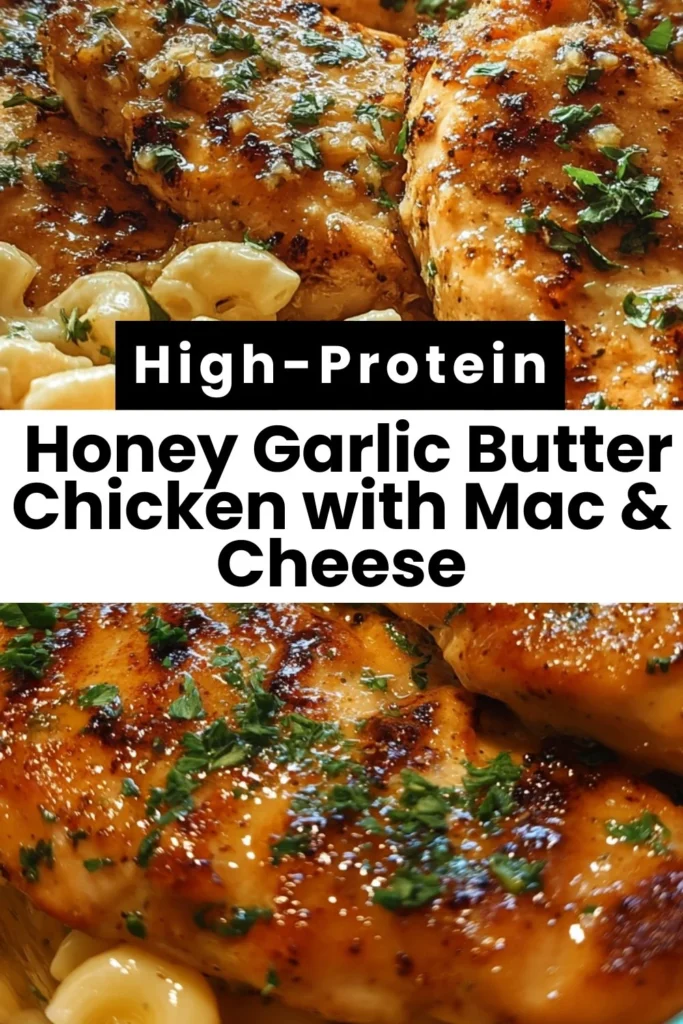
High-Protein Honey Garlic Butter Chicken with Mac & Cheese
Ingredients
Method
- Marinate the cubed chicken with olive oil, minced garlic, smoked paprika, garlic powder, dried parsley, salt, and black pepper for about 10 minutes.
- Cook the marinated chicken in a skillet over medium heat for 10-15 minutes until fully cooked.
- Stir in butter, honey, and chopped parsley.
- In the same skillet, sauté additional minced garlic in butter before adding heavy cream.
- Allow it to bubble gently.
- Stir in mozzarella and cheddar until melted and creamy.
- Boil elbow macaroni until al dente; drain and rinse under cold water.
- Combine cooked macaroni with the cheese sauce and simmer on low for about 5 minutes.