Sweet Potato Burger Bowl
Introduction
This Sweet Potato Burger Bowl is for anyone who wants a satisfying, weeknight-friendly meal that feels special without fuss. It’s especially for people who might be new to cooking, returning to the kitchen after a break, or those who’ve had a few burned dinners and want a gentle win. I’ll walk you through it step by step so you can feel calm and capable.
This recipe is approachable because each part — the roasted sweet potatoes and the simply seasoned beef — is forgiving and has clear visual cues to guide you. If you like bowls that combine roasted vegetables and a hearty protein, you may also enjoy this sweet potato breakfast recipe I’ve shared; it uses the same comforting flavors in a morning-friendly way. Read on and I’ll explain how to make this bowl look and taste great, even if you’ve never made a roasted-vegetable bowl before.
Why this recipe is easy to get right
There are a few reasons this Sweet Potato Burger Bowl is kind to cooks of all levels. First, both main components — the sweet potatoes and the ground beef — have wide windows for success. Roasted vegetables tolerate a little extra time in the oven without falling apart, and ground beef is forgiving to texture if you don’t get it perfectly uniform right away.
Second, the seasoning is simple and clear. Garlic powder, onion powder, salt, and pepper are pantry basics that produce reliable flavor. Worcestershire sauce provides an easy, quick way to deepen the beef without needing many spices or marinades.
Finally, assembly is modular: you cook the elements separately and then combine them. That means if one element finishes a few minutes before the other, you can hold it briefly or let it rest without ruining the meal. Small timing mismatches won’t lead to disaster; they’re fixable, and I’ll explain how.
How to make Sweet Potato Burger Bowl
At a high level, this recipe happens in three stages: roast, brown, assemble.
- First, you get the oven going and roast the sweet potatoes. This develops caramelized edges and soft centers — a visual and textural contrast that makes the dish feel complete. Focus on cutting the potatoes into similar-sized pieces so they cook evenly. When you toss them with oil and seasonings, you’re coating each piece to help make those golden edges.
- Next, while the potatoes are roasting, you brown the ground beef in a skillet. Browning is where flavor builds quickly: the hot pan and movement of the meat create little brown bits that taste rich. Adding Worcestershire sauce toward the end amplifies that savory depth.
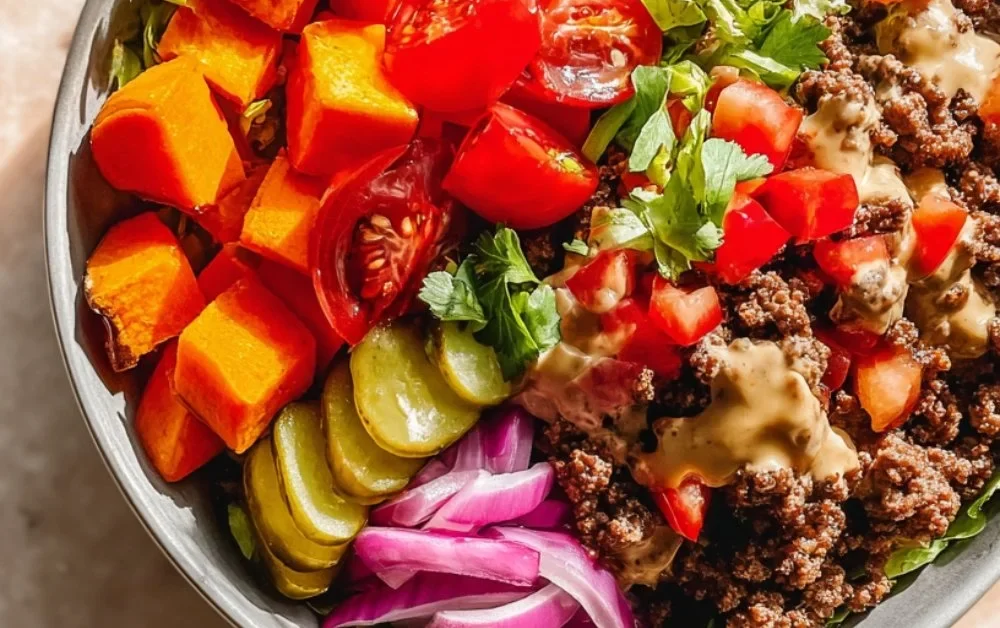
- Last, you assemble the bowl. Layer shredded lettuce, add the roasted sweet potatoes and the cooked beef, then top with red onion, diced tomatoes, and pickles. The fresh toppings bring brightness and crunch to balance the warm, hearty components.
Beginners should slow down when dicing the sweet potatoes and when browning the beef. Aim for bite-sized potato pieces and break the meat into small pieces as it cooks. These small steps make a big difference in texture and final presentation.
Ingredients
1 lb lean ground beef, 4 small sweet potatoes, 1 tablespoon avocado oil, Shredded lettuce, Red onion, Diced tomatoes, Pickles, Worcestershire sauce, Garlic powder, Onion powder, Salt and pepper
Here’s what each item does and why none of them are intimidating:
- 1 lb lean ground beef — This is the protein base. Lean ground beef cooks quickly and develops a nice browned surface. It’s forgiving because you can break it apart as it cooks to achieve the texture you like.
- 4 small sweet potatoes — These add natural sweetness, color, and a soft, creamy bite after roasting. Using small potatoes or cutting larger ones into similar-sized pieces keeps roasting times predictable.
- 1 tablespoon avocado oil — This oil has a high smoke point, which helps the sweet potatoes develop golden edges without burning. If you don’t have avocado oil, a neutral oil works the same way.
- Shredded lettuce — Provides a cool, crisp base so the warm ingredients won’t feel heavy. It’s also a textural contrast that makes each bite more interesting.
- Red onion — Sharp and slightly sweet raw, it adds a bright snap. If raw onion feels strong to you, soak the slices in cold water for 10 minutes to mellow them.
- Diced tomatoes — Freshness and acidity that cut through the richness of the beef and the sweetness of the potatoes.
- Pickles — A briny, tangy pop that brightens the whole bowl. They’re small but make a big difference.
- Worcestershire sauce — Adds umami and a little complexity to the beef without adding more spices or time.
- Garlic powder, Onion powder — These are approachable ways to add depth. They dissolve evenly and won’t burn like fresh minced garlic can if you’re not watching the pan.
- Salt and pepper — The most basic seasonings, but essential. Salt brings the flavors into focus; pepper adds a subtle bite.
All of these ingredients are common and easy to handle. They’re straightforward in measurement and use, which makes this recipe a gentle place to build confidence.
Directions
Preheat your oven to 400°F (200°C).
Peel and dice sweet potatoes into bite-sized pieces. In a large bowl, toss them with avocado oil, garlic powder, onion powder, salt, and pepper.
Spread the seasoned sweet potatoes on a lined baking sheet in a single layer and bake for 30–40 minutes, stirring halfway through.
While the sweet potatoes bake, heat a skillet over medium heat and brown the ground beef for about 8 minutes. Add Worcestershire sauce and seasonings; mix well.
Assemble your bowls by layering shredded lettuce at the bottom, followed by roasted sweet potatoes and cooked beef. Top with red onions, diced tomatoes, pickles, and drizzle with your favorite sauce.
Supportive guidance for these steps:
- Preheating the oven warms the air so the sweet potato surfaces start to caramelize right away. You’ll know the oven is ready when it reaches 400°F (200°C); if your oven runs hot or cool, a few degrees one way or the other won’t ruin the recipe — just keep an eye on color.
- When you peel and dice the sweet potatoes, aim for uniform, bite-sized pieces. Visual cue: they should be roughly the size of the tip of your thumb. That size gives you a soft center while allowing the edges to brown.
- Tossing the potatoes with oil and seasonings before roasting ensures each piece is evenly coated — that’s what leads to even browning. Don’t overcrowd the baking sheet; pieces should sit with a little breathing room so steam can escape and edges crisp.
- During the 30–40 minute bake, stirring halfway through promotes even browning. Look for golden-brown edges and a slightly sticky, tender center when you test with a fork.
- Browning the ground beef over medium heat takes about 8 minutes in the recipe. Visual cues: small browned bits on the meat and in the pan, and the meat shifting from pink to an even brown. Break it into pieces with your spatula so it cooks through evenly.
- Adding Worcestershire sauce and seasonings toward the end enhances the beef’s flavor without making it soggy. Stir so the sauce reduces slightly and coats the meat.
- Assembling the bowl is the fun part: warm roasted potatoes and beef over a bed of cool shredded lettuce, topped with fresh vegetables and pickles. If something looks a little uneven, that’s normal — bowls are meant to look homey and layered, not fussy.
If any element finishes early, hold it at a low oven temperature (about 200°F/95°C) or cover the skillet off heat until everything is ready. Slight timing mismatches are normal and easy to manage.
Key techniques you’ll practice in this recipe
This bowl reinforces several fundamental kitchen skills that build confidence:
- Roasting vegetables — You’ll learn how oil, spacing, and oven heat create caramelization. This technique applies to countless vegetables and is a reliable way to bring out natural sweetness.
- Even dicing — Cutting sweet potatoes to a consistent size leads to even cooking. Practicing this makes future recipes more predictable.
- Browning ground meat — You’ll practice controlling heat, breaking meat into even pieces, and learning the visual cues for doneness. This skill transfers to tacos, pasta sauces, and more.
- Simple seasoning — Learning when to add dry spices versus a splash of sauce (like Worcestershire) will help you balance flavors in many dishes.
Each of these techniques is gentle to practice. They’re not precise sciences; rather, they’re sensory experiences — look for color, feel for texture, and smell for doneness.
Common mistakes and how to avoid them
Here are errors beginners often make and how to recover:
- Overcrowding the baking sheet — If the sweet potato pieces are touching heavily, they’ll steam instead of roast and won’t brown. Fix: use two sheets or roast in batches. If you’ve already started and they’re steaming, remove a few pieces and roast them separately to get the color you want.
- Cutting inconsistent pieces — Too-large chunks stay firm while tiny ones burn. Fix: pull out any very small pieces early, or cut larger pieces down partway through cooking so they finish more evenly.
- Browning at too-high heat — If the beef is cooking too fast and smokes or browns too dark before it’s cooked through, lower the heat a bit and stir more frequently. A slightly lower temperature for a few extra minutes will finish the meat without burning.
- Adding Worcestershire too early — If you add it at the start, the meat can become wet and less able to brown. Adding near the end, as directed, keeps the flavors concentrated and the texture right.
- Feeling pressure for perfect presentation — Bowls are meant to be layered and inviting, not museum-worthy. If one ingredient looks uneven, remember you can tuck it under another or mix gently when serving.
If something does go off track, pause, assess what specifically is off (color, texture, taste), and adjust heat or timing. You rarely need to throw anything away.
How to adjust confidently without changing the recipe
You might want to scale portions, tweak flavors lightly, or adjust textures. Here are conceptual tips that don’t change the written recipe:
- Portion scaling — If you need more or fewer servings, scale the components proportionally. The visual rule: keep roughly equal volumes of roasted sweet potatoes and cooked ground beef per bowl and a smaller amount of shredded lettuce and toppings.
- Flavor preferences — If you prefer more tang, add extra pickles or an extra splash of Worcestershire to the beef at the end. For more sweetness, a small drizzle of honey over the roasted potatoes after they come out of the oven will gloss them without altering the cooking steps.
- Texture tweaks — If you like your sweet potatoes softer, dice slightly smaller or roast a little longer. If you like them firmer, cut larger pieces and check earlier. For beef texture, break it finer for a looser crumble or leave slightly larger pieces for more chew.
These adjustments respect the original directions and ingredients but let you adapt based on appetite and preference. Think of these as gentle nudges, not rewrites.
Serving, storage, and reheating made simple
Serving:
- Serve the bowls warm. Place shredded lettuce first so the warm ingredients rest on top rather than wilting the greens beneath.
- Offer a small sauce on the side so people can control how saucy they want their bowl. A creamy or tangy sauce complements the sweetness of the potatoes.
Storage:
- Store components separately when possible. Keep roasted sweet potatoes and cooked beef in airtight containers in the refrigerator for up to 3–4 days. Fresh toppings like lettuce and tomatoes store best separately and will stay crisper.
- If you must store a fully assembled bowl, eat within a day and expect the lettuce to wilt somewhat.
Reheating:
- For best texture, reheat the roasted sweet potatoes and beef together in a skillet over medium-low heat until warm, stirring occasionally. This revives the roasted edges and keeps the meat from drying.
- Microwave reheating works fine for convenience: heat in 30–45 second bursts, stirring in between to distribute heat.
- If the lettuce has wilted, add a fresh handful of shredded lettuce or crisp toppings before serving to restore contrast.
Questions new cooks often ask about this recipe
Is 30–40 minutes in the oven really necessary? The time range covers different ovens and sweet potato sizes. Look for golden edges and a tender center rather than relying only on the clock.
What size should the potato pieces be? Aim for bite-sized — roughly 1-inch cubes — so they roast evenly with a tender inside and caramelized edges.
Can I use a different oil? Yes. Avocado oil is specified for its high smoke point, but a neutral oil like vegetable or canola will work. Olive oil is fine, just watch for a little earlier browning.
My beef looks dry after reheating — is that normal? Dryness can happen if meat is overheated. Reheat gently in a skillet with a splash of water or a small knob of butter to restore moisture.
Are small imperfections okay? Absolutely. Slightly uneven browning or a piece that’s a tad firmer is normal and won’t hurt the flavor. Bowls are meant to be comforting and forgiving.
Final encouragement from Carla
You’ve got everything you need to make a comforting, reliable Sweet Potato Burger Bowl. Focus on the simple checkpoints — even dice, golden edges on the potatoes, and nicely browned beef — and remember that small imperfections are part of learning. Each time you make it, you’ll notice little improvements, and that steady progress is what builds confidence in the kitchen. Cooking is about practice and joy, not perfection. Enjoy the process, and savor the bowl.
Conclusion
If you’d like another take on sweet potato bowls to compare flavors and presentation, this version from Sweet Potato Burger Bowl – Jordo’s World offers a helpful perspective. For more ideas on bowl-style meals with bright, fresh toppings, check out Sweet Potato Burger Bowls – Eat With Clarity. If you enjoy variations with special sauces and a focus on higher protein, take a look at High Protein Sweet Potato Cheeseburger Bowls with Special Sauce ….