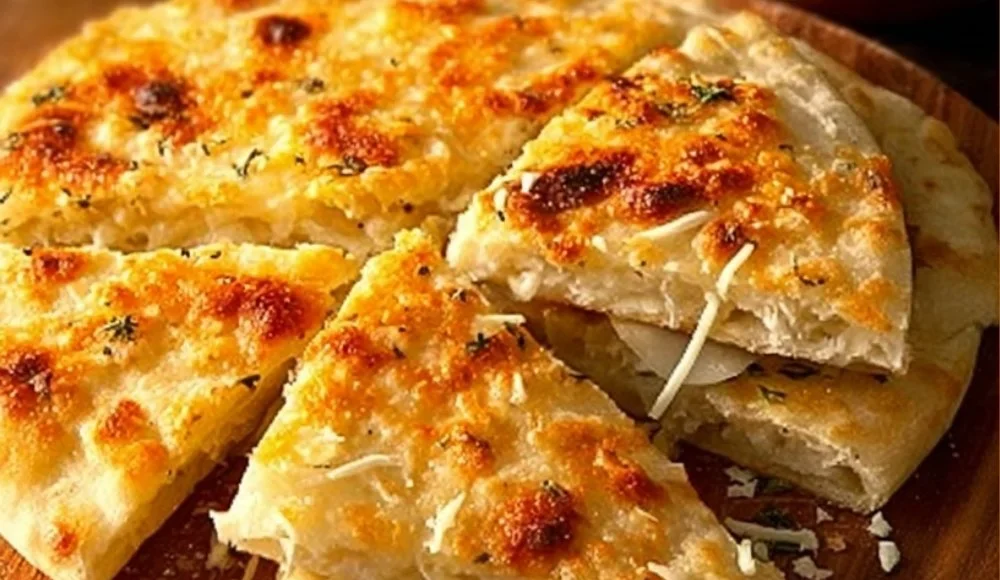
Air Fryer Garlic Bread
Introduction
Hello — I’m Carla Carter, Founder & Recipe Developer of RecipesCabin. If you’re looking for a simple, reliable way to make warm, buttery garlic bread without firing up the oven, this Air Fryer Garlic Bread is for you. It’s the kind of recipe that welcomes anyone into the kitchen: busy weeknighters, new cooks, parents who need a quick side, and anyone who wants the comfort of golden, crispy bread with minimal fuss.
This recipe is approachable because it uses everyday ingredients and a straightforward process. You don’t need special techniques, fancy tools, or perfect timing to get a delicious result. I’ll walk you through what to expect at each stage and the small things to watch for, so you feel confident from the first slice through the first bite.
Why this recipe is easy to get right
What makes this garlic bread forgiving is that it relies on clear, visible changes — color, texture, and smell — rather than precise culinary timing or complicated sequences. The air fryer crisps and browns bread evenly, so you’ll see progress as it cooks. The garlic butter mixture is straightforward to assemble by hand, and even if it’s a little uneven on the first try, the flavor still comes through.
Flexibility shows up in a few ways: the bread type (French or Italian works), how much butter you use (the recipe gives a generous amount, but a little less is still tasty), and optional toppings like parsley or Parmesan. Because garlic and butter are bold flavors, small variations won’t ruin the dish. The recipe lets you focus on simple sensory cues — a golden edge, a fragrant garlic aroma — which makes it suitable for cooks at any level.
How to make Air Fryer Garlic Bread
First, you’ll preheat the air fryer so it’s ready to crisp the bread the moment you place it inside; a preheated appliance gives you predictable browning. Next, you combine softened butter with minced garlic, salt, and pepper — this is the flavor base. Spread the mixture on each slice, add any optional toppings, and arrange the bread in the air fryer basket in a single layer so each slice gets air flow and browns evenly. Finally, you’ll cook until the bread is golden and crisp, then let it cool slightly before serving.
At each stage, here’s what to focus on:
- When preheating, notice the air fryer reach temperature quickly; a warm basket means the butter will melt and the edges will crisp.
- While mixing the butter and garlic, aim for an even, spreadable texture. You should be able to smear it on without tearing the bread.
- Spreading: don’t press so hard that the bread compresses; a gentle, even layer is enough.
- In the air fryer: single layer placement matters more than perfect spacing. If slices overlap, the overlapped areas won’t crisp as well.
- Finishing: look for a golden-brown surface and listen for a light crunch as you touch the edge with a utensil.
Beginners should slow down during the spreading step and when arranging slices in the basket. Taking a little extra time here prevents uneven cooking and helps you develop a rhythm you’ll reuse in other air fryer recipes.
Ingredients
- 1 loaf of bread (French or Italian)
- 4 tablespoons butter, softened
- 4 cloves garlic, minced
- 1/4 teaspoon salt
- 1/4 teaspoon black pepper
- 2 tablespoons parsley, chopped (optional)
- Grated Parmesan cheese (optional)
Each of these ingredients plays a small but important role. The loaf of bread is your structure — French or Italian has a sturdy crumb that holds up to butter and heat. The softened butter spreads easily and melts into the bread, giving a rich mouthfeel and carrying flavor. Minced garlic is the aromatic heart of the recipe; minced pieces distribute the garlic flavor so you get hits of garlic in each bite. The salt and pepper are simple seasoning that bring out both the butter and garlic. Parsley adds a fresh, herbaceous lift if you choose to include it, and Parmesan gives a salty, nutty top note if you want a touch of umami.
None of these ingredients are intimidating — they’re pantry staples or easy additions at the grocery store. They work together by creating contrast: rich butter, pungent garlic, and crisp toasted bread. That balance is what makes each slice satisfying and familiar.
Directions
- Preheat the air fryer to 350°F (175°C).
- In a bowl, mix the softened butter, minced garlic, salt, and pepper until well combined.
- Spread the garlic butter mixture generously on one side of each slice of bread.
- If desired, sprinkle chopped parsley and grated Parmesan cheese on top.
- Place the slices of bread in the air fryer basket in a single layer.
- Cook for about 5-7 minutes, or until the bread is golden brown and crispy.
- Remove from air fryer and let cool slightly before serving.
Supportive guidance around these steps:
- Step 1: Preheating the air fryer is a small step that improves consistency. You’ll notice the interior is warm to the touch within a few minutes; this helps the butter melt quickly and creates a crisper exterior. If your air fryer has a preheat function, use it; if not, running it empty for 2–3 minutes at temperature works fine.
- Step 2: When mixing butter and garlic, you’re aiming for a spreadable contrast — not a runny sauce. The butter should be soft enough to mix easily; if it’s too cold, it won’t spread and could tear the bread. If it’s very warm, the butter will be greasy. The visual cue is a creamy, slightly glossy mix flecked with minced garlic.
- Step 3: Spreading generously means the butter should cover the surface in an even layer. If you see a few thin spots, that’s okay — flavor still distributes in the heat. Use a butter knife or small offset spatula and go from center to edges with light pressure.
- Step 4: Parsley and Parmesan are optional, but a sprinkle of green and a dusting of cheese give visual contrast and extra flavor. If you add Parmesan, use it sparingly so it melts and creates a slightly crisp, golden top.
- Step 5: A single layer ensures air circulates around each slice, producing even browning. If you have more slices than will fit, cook in batches. It’s better to do two batches than to crowd the basket and get soggy middles.
- Step 6: Timing depends on your air fryer and the bread thickness. Watch for a golden edge and a crisp top — that’s your cue to stop. If the slices are thicker, they may need the full 7 minutes; thinner slices may be done closer to 5 minutes.
- Step 7: Letting the bread cool slightly helps the butter set and the surface crisp a touch more as it rests. Serve warm for the best texture and aroma.
If things don’t look perfectly even the first time, that’s okay. A few darker spots or slightly softer centers can happen, especially with different bread sizes. The smell of toasted garlic and the warmth of the butter will still make it taste wonderful.
Key techniques you’ll practice in this recipe
This recipe helps you practice a few fundamental kitchen skills:
- Softening and working with butter: learning the right texture for spreading is useful for many recipes, from sandwiches to baking.
- Even seasoning: mixing salt and pepper into a fat distributes flavor more consistently than sprinkling on top.
- Spreading evenly without tearing bread: a gentle hand keeps slices intact and is a useful habit for sandwiches, toast, and pastries.
- Using an air fryer: you’ll get comfortable with single-layer cooking, timing based on visual cues, and adapting to your specific model.
These are simple but transferable skills. Once you’re confident with them, you’ll notice they improve lots of other dishes you make.
Common mistakes and how to avoid them
Typical errors and simple fixes:
- Mistake: The butter is too hard to spread and tears the bread.
- Avoid by: Letting the butter sit at room temperature until soft but still slightly cool, or briefly microwaving (5–8 seconds) if you’re in a hurry.
- Mistake: Overcrowding the air fryer basket.
- Avoid by: Cooking in batches so each slice has space for air to circulate; crowded slices lead to softer centers.
- Mistake: Bread browning too quickly on the edges but staying soft in the middle.
- Avoid by: Using a slightly lower temperature or checking at the earlier end of the time range. Thicker slices may need more time at a lower setting.
- Mistake: Garlic burning and becoming bitter.
- Avoid by: Minced garlic in the butter is protected by the fat, but if your air fryer runs hot or cooks fast, keep an eye at the shorter time mark and remove when the surface is golden rather than dark brown.
If something feels off — a too-soft center or a too-dark edge — you can recover without starting over. Remove any burnt spots, give slices another minute at a lower temperature, or finish in a conventional oven on a baking sheet for a minute or two if you need more even heat.
How to adjust confidently without changing the recipe
Portion scaling concepts:
- The recipe is easy to scale up or down by adjusting the number of slices you prepare. If you have a larger loaf or want more servings, make additional batches rather than increasing thickness or crowding the basket.
Flavor preference adjustments (conceptual only — do not alter ingredients or steps):
- If you like a milder garlic note, spread the mixture more thinly or use slightly less minced garlic when you prepare it next time. If you prefer more punch, reserve a bit of minced garlic to sprinkle lightly on top before serving.
- For a greener, fresher feel, add more fresh herbs on top after cooking rather than before, which preserves their brightness.
Texture tweaks (conceptual only):
- Thicker slices yield a chewier center and crisp edge; thinner slices will be crispier overall. Adjust the slice thickness when you cut the loaf rather than changing cooking time dramatically.
- If you want a crunchier top, add a light dusting of grated Parmesan in the final minute of cooking; it will turn golden and add texture.
All of these are ways to personalize results over time while following the same reliable recipe steps.
Serving, storage, and reheating made simple
Serving:
- Serve garlic bread warm for the best texture — the butter will be glossy and the edges crisp. It pairs beautifully with pasta, soups, salads, or as a snack with a dipping sauce like marinara.
- Arrange slices on a warm plate or breadboard; a simple garnish of fresh parsley after cooking brightens the presentation.
Storage:
- Store leftovers in an airtight container at room temperature for up to 24 hours. For longer storage, refrigerate for up to 2 days. Keep in mind that refrigeration will soften the crust.
- To freeze, wrap slices individually in foil or plastic wrap and place in a freezer bag for up to one month.
Reheating:
- Best method: Reheat in the air fryer for 2–3 minutes at 325°F (160°C). This helps restore crispness without overbrowning.
- Alternative: Use a conventional oven at 350°F (175°C) for 5–7 minutes on a baking sheet. Avoid microwaving if you want to keep the crust crisp; microwaves tend to make bread chewy or soggy.
Questions new cooks often ask about this recipe
Q: How do I know when the bread is done?
A: Look for an even golden-brown top and a firm, slightly crisp edge. Tap the edge gently — it should sound slightly hollow and feel crisp.
Q: Can I use frozen bread?
A: You can, but thaw it first so the butter spreads easily and the center heats evenly. Cold bread may need a minute or two more of cook time.
Q: My garlic brown spots — is that bad?
A: A little golden color is perfect and adds flavor. If the garlic turns very dark or black, it’s bitter and best avoided; reduce cooking time slightly next time.
Q: What air fryer setting is best?
A: 350°F (175°C) is the recipe setting because it crisps without burning the garlic or over-browning the edges. Air fryers vary, so check at the lower end of the time range and adjust for your model.
Q: Is it okay if the butter pool forms on the plate?
A: Yes — that’s normal. The butter melts and soaks slightly into the bread. If there’s excess, blot it with a paper towel or serve on a warmed rack so it drains.
Final encouragement from Carla
Cooking is a practice, and each time you make this Air Fryer Garlic Bread you’ll learn a little more about timing, texture, and what your equipment does. Small imperfections — a slightly darker edge or a softer middle — are part of learning and won’t ruin the enjoyment. Trust your eyes and nose: golden color and that warm garlic-butter aroma are your best guides. Be patient with yourself, and remember that simple recipes like this are where confidence grows. Enjoy the process and the delicious result.
Conclusion
If you’d like another detailed take or visual steps for making garlic bread in an air fryer, I recommend this helpful walkthrough: The Best Homemade Air Fryer Garlic Bread | Air Fryer Side Dish.