Crispy Air Fryer Cabbage Wedges
Introduction
Hi — I’m Sarah Collins. If your weeknights look anything like mine used to (kids at soccer, a sink full of lunch dishes, and the clock moving faster than your to-do list), you want meals that are simple, dependable, and liked by everyone at the table. Crispy Air Fryer Cabbage Wedges are one of those dishes I turn to again and again. They give you familiar, comforting flavors, a bit of crunch that kids love, and they take almost no babysitting once they’re in the air fryer.
This recipe works for busy families because it’s fast, forgiving, and uses ingredients that live in most kitchens. You can serve it alongside weeknight proteins, bring it to a casual gathering, or make a double batch to use in lunchboxes the next day. The flavors are straightforward — a touch of garlic and onion powder, olive oil for browning, and an optional sprinkle of parmesan to finish — so it’s easy for picky eaters and satisfying enough for adults who want something a little more interesting than plain steamed cabbage.
What makes this a true go-to is reliability. The air fryer gives you consistent crisping without a lot of oil or fuss, and the steps are short and repeatable even on tired evenings. It’s a dish you can count on when schedules are full, because it keeps well, reheats nicely, and pairs with many weeknight mains. In short: simple, fast, kid-approved, and forgiving — the kind of side I love to keep in my rotation.
How to make Crispy Air Fryer Cabbage Wedges
Think of this recipe as three quick stages: prep, toss, and crisp. First, you prep by cutting the cabbage into wedges — that’s the only real knife work, and it’s straightforward. Next, you toss the wedges with olive oil and seasonings; that step flavors the cabbage and helps it brown. Finally, the air fryer does the heavy lifting: it crisps the edges and gives a nice golden finish without needing much oil or attention.
Where beginners should slow down: cutting wedges evenly. I recommend aiming for wedges that are similar in size so they finish at the same time. If one wedge is much thicker, it will take longer to crisp. Shortcuts naturally exist: if you’re really rushed, have someone else in the family cut the cabbage while you finish dinner prep, or use pre-sliced cabbage wedges from the deli counter if your store carries them. But even the full prep takes only a few minutes, and the rest is hands-off.
At each stage you’re looking for simple cues: even coating after tossing, a single layer in the basket for good circulation, and a light golden color when the wedges are done. If you keep those points in mind, the result is reliably crisp and flavorful.
Ingredients
- 1 head of cabbage
- 2 tablespoons olive oil
- 1 teaspoon garlic powder
- 1 teaspoon onion powder
- Salt and pepper to taste
- Optional: parmesan cheese for topping
Here’s what each ingredient does and why it matters in plain home-cook terms:
- 1 head of cabbage: This is the star. Cabbage is sturdy enough to hold together as wedges and mild enough that kids and adults both enjoy it. It crisps around the edges while staying pleasantly tender inside.
- 2 tablespoons olive oil: Oil helps the wedges brown and keeps them from drying out. It also carries the garlic and onion flavors so they stick to the cabbage.
- 1 teaspoon garlic powder: Garlic powder gives that familiar, kitchen-friendly garlic flavor without the risk of burning that minced garlic can have in a hot air fryer.
- 1 teaspoon onion powder: Paired with the garlic powder, onion powder adds a savory depth that makes the cabbage taste more “complete” and family-friendly.
- Salt and pepper to taste: Salt enhances flavor and helps the cabbage release a little moisture as it cooks, while pepper adds a subtle bite. I usually go light and let people add more at the table.
- Optional: parmesan cheese for topping: A sprinkle of parmesan at the end turns these wedges into something a bit special — a salty, nutty finish that many kids enjoy. It’s optional, but it’s a lovely little upgrade.
All of these are common pantry items, which is part of why this recipe works so well in a real family kitchen. Nothing exotic, nothing temperamental — just simple flavors that play well with a lot of meals.
Directions
- Preheat the air fryer to 350°F (175°C).
- Cut the cabbage into wedges and place them in a large bowl.
- Drizzle the olive oil over the cabbage wedges and sprinkle with garlic powder, onion powder, salt, and pepper. Toss to coat evenly.
- Place the wedges in the air fryer basket in a single layer.
- Air fry for 10-15 minutes, flipping halfway through, until crispy and golden brown.
- If desired, sprinkle with parmesan cheese and air fry for an additional 1-2 minutes.
- Serve warm as a side dish.
Friendly guidance around the steps (without changing them)
- Step 1: Preheating gives the air fryer a head start on browning. If your machine runs hot or cool, you’ll learn after a couple of batches — but 350°F is a good middle ground for this cut of vegetable.
- Step 2: Cut wedges evenly. I aim for about 6–8 wedges per head, depending on size. Keep the core attached enough to hold each wedge together so they don’t fall apart when you flip them.
- Step 3: Toss thoroughly so each wedge has a thin, even film of oil and seasoning. If a wedge looks dry, give it a little extra drizzle. The oil is what helps you get those crisp edges.
- Step 4: A single layer is important for even air circulation. If you need to, cook in two quick batches rather than crowding the basket.
- Step 5: The 10–15 minute window lets you dial in your preferred crispness. Check at 10 minutes — the wedges will be tender with browned edges — and continue if you want extra color. Flip gently at the halfway point so both sides brown.
- Step 6: Adding parmesan at the end gives it a quick melt and toasty flavor. Don’t add it too early or it may burn.
- Step 7: Serve right away for peak texture. The wedges are best warm and slightly crisp.
What things should look/smell/feel like
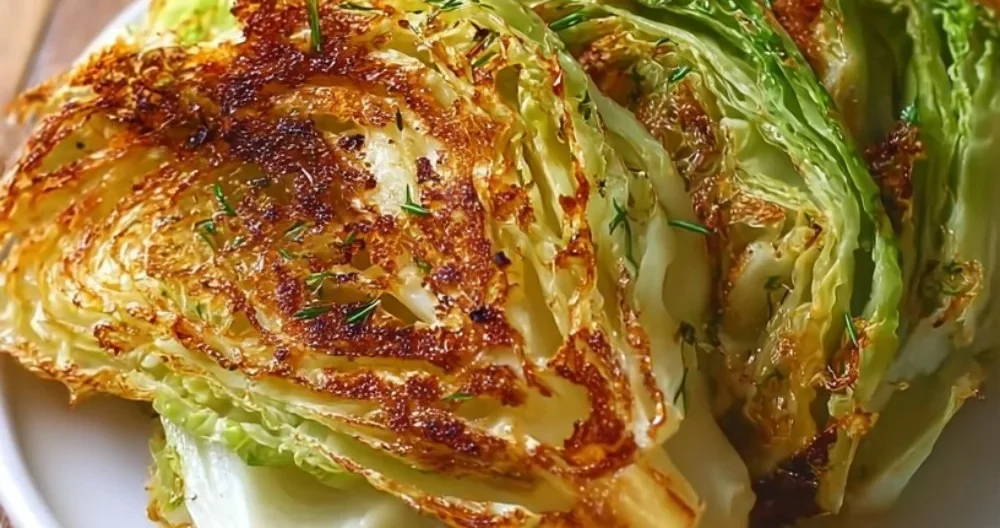
- Look: golden brown at the edges, slightly charred in spots, and not floppy.
- Smell: toasty, with a hint of garlic and onion.
- Feel: the outer leaves should be crisp; press the center gently — it should be tender, not raw.
Common small mistakes to avoid
- Crowding the basket (results in steaming rather than crisping).
- Using too much oil (drips and soggy spots). Two tablespoons is enough for a whole head.
- Cutting wedges unevenly (leads to uneven cooking).
- Skipping the flip (you’ll miss that even golden color).
How to know you’re on track
- After the flip, both sides should be developing color. If one side is still pale after a few minutes, your basket may be crowded or the pieces may need more oil. The center should be tender when pierced with a fork.
Why families love this dish
Cabbage wedges are familiar without being boring. The flavor profile — olive oil, garlic, onion, salt, pepper, and optional parmesan — reads as “homey” to kids and grown-ups alike. There’s something comforting about a roasted vegetable that’s slightly sweet at the core and crisp around the edges. Kids are often drawn to the crunchy edges, and parents like that it’s low-fuss.
It’s also versatile: serve it alongside chicken nuggets for a kid-friendly plate, pair it with grilled sausages or a quick pan-seared fish for adults, or make it part of a casual vegetarian meal with hummus and warm bread. Because the flavors are straightforward, it’s easy to adapt without complicating the cooking process, which is a big plus during busy weeks.
If you have picky eaters, the parmesan option can make it more appealing; for more adventurous eaters, a squeeze of lemon or a drizzle of favorite sauce at the table adds instant personality. Its simplicity is what makes it family-friendly — no surprise ingredients, no heavy sauces — just honest, dependable taste.
Smart substitutions and simple variations
I want to be clear: don’t change the ingredients in the core recipe when following it exactly. That said, when you’re experimenting outside of the base recipe, these swaps keep things reliable:
- Swap oils sparingly: If you’re out of olive oil, a neutral oil like avocado or light vegetable oil will work. They’ll brown slightly differently but still give you crisp edges. (Remember the recipe calls for 2 tablespoons total.)
- Cheese options: If you don’t have parmesan, a sprinkling of finely grated cheddar or crumbled feta added at the last minute gives a different, but still tasty, finish.
- Make it kid-friendlier: Leave the pepper out or use a smaller pinch if little ones are sensitive to peppery flavors. A light dusting of mild paprika instead of pepper gives color without heat.
- Flavor boosts for adults: Finish with a squeeze of lemon, a scatter of chopped fresh herbs, or a drizzle of balsamic glaze after cooking for a more grown-up touch.
- Texture tweaks: For more pronounced char, increase the air fryer temp by 10–15 degrees in the final minutes — just watch closely.
All of these keep the recipe’s structure intact and offer small ways to tailor flavor without adding complexity.
Pairing ideas for a complete, satisfying meal
This cabbage side works with a wide variety of mains and only asks for simple companions:
- Kid-friendly: serve with oven-baked chicken tenders, mashed potatoes, or a turkey sandwich. Add a fruit cup and you’ve got an easy weeknight plate.
- Weeknight dinner: pair with pan-seared pork chops, roasted chicken thighs, or salmon filets. Add a simple grain (rice, quinoa) and a quick salad for balance.
- Casual gathering: serve alongside grilled sausages, crusty bread, and a bowl of pickles or olives for a relaxed sharing board.
- Vegetarian option: make a plate with roasted chickpeas, warm pita, and a yogurt sauce so the cabbage is one part of a satisfying vegetarian spread.
The goal is minimal extra work: heat something that’s already in your routine and you’ll have a full, balanced meal in under half an hour.
Make-ahead tips, leftovers, and storage
Cabbage wedges hold up well to short-term storage. Cool them to room temperature, then transfer to an airtight container and refrigerate for up to 3 days. Reheating in the air fryer for 3–5 minutes at a moderate temperature brings back crispness far better than the microwave. If you only have a microwave, a quick 30–45 second zap will warm them but won’t restore the crunch.
For lunchboxes, pack wedges in an insulated container with a small dipping cup (plain yogurt, ranch, or ketchup can be kid-approved). If you want to prep ahead, toss the wedges with oil and seasoning, store them covered in the fridge for up to 24 hours, and cook them straight from the fridge — they’ll take a minute or two longer.
Avoid freezing cooked wedges; the texture becomes too soft. If you want to keep cabbage long-term, blanch and freeze the core pieces raw, then reheat and season when ready.
Common questions home cooks ask about this recipe
- How long will it take if my wedges are thicker? Expect the cook time to move toward the higher end of the 10–15 minute window, and possibly a minute or two more. Flip and check for tenderness.
- Can I make a larger batch? Yes — just work in batches. Crowding the basket leads to steaming, not crisping, so multiple cooks are better than one crowded basket.
- My wedges came out too soft — what went wrong? Most likely the basket was crowded or there wasn’t enough oil. Make sure each wedge has a thin coating of oil and space for air to circulate.
- Can I add sauces before cooking? I don’t recommend wet marinades before air frying as they can prevent browning and lead to uneven cooking. Save sauces for the table or add a sprinkle of parmesan at the end as suggested.
- Will this work in an oven? Yes — roasted cabbage wedges in a 425°F oven will give similar results. Cook on a rimmed baking sheet and roast until edges brown, flipping once.
These are practical fixes that help you feel confident returning to the recipe.
Final thoughts from Sarah
This recipe is small but mighty: approachable enough for weeknights, forgiving enough for busy households, and flavorful enough to become a family favorite. You don’t need special skills or a pantry full of gourmet ingredients to make something that feels comforting and a little special. Keep the steps simple, trust the air fryer to do the work, and don’t be afraid to tweak the finish at the table so everyone at your table gets exactly what they like.
If you’re new to air frying vegetables, start with one head of cabbage and give it a try on a quiet night. I bet it’ll become one of those easy sides you make when you want dinner to be uncomplicated but still satisfying. Happy cooking — Sarah Collins
Conclusion
If you’d like a quick reference with photos and another home cook’s notes, I find this handy guide to be useful: Air Fryer Cabbage Wedges – Evergreen Kitchen.