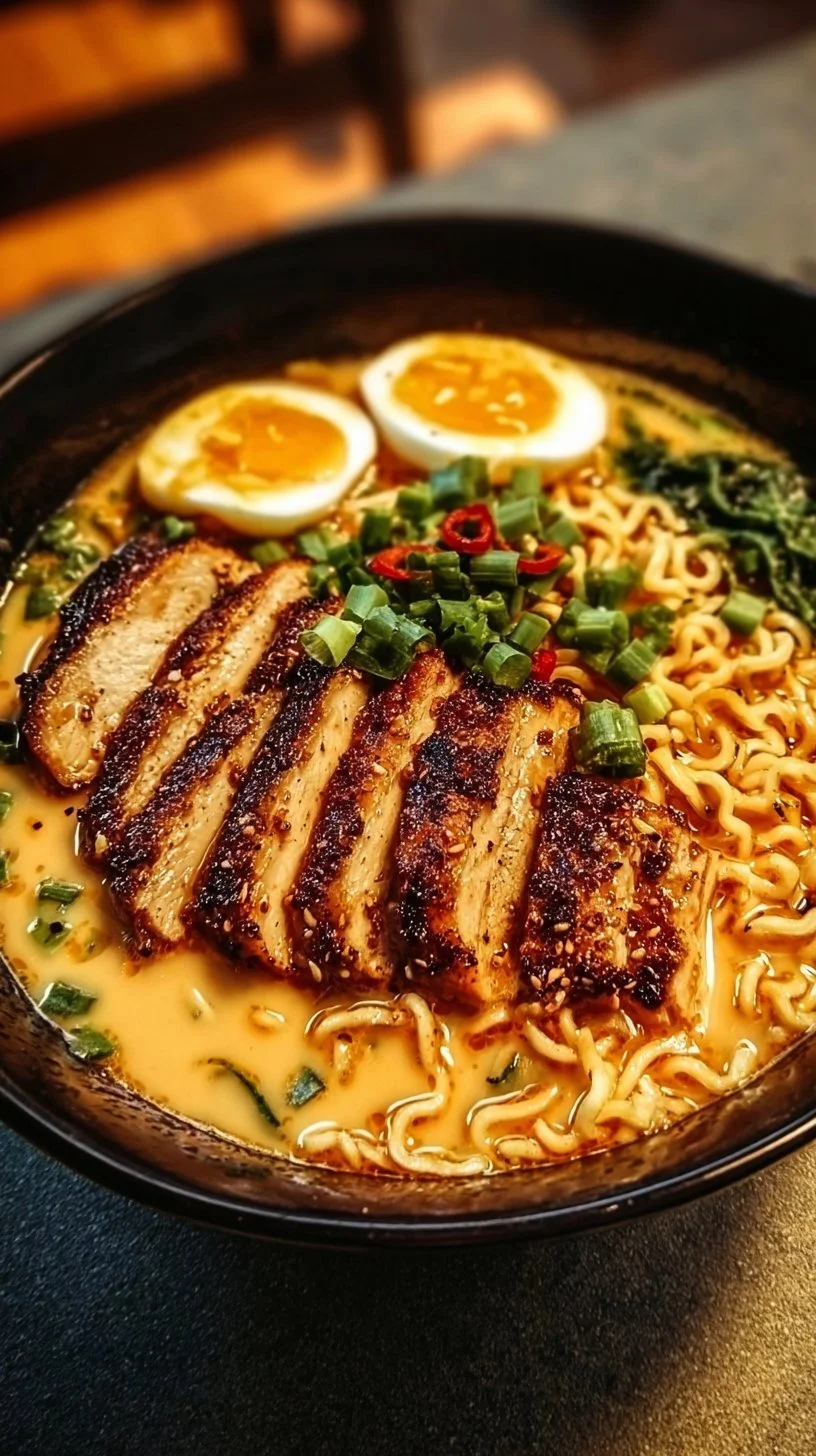
Creamy Garlic Chicken Ramen
Introduction
This Creamy Garlic Chicken Ramen is for anyone who wants a comforting, flavorful meal without fuss — whether you’re cooking for the first time or returning to the kitchen after a break. It’s approachable because the steps are straightforward and the ingredients are familiar; nothing exotic or intimidating. I designed this recipe to be a friendly teaching moment: you’ll build a rich broth, brown chicken for texture, and bring everything together with cream and fresh vegetables. If you’ve ever worried about making a soups-and-noodles dish taste homemade instead of boxed, this recipe will show you how small, clear choices make a big difference.
If you like exploring dishes that pair creamy sauces with simple proteins, you might enjoy a similar comforting dish like Parmesan-crusted chicken with creamy garlic sauce, which uses the same gentle flavor ideas in a different format. Read this guide slowly, and know that my tone here is calm and encouraging — I’ll walk you beside the stove so you feel steady and confident.
Why this recipe is easy to get right
There are a few reasons this Creamy Garlic Chicken Ramen is forgiving. First, the liquids (chicken broth and cream) give you time to correct things: if the seasoning feels light, it’s easy to add a pinch more salt or a splash more soy sauce. Second, ramen noodles cook quickly and predictably, so you won’t overwork the dish while waiting for something to finish. Third, the recipe tolerates a range of vegetable sizes and chicken thicknesses — the goal is tender chicken and softened vegetables, not perfection.
Flexibility comes from texture and timing. If the chicken takes a minute longer to brown, that’s fine; you can lower the heat slightly and let it finish gently. If your vegetables are softer than you expected, the cream will still coat everything and taste wonderful. This recipe is suitable for all skill levels because it focuses on simple actions — sauté, simmer, stir — and gives visual cues you can trust.
How to make Creamy Garlic Chicken Ramen
Overall process: you’ll start by building flavor in the pot with garlic and a bit of oil, brown the chicken to develop a savory surface, add broth and noodles to cook, then finish by stirring in cream, soy sauce, and vegetables so the whole pot becomes a silky, well-seasoned bowl.
What happens first: heating the oil and gently sautéing garlic releases its aroma and flavors. Watch for the garlic to become fragrant and pale golden — this takes only 30–60 seconds over medium heat. This step builds the base of the dish.
Next: browning the chicken. Browning adds color and a toasty flavor that lifts the broth. You’re not trying to cook the chicken through completely here; you’re creating a flavorful exterior. If the breasts are thick, give them a minute or two on each side until they turn golden.
Then: pouring in the chicken broth and bringing it to a boil. This is the stage where the pot becomes a cooking environment for the noodles and the chicken. A gentle boil will cook the ramen in the time the package suggests. Keep an eye on bubbling — you want steady, even heat, not a wild rolling boil.
After noodles: stir in the cream, soy sauce, and mixed vegetables. The cream smooths the broth into a richer sauce, soy sauce adds savory depth, and the vegetables bring color and freshness. Simmer briefly until the vegetables are tender; this softens them while keeping bright color.
Where beginners should slow down: browning the chicken and watching the noodles cook. For the chicken, take time to wait for the pan to be hot so the meat browns rather than steams. For the noodles, follow the package timing and check a minute early — overcooked noodles turn limp quickly, but a slightly firm texture is pleasant in a soup.
If you want a practical how-to example from another approachable recipe that teaches similar finishing techniques, this dreamy garlic butter chicken and bowtie pasta shows the same gentle finishing steps with cream and aromatics.
Ingredients
2 chicken breasts, 4 cups chicken broth, 2 packs of ramen noodles, 1 cup heavy cream, 3 cloves garlic, minced, 1 cup mixed vegetables (e.g., bell peppers, carrots, broccoli), 2 tablespoons soy sauce, 1 tablespoon olive oil, Salt and pepper to taste, Green onions for garnish
What each ingredient does in the recipe:
- Chicken breasts: provide the main protein and substance. Browning them adds savory flavor.
- Chicken broth: builds the body of the soup and carries the aromatics. It’s the liquid backbone.
- Ramen noodles: give the dish comforting texture and make it a satisfying meal quickly.
- Heavy cream: turns the broth silky and rich, creating that “creamy” character without needing extra steps.
- Garlic (minced): releases fragrance and a warm, savory note early in cooking.
- Mixed vegetables: add color, freshness, and nutrients; they also change the mouthfeel from purely silky to pleasantly varied.
- Soy sauce: boosts umami and balances the cream’s richness.
- Olive oil: helps sauté the garlic and gives the chicken a nice surface for browning.
- Salt and pepper: simple seasoning that highlights the other flavors.
- Green onions: brighten the finish with a mild oniony snap.
None of these ingredients are complicated. They are pantry- and grocery-store friendly, and together they create a balanced bowl: savory broth, tender protein, creamy finish, and fresh garnish.
Directions
- In a large pot, heat olive oil over medium heat. Add minced garlic and sauté until fragrant.
- Add the chicken breasts and cook until browned.
- Pour in the chicken broth and bring to a boil.
- Add ramen noodles and cook according to package instructions.
- Stir in heavy cream, soy sauce, and mixed vegetables.
- Season with salt and pepper to taste.
- Simmer until the vegetables are tender.
- Serve hot, garnished with chopped green onions.
Supportive guidance around the steps:
- Step 1 visual cues: the oil should shimmer faintly but not smoke. The minced garlic will soften and release a nutty, fragrant scent; look for a pale golden flecking — avoid dark brown because that means it has started to burn.
- Step 2 texture hint: when the chicken is browned, it will lift easily from the pot. If it sticks, it likely needs a touch more time to form that golden crust. Browning doesn’t mean fully cooked — you’ll finish it in the broth.
- Step 3 timing: once the broth is in, bring it to a gentle boil rather than a furious one. A rolling boil can make the noodles overcook or break apart.
- Step 4 reassurance: cook the ramen according to the package, but check a minute early if you prefer a firmer bite. It’s okay if your ramen packet calls for different times — use your eyes and taste to decide doneness.
- Step 5 what to expect: when the cream hits the hot broth, it will loosen and swirl into the liquid, turning it a soft, creamy color. Stirring in the vegetables at this point lets them cook just enough to be tender with a bit of bite.
- Step 6 seasoning tip: soy sauce already adds saltiness; season with salt gradually and taste. Pepper adds a gentle bite — add a little, taste, and adjust.
- Step 7 texture cue: “tender” vegetables mean they give easily to a fork but still hold shape. The color should stay lively — overcooked vegetables often look dull and limp, which is fine but less vibrant.
- Step 8 serving note: garnish with green onions just before serving so they stay bright and give a fresh lift to the creamy bowl.
If something doesn’t look perfect — maybe your cream separated or the noodles look softer than you envisioned — that’s normal. A gentle stir and a few minutes of simmer will often bring everything back together.
Key techniques you’ll practice in this recipe
- Sautéing garlic: learning to soften garlic without burning is a valuable, transferable skill that flavors countless dishes.
- Browning meat: the simple act of creating color on the chicken builds layers of flavor; learning when to let the meat sit in the pan versus moving it around is useful elsewhere.
- Simmering to meld flavors: bringing broth, cream, and soy sauce together teaches control of gentle heat so sauces stay smooth.
- Timing noodles and vegetables together: coordinating quick-cooking ingredients is a lesson in rhythm that will help you with stir-fries, pastas, and soups.
Each of these techniques is foundation-level and will appear again in many recipes. Practicing them here gives you confidence for other dishes that combine protein, sauce, and starch.
Common mistakes and how to avoid them
- Garlic burned: if the garlic turns dark brown right away, reduce the heat and remove the pot from the burner for a moment. Burned garlic tastes bitter; start again with fresh garlic if it’s too far gone.
- Chicken not browned or sticky: if the pan is too cool the chicken won’t brown. Heat the pot a touch more and give the chicken space; overcrowding causes steaming instead of browning.
- Overcooked ramen: noodles become mushy if they sit too long in hot liquid. Follow package times and consider removing the pot from heat a minute early, allowing residual heat to finish the job.
- Cream splitting: if you add cream to a pot that’s boiling fiercely, it can break. Lower the heat to a gentle simmer before adding cream and stir gently as it incorporates.
- Bland final dish: taste and adjust. Soy sauce adds savory depth, and a small pinch of salt at the end often brightens everything. Add seasoning in cautious increments so you don’t oversalt.
If something goes off track, remember there is usually a simple recovery: lower the heat, taste, and adjust salt and acid (a small squeeze of lemon or a splash of vinegar can brighten if it feels too heavy). You rarely need to start over.
How to adjust confidently without changing the recipe
Portion scaling: conceptually, doubling the recipe doubles everything. Liquid-to-protein balance matters: if you increase chicken substantially, increase broth proportionally so the noodles still have enough liquid to cook. If you’re halving for one person, reduce cooking vessel size and watch noodle timing closely — smaller pots heat faster.
Flavor adjustments: you can conceptually tilt the savory-salty balance with more or less soy sauce, or brighten the bowl with a tiny squeeze of citrus at the end. If you prefer a milder garlic presence, use two cloves instead of three; for a punchier garlic note, keep all three and consider a small extra clove. These are conceptual tweaks — don’t change the written ingredient list or steps.
Texture tweaks: if you enjoy firmer vegetables, add them later in the final simmer; if you like them softer, add earlier or cut them smaller so they cook through. For chewier noodles, check package timing a minute early. These adjustments change timing, not ingredients or steps.
Serving, storage, and reheating made simple
Serving: ladle the ramen into bowls and sprinkle chopped green onions on top. Allow each person to stir their bowl so the cream is evenly distributed. This dish pairs well with simple sides like a light salad or steamed greens.
Storage: cool leftovers quickly and store in an airtight container in the refrigerator for up to 3–4 days. The noodles will continue to soften as they sit in the liquid.
Reheating: reheat gently on the stove over low-medium heat. Add a splash of water or broth while warming to loosen the sauce and revive the texture of the noodles. Microwave reheating can work in a pinch, but stir halfway through and add a small splash of liquid to prevent dryness.
For practical tips on storing and reheating creamy chicken dishes that use similar techniques, review a related recipe’s storage notes like this baked chicken cordon bleu to see how gentle reheating preserves texture.
Questions new cooks often ask about this recipe
- How long should the chicken be browned? Wait until it releases from the pan easily and has a golden surface — about 3–4 minutes per side depending on thickness. You’ll finish cooking it in the broth.
- What if the cream curdles? If the pot is too hot, cream may separate. Turn the heat down and stir slowly — often it comes back together. If not, a small whisk of cold cream or a splash of broth can help smooth it.
- Do I have to use ramen packets’ seasoning? No. The noodles themselves are what you need; the included seasoning packet can be skipped because soy sauce and broth provide the seasoning here.
- Can I use chicken thighs instead of breasts? Yes, thighs work well and are forgiving — they may need slightly longer to brown and cook through.
- Should I cover the pot when simmering? Leave it uncovered if you want the broth to reduce slightly; cover if you want to retain all the liquid and cook the vegetables gently.
These are normal questions — every cook learns by asking and observing. Little adjustments and tasting along the way are your best tools.
Common “Is this normal?” moments
- Broth looks thin after adding cream: it will thicken slightly as it simmers and as noodles absorb liquid.
- Noodles floating apart: that’s okay; stir gently to nestle them into the broth.
- Vegetables fading in color: if that worries you, shorten the simmer time or add them later next time. A slightly dull look doesn’t mean it’s not delicious.
These small imperfections won’t ruin the meal — most readers find the dish comforting and flavorful even if it’s not picture-perfect.
Final encouragement from Carla
You don’t need perfect timing or special tools to make a satisfying bowl of Creamy Garlic Chicken Ramen. Each step is an opportunity to learn something useful: how garlic flavors a broth, how browning adds depth, and how cream finishes a dish. Trust your senses, taste as you go, and remember that small missteps are part of learning. Come back to the recipe whenever you want a gentle challenge or a quick, cozy meal — you’re building kitchen confidence with each pot you make.
Conclusion
If you enjoy the idea of a bolder, spicier take on creamy ramen, check out this variation called Fiery Chicken Ramen with Creamy Garlic Sauce for inspiration on using heat alongside cream. For another homey riff that blends cream and spice, this version titled Fiery Chicken Ramen w/ Creamy Garlic Sauce shows how different proteins and chiles can shift the flavor. If you’re curious about a cream-forward ramen with a spicy lift, take a look at Creamy Spicy Chicken Ramen – Kenna’s Cooks for more ideas. And for a charming recipe name and technique crossover, this Marry Me Chicken Ramen – Myriad Recipes demonstrates how simple additions can make a weeknight dish feel special.
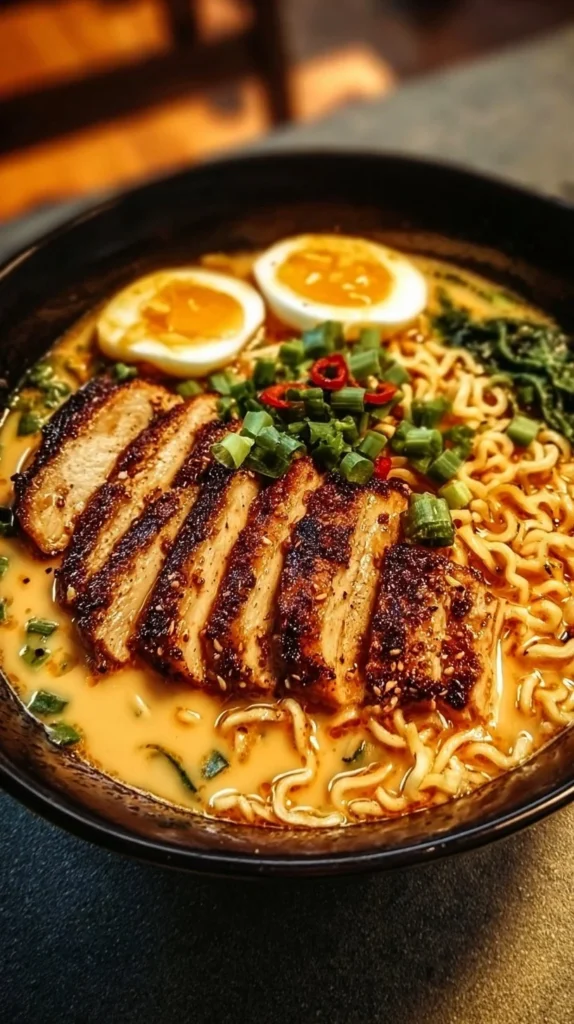
Creamy Garlic Chicken Ramen
Ingredients
Method
- In a large pot, heat olive oil over medium heat. Add minced garlic and sauté until fragrant.
- Add the chicken breasts and cook until browned.
- Pour in the chicken broth and bring to a boil.
- Add ramen noodles and cook according to package instructions.
- Stir in heavy cream, soy sauce, and mixed vegetables.
- Season with salt and pepper to taste.
- Simmer until the vegetables are tender.
- Serve hot, garnished with chopped green onions.