Winter Mediterranean Quinoa Bowl
Introduction
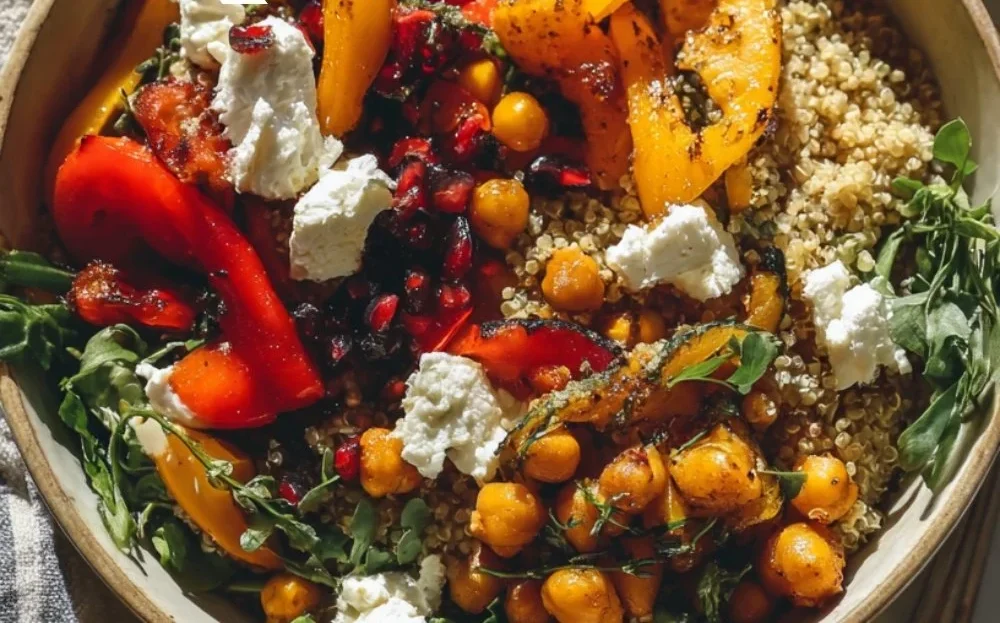
This Winter Mediterranean Quinoa Bowl is exactly that kind of recipe: friendly, forgiving, and packed with familiar tastes—roasted squash and peppers, crisp chickpeas, a tangy tahini-pomegranate drizzle, and a little feta to make it feel cozy. It’s the kind of dinner I turn to when there’s a lot going on after school or on a busy evening when I want something wholesome on the table fast.
If you’re juggling carpools, homework, or late meetings, you’ll appreciate this bowl’s straightforward timing and the way most steps can be done while dinner actually cooks. It works brilliantly for weeknights, and it’s also pretty enough for small gatherings or casual potlucks. Make it ahead for lunches, or double it for meal prep; either way, it keeps well and travels easily.
Families like dishes with predictable flavors and textures. This bowl checks those boxes: sweet roasted squash, gently smoky paprika, crunchy lemony chickpeas, bright pomegranate seeds, and creamy tahini. If you like dinner recipes that don’t demand perfect timing or fancy equipment, this is one to keep in your regular rotation. For other simple bowl ideas that are just as practical on busy nights, I often turn to recipes like the easy high-protein cottage cheese pizza bowl, which shares the same weeknight-friendly spirit.
How to make Winter Mediterranean Quinoa Bowl
Think of this recipe as a few reliable stations: cook the quinoa, roast the vegetables, crisp the chickpeas, make the dressing, and finish with quick toasts and toppings. Each stage is short and forgiving, and you don’t need to be perfect to have success.
Start with the quinoa — it’s the base and sets the pace. Rinsing removes bitterness, and simmering with a bay leaf gives a subtle background flavor. While the quinoa is doing its quiet thing, get the oven going and prep the veggies; roasting concentrates flavors and gives a caramelized edge that’s kid-friendly and familiar. Tossing the chickpeas with spices and adding them to the pan for the final part of roasting gives you crispy texture with almost no extra effort.
The tahini-pomegranate dressing is the single thing that pulls everything together; it’s creamy, slightly sweet, and tangy, and it’s fast to whisk. Toasted pine nuts are a small extra step that adds warmth and crunch, and they’re worth watching closely. Assembly is simple: a base of quinoa, a handful of greens, the roasted veg and chickpeas, pomegranate seeds and feta, then drizzle the dressing. The whole process is something you can do start-to-finish in about an hour, and many of the steps let you multitask.
Beginners should slow down when roasting: spread the vegetables in a single layer and stir once midway so everything browns evenly. Also, take a moment to dry the chickpeas well — it makes a big difference in crispiness. Shortcuts exist: using pre-cut squash or a bag of mixed winter squash can shave prep time, and quick-toasted nuts can be done while the dressing comes together.
Ingredients
1 cup tri-color quinoa, rinsed, 2 cups vegetable broth, 1/2 teaspoon salt, 1 bay leaf, 1 large butternut squash, peeled and cubed (about 2 pounds), 1 medium red onion, sliced into wedges, 1 red bell pepper, sliced, 2 tablespoons olive oil, 1 teaspoon dried oregano, 1/2 teaspoon smoked paprika, Salt and black pepper, to taste, 1 can chickpeas, drained and rinsed (15 ounces), 1 tablespoon olive oil, 1/2 teaspoon ground cumin, 1/4 teaspoon cayenne pepper, Salt, to taste, 3 tablespoons tahini, 2 tablespoons pomegranate molasses, 1 clove garlic, minced, 2 tablespoons lemon juice, 3 to 4 tablespoons warm water, Salt and black pepper, to taste, 1/2 cup pomegranate seeds, 1/2 cup crumbled feta cheese, 1/4 cup fresh parsley, chopped, 1/4 cup toasted pine nuts, Mixed greens (arugula or spinach)
Each ingredient plays a clear, home-cook role. The tri-color quinoa is the hearty base that soaks up flavors and gives the bowl structure. Vegetable broth adds a little savory depth to the quinoa while the bay leaf keeps it tasting rounded. Butternut squash brings sweetness and a soft texture kids tend to love; red onion and bell pepper add color, mild bite, and a slightly caramelized edge when roasted. Olive oil and dried herbs are pantry staples that help develop those roasted flavors, and smoked paprika gives a subtle warmth without being spicy.
Chickpeas add crunch and protein — drying them well before roasting helps them crisp up. The spice mix is simple but familiar: cumin and a touch of cayenne for a gentle lift. The tahini-pomegranate dressing is the flavor bridge: tahini gives creaminess, pomegranate molasses lends a glossy tangy-sweet note, and lemon and garlic keep it bright. Pomegranate seeds add juicy pops, feta brings familiar saltiness that kids recognize, parsley freshens everything, and toasted pine nuts offer a buttery crunch. Mixed greens are there for freshness and to give the bowl a lighter mouthfeel.
Directions
Bring vegetable broth to a boil in a medium saucepan. Add rinsed quinoa, salt, and bay leaf. Reduce heat to low, cover, and simmer for 15 minutes or until liquid is fully absorbed. Remove bay leaf and fluff quinoa with a fork., Preheat oven to 425°F. Toss cubed butternut squash, red onion wedges, and bell pepper slices with olive oil, dried oregano, smoked paprika, salt, and black pepper. Spread in a single layer on a large baking sheet. Roast for 20–25 minutes, stirring halfway, until vegetables are tender and lightly caramelized., Pat chickpeas thoroughly dry. Toss with olive oil, ground cumin, cayenne pepper, and salt. Add chickpeas to the vegetable baking sheet for the final 15 minutes of roasting, stirring once, until golden and crispy., Whisk together tahini, pomegranate molasses, minced garlic, and lemon juice. Gradually incorporate warm water, one tablespoon at a time, whisking until a smooth, pourable consistency is reached. Season with salt and black pepper., Place pine nuts in a dry skillet over medium heat. Toast, stirring frequently, for 2 to 3 minutes until golden brown and fragrant. Remove from heat immediately to prevent burning., Divide cooked quinoa evenly among four bowls. Top each with mixed greens, roasted vegetables, and crispy chickpeas. Sprinkle with pomegranate seeds, crumbled feta, chopped parsley, and toasted pine nuts. Drizzle generously with tahini-pomegranate dressing and serve immediately.
A few simple checkpoints while you cook: the quinoa should look tender and fluffy when you lift it with a fork — no visible liquid should remain in the pot. When the vegetables are done, they’ll have some caramelized dark spots and a soft bite when pierced with a fork. Crispy chickpeas should be golden and have a pleasant crunch when you bite into them; if they’re a little soft, give them a couple more minutes in the oven (they crisp more as they cool, too).
For the dressing, aim for a texture that easily pours but still clings to the spoon — that usually happens around 3 to 4 tablespoons of warm water, depending on your tahini. With pine nuts, watch closely: they go from golden to burnt very quickly, so pull the pan off the heat as soon as they smell nutty and look golden. When assembling, don’t be shy with the dressing — it’s the flavor glue that ties everything together.
Why families love this dish
Families are drawn to meals that are familiar but feel a bit special. The Winter Mediterranean Quinoa Bowl combines the comfort of roasted squash and the familiar tang of feta with playful textures — soft quinoa, crisp chickpeas, juicy pomegranate seeds — that appeal to both kids and adults. There’s a sweetness and mild spice here that’s not overwhelming, which makes it a safe bet for picky eaters while still offering interesting layers for grown-ups.
Parents will also appreciate how forgiving the recipe is. Nothing here requires exact timing or fussy technique: quinoa is relatively hands-off, roasting is easy to watch and adjust, and the dressing comes together in a few whisk-strokes. If you need to keep a picky child happy, you can serve the components separately in a deconstructed plate. For a little inspiration on bowl-based meals that are easy to adapt for family tastes, consider trying the ground beef hot honey bowl, which uses the same idea of components everyone can customize.
Smart swaps keep this recipe reliable: if you don’t have pomegranate molasses, a splash of honey and a little extra lemon can mimic the sweet-tart balance, though I wouldn’t change the original ingredients when following the recipe exactly. If someone in your family isn’t a fan of feta, serve the cheese on the side — its briny punch is welcome but not essential to the structure.
Pairing ideas for a complete, satisfying meal
This bowl is a hearty main on its own, but a few easy sides turn it into a more rounded dinner without adding much fuss. A warm crusty bread or pita is handy for sopping up dressing and makes the meal feel more substantial to children. A simple cucumber-yogurt salad or tzatziki on the side adds a cool, familiar element kids often enjoy.
For a heartier table when friends are over, a platter of roasted root vegetables or a roasted cauliflower brings complementary textures and keeps the meal seasonal. If you want another protein option on the table, the sweet-and-spicy profile of the honey sriracha salmon bowls pairs well alongside this quinoa bowl—the flavors don’t compete and you’ll have choices for different appetites.
Keep sides minimal for weeknights: a simple green salad, warm bread, or roasted chickpeas for snacking before the main course are all practical, family-friendly additions that don’t demand extra time in the kitchen.
Make-ahead tips, leftovers, and storage
This bowl is excellent for make-ahead meals. Cook the quinoa and roast the vegetables and chickpeas a day or two in advance. Store components separately in airtight containers: quinoa in one, roasted vegetables and chickpeas in another, dressing in a small jar, and toppings like pomegranate seeds and feta in their own containers. Keeping things separate keeps textures where they should be — chickpeas stay crispier and greens won’t go limp.
To reheat, gently warm the quinoa and roasted veggies in the oven at 350°F for 10–15 minutes or in a skillet over medium heat with a splash of water to restore a little moisture. If you’re using a microwave, short bursts at medium power work best; stir between intervals to avoid hot spots. Add cold toppings (pomegranate, feta, parsley, pine nuts) after reheating and drizzle the dressing just before serving to preserve texture. Leftovers keep well for 3–4 days in the refrigerator when stored properly.
For packed lunches, keep the dressing and crunchy toppings separate until you’re ready to eat; this keeps the bowl fresh and prevents sogginess. A thermos with warm quinoa and a small container of dressing can make a satisfying, portable lunch.
Common questions home cooks ask about this recipe
Q: Can I use a different grain? A: Yes — swapping in farro or bulgur is possible, but cooking times and liquid ratios will differ. The tri-color quinoa is quicker and more predictable for weeknights.
Q: Why does my quinoa sometimes turn out soggy? A: Make sure to measure your liquid and quinoa accurately, keep the pot covered during simmering, and fluff with a fork when done. If it looks wet, give it a few minutes off the heat with the lid slightly ajar to let excess steam escape.
Q: How do I get chickpeas crispy? A: The two big tricks are drying them thoroughly and giving them enough time in the oven at a high heat. Tossing them directly on the hot baking sheet with the veggies helps them brown; if they’re still soft, bake a few extra minutes.
Q: Can I scale this up? A: Absolutely. Everything scales linearly here — increase quantities and use larger pans. For very large batches, roast vegetables in separate pans so they cook evenly.
Q: My kids won’t eat pomegranate seeds — what then? A: No problem. Substitute with dried cranberries or leave them off and serve the dish deconstructed. The bowl still shines without every garnish.
These are the kinds of small issues I’ve solved in real kitchens over time; none of them require special tools, just a bit of attention and the confidence to adjust heat and timing as needed.
Final thoughts from Sarah
I love this Winter Mediterranean Quinoa Bowl because it’s one of those recipes that feels thoughtful without being fussy. It’s a practical, weeknight-friendly dinner that offers familiar flavors and textures the whole family can enjoy. The rhythm of making it — cook, roast, crisp, whisk, assemble — fits cleanly into real life, and the components are easy to tweak for picky eaters or scaled up for company.
If you make it, don’t worry about perfection: a few browned edges on the squash, a slightly thicker dressing, or a sprinkle of extra feta won’t hurt a thing. Keep the components separate when you’re making it ahead, and assemble when you’re ready to eat to preserve the best textures. I hope this bowl finds a place in your weeknight lineup — it’s dependable, approachable, and quietly special.
Warmly,
Sarah
Conclusion
If you’d like to see another quinoa-based salad for inspiration, take a look at this bright Quinoa Salad | The Mediterranean Dish which shares similar flavor ideas and assembly tips. For a variation that leans into warm winter vegetables, this recipe for Mediterranean Warm Quinoa Salad with Squash and Cauliflower is a great place to explore different roasting combos and seasonal swaps.