
Lemon Chicken & Veggie Orzo Stir Fry
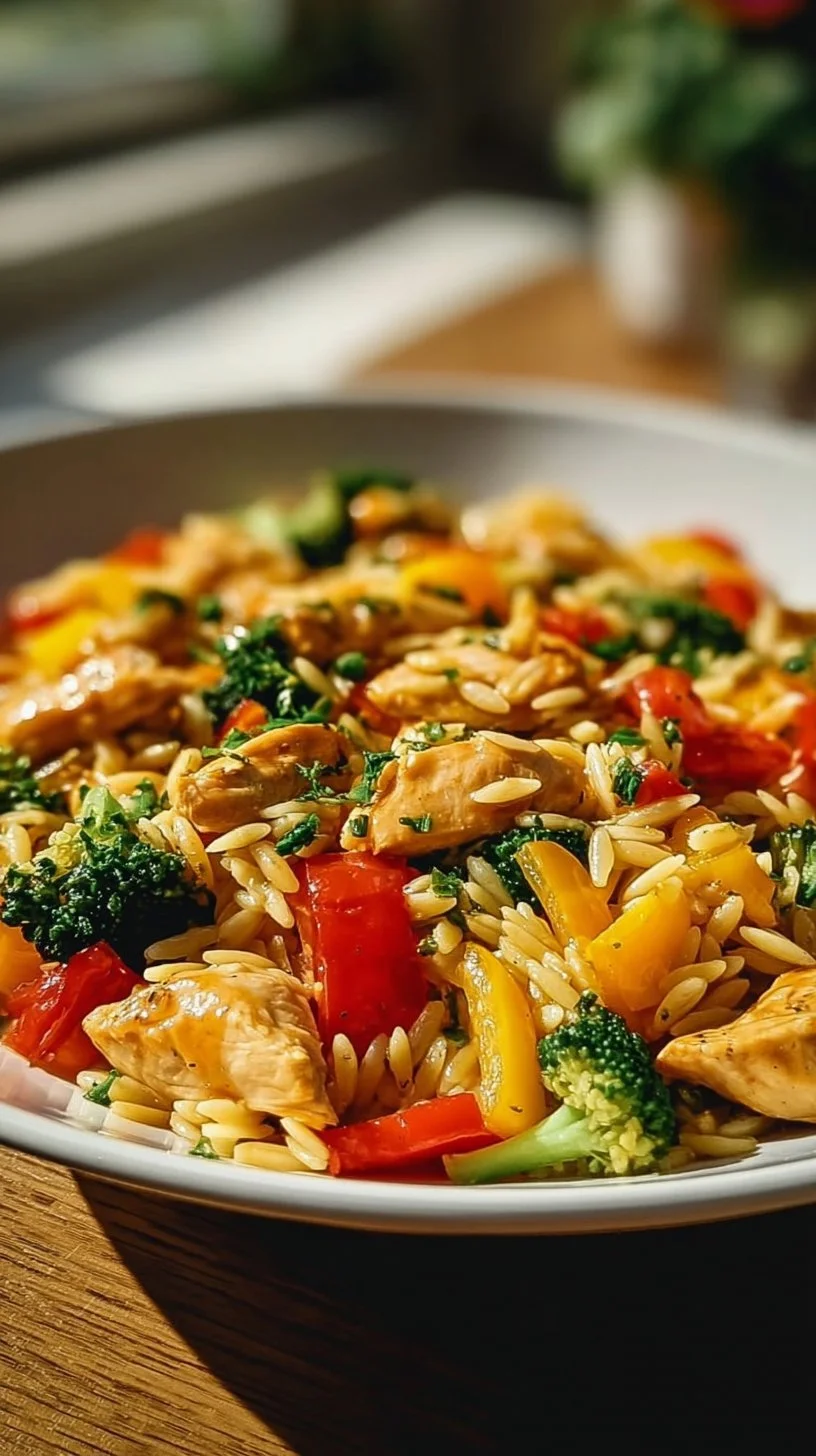
If you’re someone who wants a weeknight dinner that feels fresh, bright, and genuinely doable, this Lemon Chicken & Veggie Orzo Stir Fry is for you. I’m Carla Carter, founder and recipe developer of RecipesCabin, and my goal here is to help you feel calm and capable in the kitchen — even if you’re new or have had a few meals go sideways before. This dish is approachable because it uses familiar ingredients, a clear sequence of steps, and simple techniques that build confidence. If you’ve ever wanted to combine a pasta-like grain (orzo) with tender chicken and crisp vegetables without a fuss, this is a perfect recipe to practice.
You’ll notice the balance here: protein, vegetables, a starchy base, and a bright lemon-soy sauce that ties everything together. If you like learning by example, you might also enjoy the flavor profiles in my grilled chicken orzo salad, which approaches similar ingredients in a different format. Read on and I’ll walk you through what to expect at each stage so you can succeed on your first try.
Why this recipe is easy to get right
This recipe is forgiving in several helpful ways. First, the orzo cooks separately, so you won’t be juggling pasta and pan-cooking at the same time — that alone makes timing less stressful. Second, the vegetables are cooked to “tender-crisp,” a wide window where they’re neither raw nor mushy, which means small timing differences won’t ruin the dish. Third, the lemon-soy sauce is simple and adjustable: if you like more brightness, add a touch more lemon; if you prefer savory, a bit more soy does the trick.
Beginners will find room to breathe here. You won’t need precise measurements beyond the given recipe, and most checks are sensory — look for golden brown on the chicken, bright color on the vegetables, and al dente orzo. If you’ve felt overwhelmed by recipes that demand exact timing and perfect knife skills, this one lets you learn while still producing a satisfying meal. If you want to explore more one-pan confidence builders after this, check out my straightforward Asian cabbage stir fry for another forgiving, vegetable-forward meal.
How to make Lemon Chicken & Veggie Orzo Stir Fry
Overall, this recipe follows a simple flow: prep, cook orzo, brown chicken, add vegetables and garlic, pour the lemon-soy sauce, then combine everything. Start by preparing everything you’ll need so you’re not rushing at the stove — a quick chop and mise en place saves stress later. While the water for the orzo comes to a boil, cube the chicken and dice the vegetables. Cooking the orzo first sets a relaxed pace because once it’s drained you can return your full attention to the skillet.
When you brown the chicken, you’re creating flavor — those golden edges are where taste concentrates, so keep the pan hot enough to brown but not so hot that it smokes. After the chicken has a good color, add garlic briefly so it becomes fragrant without burning, then add the vegetables to cook until they’re tender-crisp. Pouring the lemon-soy mixture at this point lets the sauce warm through and coat everything evenly. The final step — tossing the orzo in — brings texture contrast and completes the meal.
Beginners should slow down during two moments: browning the chicken and cooking the vegetables. For chicken, look for a solid golden color and juices running clear; for vegetables, watch for bright, saturated color and a slight give when pierced with a fork. Those little pauses yield big improvements in both flavor and texture.
Ingredients

3–4 boneless, skinless chicken breasts, 2 cloves fresh garlic, minced, 1 cup orzo pasta, 1 bell pepper (any color), diced, 1 medium zucchini, sliced, 1 cup broccoli florets, 2 tbsp low-sodium soy sauce, 2 tbsp fresh lemon juice, 2 tbsp olive oil, Salt and pepper to taste
Each ingredient here has a clear job, and none are intimidating:
- Chicken breasts: The main protein. Cubed, they cook quickly and provide a tender, hearty center to the dish.
- Fresh garlic: Adds aroma and a savory lift. Minced garlic releases its scent and flavor fast, so it’s added briefly.
- Orzo pasta: Acts like a rice or small pasta — it soaks up flavors and adds comforting texture.
- Bell pepper, zucchini, broccoli: These vegetables offer color, crunch, and nutrition. They’re easy to prep and cook within the same short window.
- Low-sodium soy sauce: Brings a savory umami backbone without being overly salty. Using low-sodium gives you control.
- Fresh lemon juice: Provides the bright, fresh contrast that makes the whole dish feel lively.
- Olive oil: The cooking medium; it helps with browning and carries flavor.
- Salt and pepper: Enhances and rounds the flavors. A light hand with salt is fine; you can always adjust at the end.
Taken together, these ingredients create a dish that’s balanced: savory and bright, tender and crisp. None require advanced techniques, and you’ll learn how small changes — like adding a squeeze more lemon — alter the final taste.
Directions
- Prepare your ingredients: Wash and chop all vegetables into bite-sized pieces; cube the chicken.
- Cook the orzo: Boil salted water, add orzo, and cook until al dente (about 8 minutes). Drain and set aside.
- Sauté the chicken: In a large skillet over medium-high heat, heat olive oil. Add seasoned chicken cubes and cook until golden brown (5-7 minutes).
- Add vegetables: Stir in garlic for one minute, then add bell peppers, zucchini, and broccoli. Sauté until tender-crisp (5 minutes).
- Create the sauce: Mix soy sauce with fresh lemon juice in a bowl and pour over the chicken and veggies.
- Combine everything: Add cooked orzo to the skillet, tossing gently until all ingredients are heated through.
Supportive guidance around the steps:
- Prepare your ingredients: Look for uniform pieces so everything cooks evenly. Vegetables cut to bite-size will be easier to eat and cook through at the same rate as the chicken cubes.
- Cook the orzo: Salted water should taste slightly salty — this seasons the orzo from the inside. Al dente means the orzo has a tiny bit of bite at its center; if you prefer softer, add a minute or two.
- Sauté the chicken: When the cubes slip easily in the pan and have a warm, golden crust, they’re ready to flip. If they stick, give them another 30 seconds — they release when the sear has formed.
- Add vegetables: Garlic goes in first for a quick minute so it releases its aroma; it will smell fragrant and slightly sweet. Once the bell pepper looks glossy and the broccoli is a vibrant green with a fork-readable texture, you’re at the tender-crisp stage.
- Create the sauce: Mixing soy and lemon lets you taste and tweak before adding. The lemon brightens; the soy grounds the dish.
- Combine everything: Toss gently so the orzo doesn’t break and the chicken and vegetables remain distinct. Heat through until steam rises and the skillet smells lemony and savory.
If something doesn’t look perfect — say the chicken isn’t deeply browned — don’t worry. A little extra time in the pan will help, and the sauce ties everything together so the final result will still be satisfying.
Key techniques you’ll practice in this recipe
This recipe teaches a handful of useful, transferable skills:
- Browning meat in a skillet: You’ll learn how to develop a golden crust, which improves flavor in chicken, beef, and pork dishes.
- Timing separate components: Cooking the orzo separately while pan-cooking the other ingredients teaches how to manage multiple elements without stress.
- Quick sautéing of vegetables: You’ll develop a sense for visual cues — color, sheen, and slight tenderness — rather than relying on strict times.
- Simple sauce mixing: Combining an acid (lemon) with a salty component (soy) shows how small sauces can brighten and balance a dish.
These techniques apply to many other recipes — for example, the same pan skills are useful in my beef stir-fry with vegetables or a one-pot pasta. Practicing them here builds a reliable foundation.
Common mistakes and how to avoid them
Even the calmest cooks run into small hiccups. Here are common ones and easy fixes:
- Mistake: Chicken browns unevenly or stews instead of sears. Fix: Don’t overcrowd the pan. If the pan looks crowded, brown in batches or use a larger skillet. A hot pan and a thin layer of oil help create that golden color.
- Mistake: Vegetables turn mushy. Fix: Cut veggies into similar-sized pieces and cook just until tender-crisp. Remove from heat a little early — they’ll continue to soften from residual heat.
- Mistake: Orzo clumps together after draining. Fix: Rinse briefly under hot water or toss with a teaspoon of oil after draining, then separate gently with a fork before adding to the skillet.
- Mistake: Sauce tastes too salty or too sour. Fix: If too salty, add a squeeze more lemon or a small splash of water; if too sour, a pinch of sugar or an extra tablespoon of olive oil will balance it.
If something goes off track, small adjustments usually rescue the dish — and remember, dinner that’s a touch different from the picture is still a success.
How to adjust confidently without changing the recipe
You may want to scale portions or tweak flavors — here’s how to think about that without altering the core ingredients or steps:
- Portion scaling: To feed more people, increase the orzo and vegetables proportionally to the protein. The general idea is to keep a similar ratio of orzo:protein:veggies so the balance remains.
- Flavor preferences: If you prefer more brightness, conceptually add a little extra lemon juice at the end; for more savory depth, a touch more soy sauce or a small splash of olive oil will help. Think in small increments — taste and adjust.
- Texture tweaks: If you like it saucier, reduce the orzo slightly or add a tablespoon of warm water to the lemon-soy mixture to increase sauce volume. For drier, skip the extra water and toss gently near the end.
These are conceptual adjustments — you’re not changing the ingredient list or steps, but learning how to adapt outcomes to your taste.
Serving, storage, and reheating made simple
Serving: This dish is lovely straight from the skillet. Spoon onto plates, garnish with an optional lemon wedge or a few fresh herbs if you have them on hand. The contrast of warm orzo, tender chicken, and crisp vegetables looks and tastes inviting.
Storage: Cool leftovers to room temperature, then store in an airtight container in the refrigerator for up to 3–4 days. Because the recipe uses cooked pasta, avoid leaving it out more than two hours before refrigerating.
Reheating: Reheat gently on the stovetop over medium-low heat with a splash of water or a teaspoon of olive oil to revive moisture. Microwave reheating works too: cover loosely and heat in 30–45 second bursts, stirring in between to keep textures even. The key is gentle, short reheating so vegetables remain pleasant and chicken stays tender.
Questions new cooks often ask about this recipe
- Timing concerns: How do I know when the chicken is done? Look for a firm texture and juices that run clear; if you’re unsure, cut a slightly larger piece to check that there’s no pink center.
- Equipment questions: Do I need a special pan? A large, sturdy skillet works best to give the chicken space to brown; if you don’t have one, a wide sauté pan will do.
- “Is this normal?” moments: If the garlic seems to brown too fast, that’s normal — garlic cooks quickly and can burn; that’s why we add it briefly and keep an eye on it.
- Confidence-building clarification: If the dish feels like a lot at once, remember the rhythm — orzo first, then chicken, then vegetables, sauce, and combine. Each step prepares the next, and you’ll gain confidence with repetition.
If you ever feel uncertain mid-recipe, pause, take a breath, and check the visual cues I’ve described — they’re your best guide.
Final encouragement from Carla
I want you to remember: cooking is practice, not perfection. Every time you make a dish like this, you build understanding about heat, timing, and flavor balance. If something doesn’t turn out exactly as you pictured, that’s okay — you’re learning, and the lemony, comforting flavors here will still make a lovely meal. Keep experimenting gently, trust your senses, and enjoy the process as much as the result. You’re doing better than you think.
Conclusion
If you’d like another version or inspiration for this flavor combination, you can compare the recipe to Umami’s Lemon Chicken & Veggie Orzo Stir Fry page for a different take, or view an ingredient-focused note on Threads at a Threads post listing the ingredients. These resources can offer a useful comparison while you make this recipe your own.
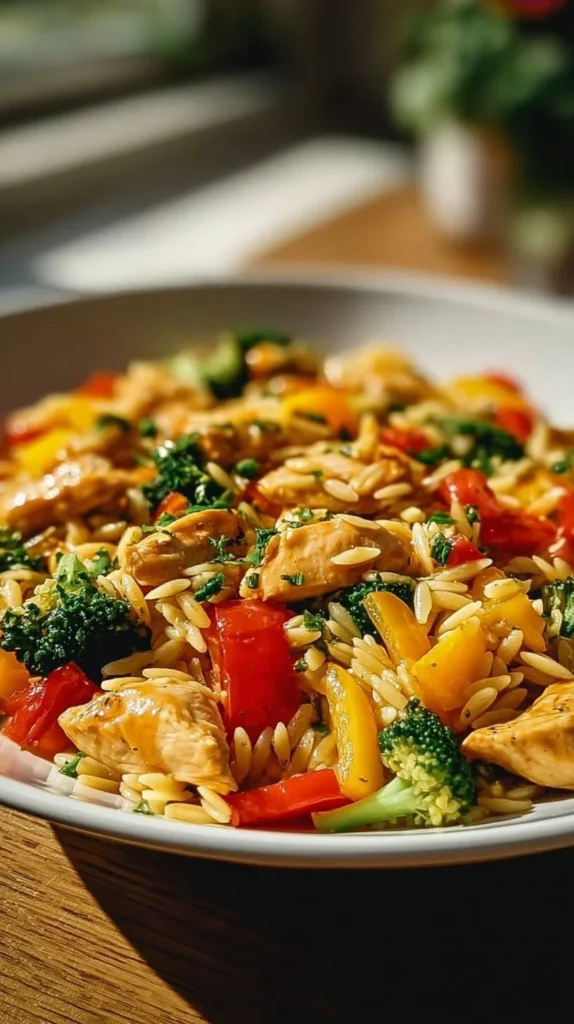
Lemon Chicken & Veggie Orzo Stir Fry
Ingredients
Method
- Wash and chop all vegetables into bite-sized pieces; cube the chicken.
- Boil salted water, add orzo, and cook until al dente (about 8 minutes). Drain and set aside.
- In a large skillet over medium-high heat, heat olive oil. Add seasoned chicken cubes and cook until golden brown (5-7 minutes).
- Stir in garlic for one minute, then add bell peppers, zucchini, and broccoli. Sauté until tender-crisp (about 5 minutes).
- Mix soy sauce with fresh lemon juice in a bowl and pour over the chicken and veggies.
- Add cooked orzo to the skillet, tossing gently until all ingredients are heated through.